
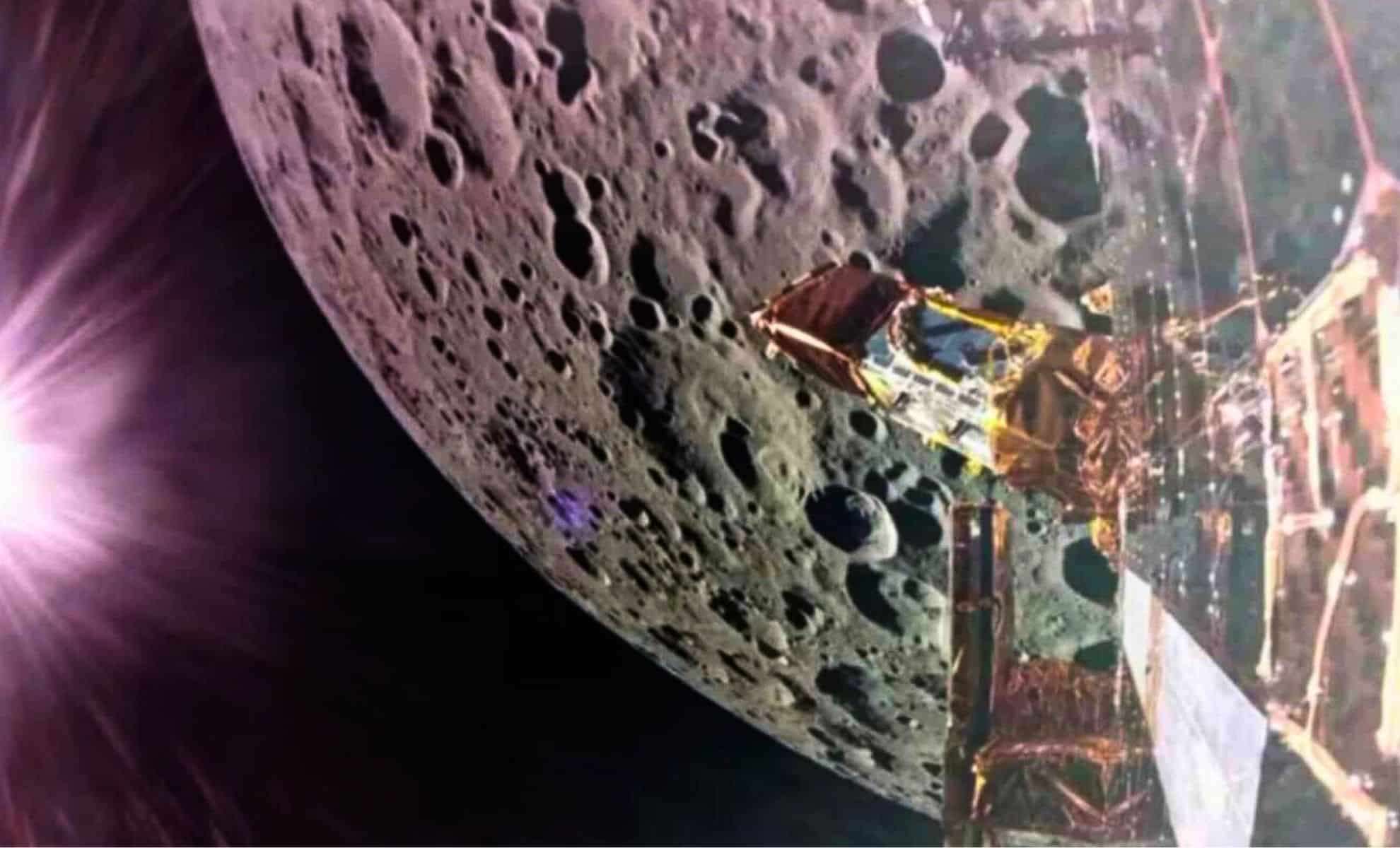
Firefly Aerospace’s Blue Ghost lander has recently provided breathtaking new visuals of the moon’s far side, unveiling a detailed panorama of impact craters and rugged landscapes previously unseen at this resolution.
With its planned touchdown set for March 2, this spacecraft is on the cusp of achieving a major breakthrough in lunar missions.
The Journey of Blue Ghost to Lunar Orbit
Departing Earth orbit on February 8, Blue Ghost undertook an extraordinary journey through space, ultimately entering lunar orbit on February 13.

Since arrival, it has been refining its path, lowering its orbit from a distant elliptical trajectory down to an altitude of just 120 kilometers (74.6 miles) above the lunar surface.
In the process, the lander captured stunning images of the lunar south pole, a region highly regarded for future human exploration.
More astonishingly, Blue Ghost’s February 18 flyby footage has offered an amazing glimpse at the moon’s elusive far side, a terrain forever hidden from Earth's vantage point.
NASA’s Strategic Investment in Blue Ghost
More than just visual marvels, Blue Ghost transports 10 scientific payloads for NASA under the Commercial Lunar Payload Services (CLPS) program, a key part of the Artemis initiative.
These instruments aim to analyze the lunar subsurface, examining dust and regolith layers that coat the moon.
NASA views robotic explorers like Blue Ghost as vital for testing essential technology for future human missions to the lunar surface and beyond, including Mars exploration.
The mission’s findings could transform everything from precision landing methods to the discovery of lunar resources, shaping humanity’s path in space.
Critical Landing Phase Approaches
Blue Ghost is set for a challenging landing on March 2, targeting the far eastern edge of the moon’s near side, close to the volcanic formation Mons Latreille within the Mare Crisium basin.
If the touchdown is successful, the lander is expected to operate for 14 Earth days, equivalent to one full lunar day, before the extreme cold and darkness of the lunar night prematurely end its mission.
Significant events are anticipated during this period, including capturing an extraordinary celestial occurrence: a solar eclipse on March 14, when Earth will obscure the sun from the moon’s perspective, plunging Blue Ghost’s location into an eerie five-hour shadow.
Following that, on March 16, Blue Ghost plans to study the enigmatic dust levitation phenomenon, a mysterious shimmering effect first observed by Apollo astronauts during lunar sunsets.
Elevating Private Sector Space Exploration
Blue Ghost represents more than a spacecraft — it embodies the new era of private industry leadership in lunar exploration.
With NASA increasingly relying on commercial partnerships, this mission could herald a new wave of robotic lunar deliveries, laying groundwork for sustained human presence on the moon.
- Categories:
- Space










0 comments
Sign in to Comment