
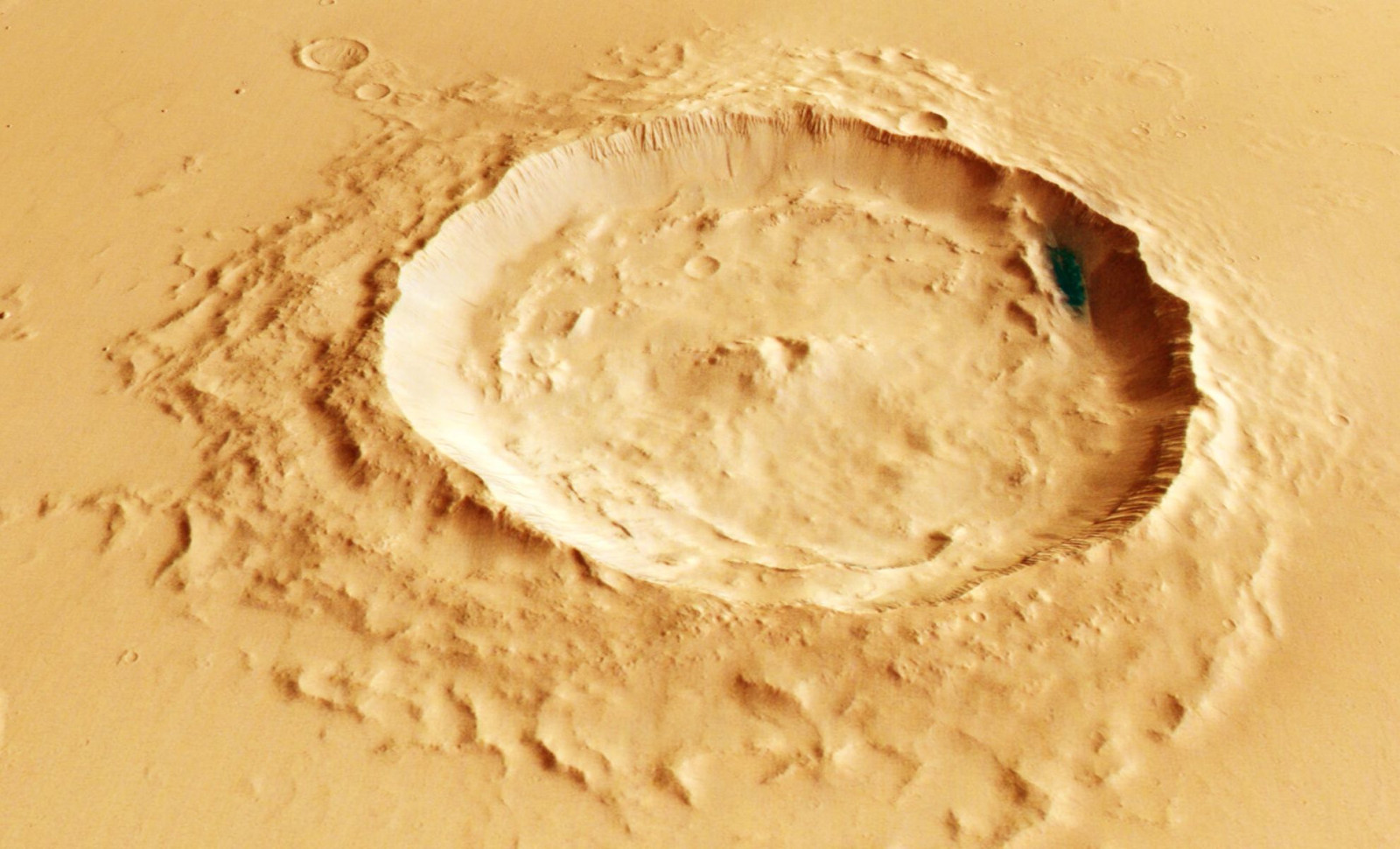
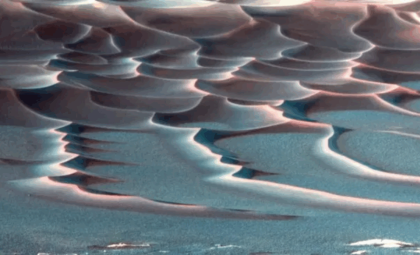
Martian atmospheric currents, reminiscent of scenes from a science fiction tale, have been continuously reshaping the surface of the Red Planet across millions of years. Fresh visuals from Mars Express showcase the immense force of these winds, which act like planetary sandblasters, carving out dramatic formations. Among these features are the yardangs, distinctive elongated ridges left standing as softer material around them erodes away. These winds appear to be tirelessly crafting Mars’ terrain in ways we're only beginning to fully grasp.
For more than twenty years, the European Space Agency’s Mars Express orbiter has been delivering breathtaking high-definition snapshots of the Martian surface. These images continue to reshape our understanding, highlighting a far more active and evolving landscape than previously believed.
Yardangs: Wind-Eroded Marvels of Mars
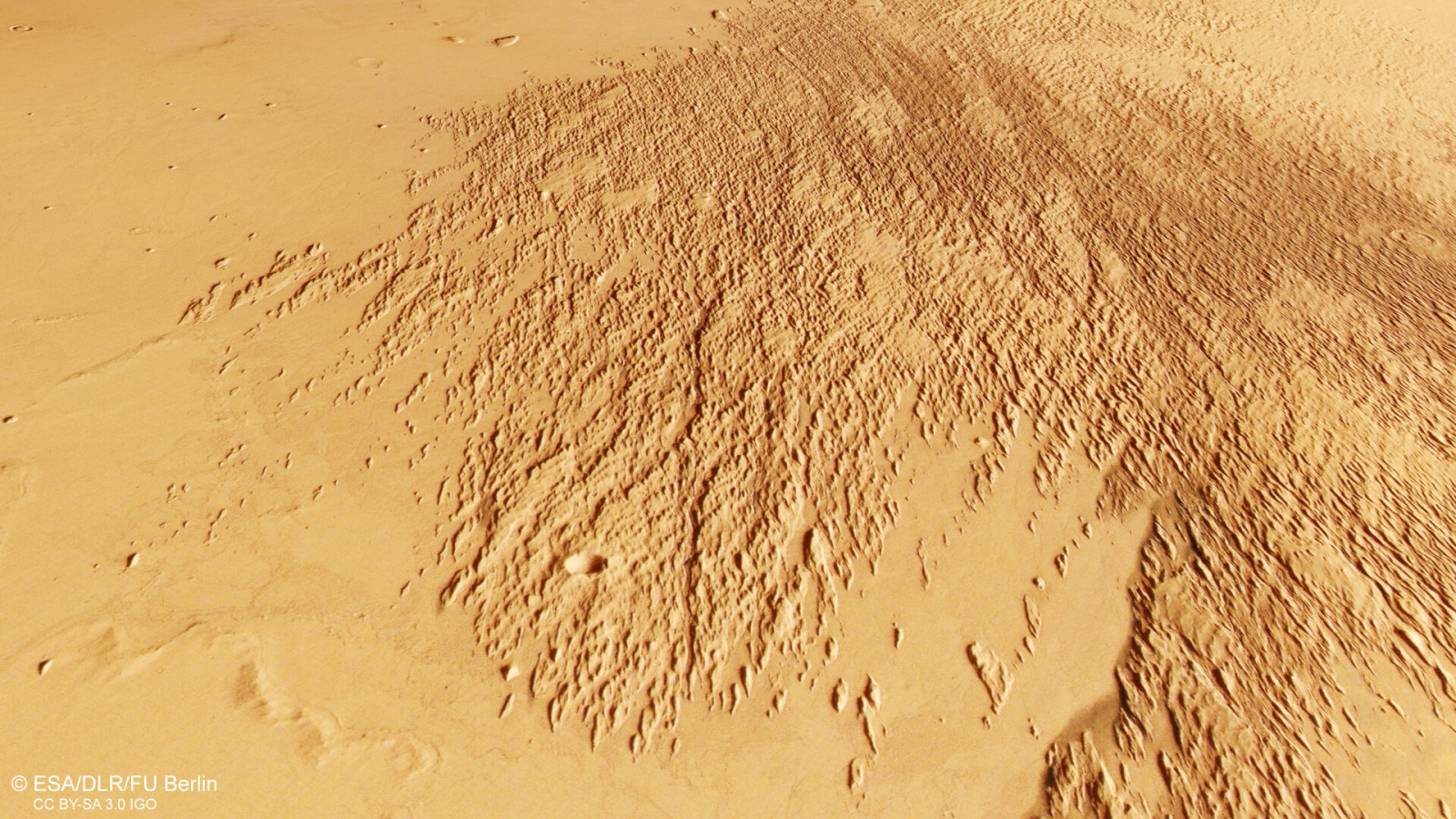
Yardangs represent fascinating geological structures that often go unnoticed. They are streamlined ridges or hills sculpted by wind erosion removing the material around them. ESA notes that these formations are widespread across Mars. In their words:

“They’re evidence of powerful Martian winds acting as a cosmic sandblaster, pulling sand grains into the air and sculpting grooves in the surface that extend across tens of kilometers.”
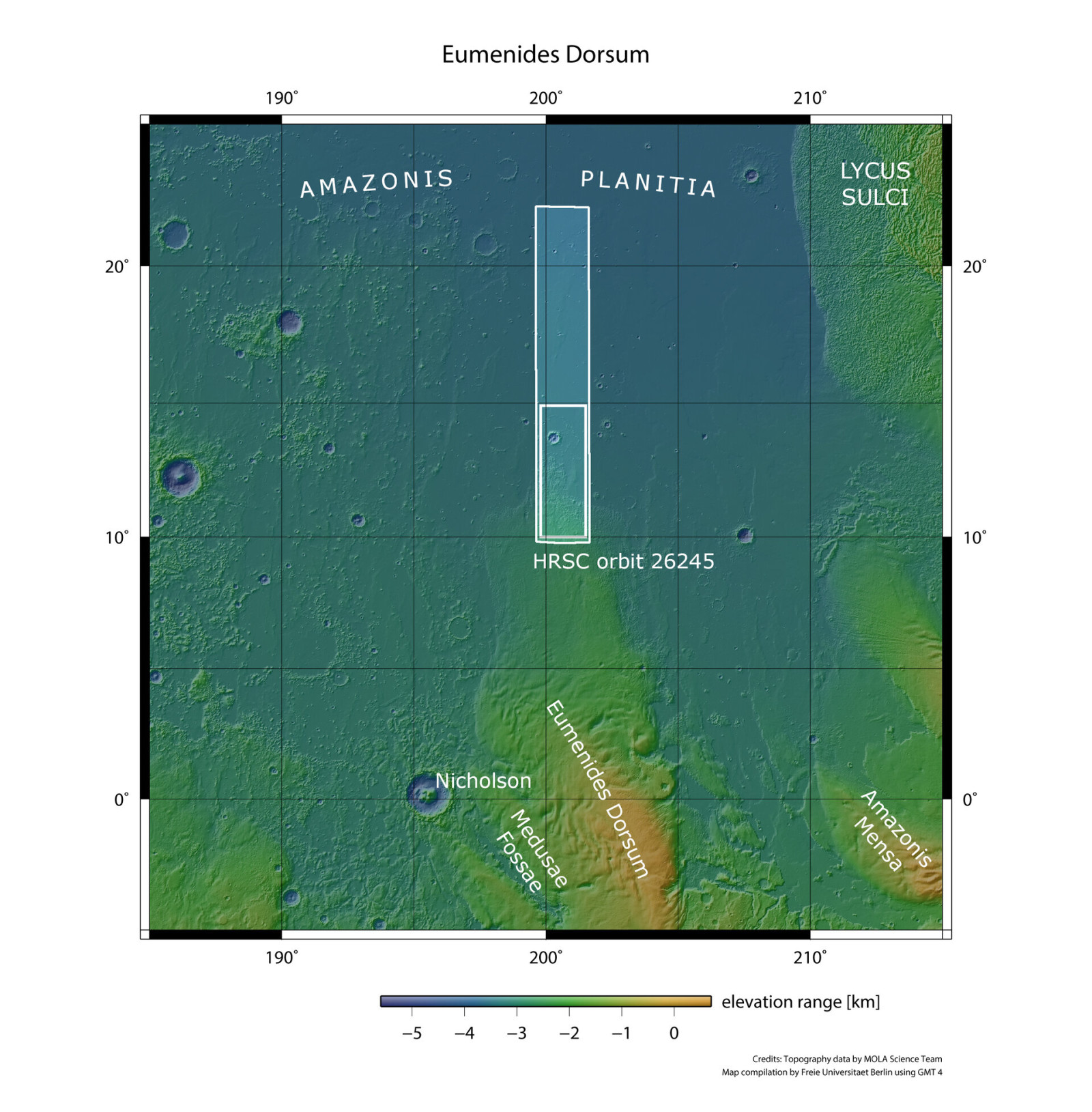
According to recent Mars Express imagery, all yardangs align uniformly due to the prevailing southeastern winds shaping their form. These ridges are located at the northern edge of the Eumenides Dorsum range, an area marked by intense dust storms and volcanic features. This zone is part of the vast Medusae Fossae Formation, a crucial geological site for decoding Mars’ climatic past. The winds here have essentially transformed the terrain into a sweeping canvas of long, graceful ridges.
Where Volcanic Activity Meets Wind Erosion
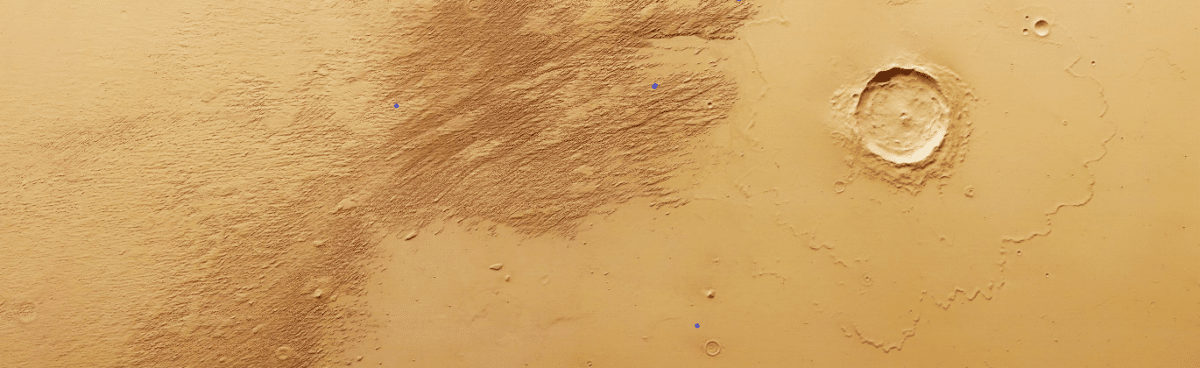
The photographs also display a recent crater with surrounding ejecta—debris launched during its formation.
“Visible only upon closer inspection (and marked in the annotated view): just below and beside the main bulk of yardangs lies so-called ‘platy flow’, which is somewhat reminiscent of floating ice sheets – or floes – seen here on Earth,” as stated in ESA’s report.
Lava flows once coated the surface, solidifying into a fractured crust that later fragmented into vast plates. These slabs were then shifted by Martian winds, akin to ice floes drifting on water. This blend of volcanic processes and wind erosion reveals how vibrant and complex Mars’ geological activity remains. The yardangs resting atop this platy flow imply these features formed relatively recently in the planet’s geological timeline.
Two Decades Mapping Mars: Insights from Mars Express
Since its 2003 launch, Mars Express has been systematically surveying Mars, producing some of the most detailed images of its surface to date. These high-resolution observations—ranging from color imaging to 3D terrain models—have been vital for understanding Mars’ intricate geological evolution.
The long-term data from ESA’s Mars mission has enabled researchers to reconstruct the history of wind-driven processes shaping the planet. It continually reveals that Mars remains remarkably active, even from millions of miles away.
- Categories:
- News






0 comments
Sign in to Comment