
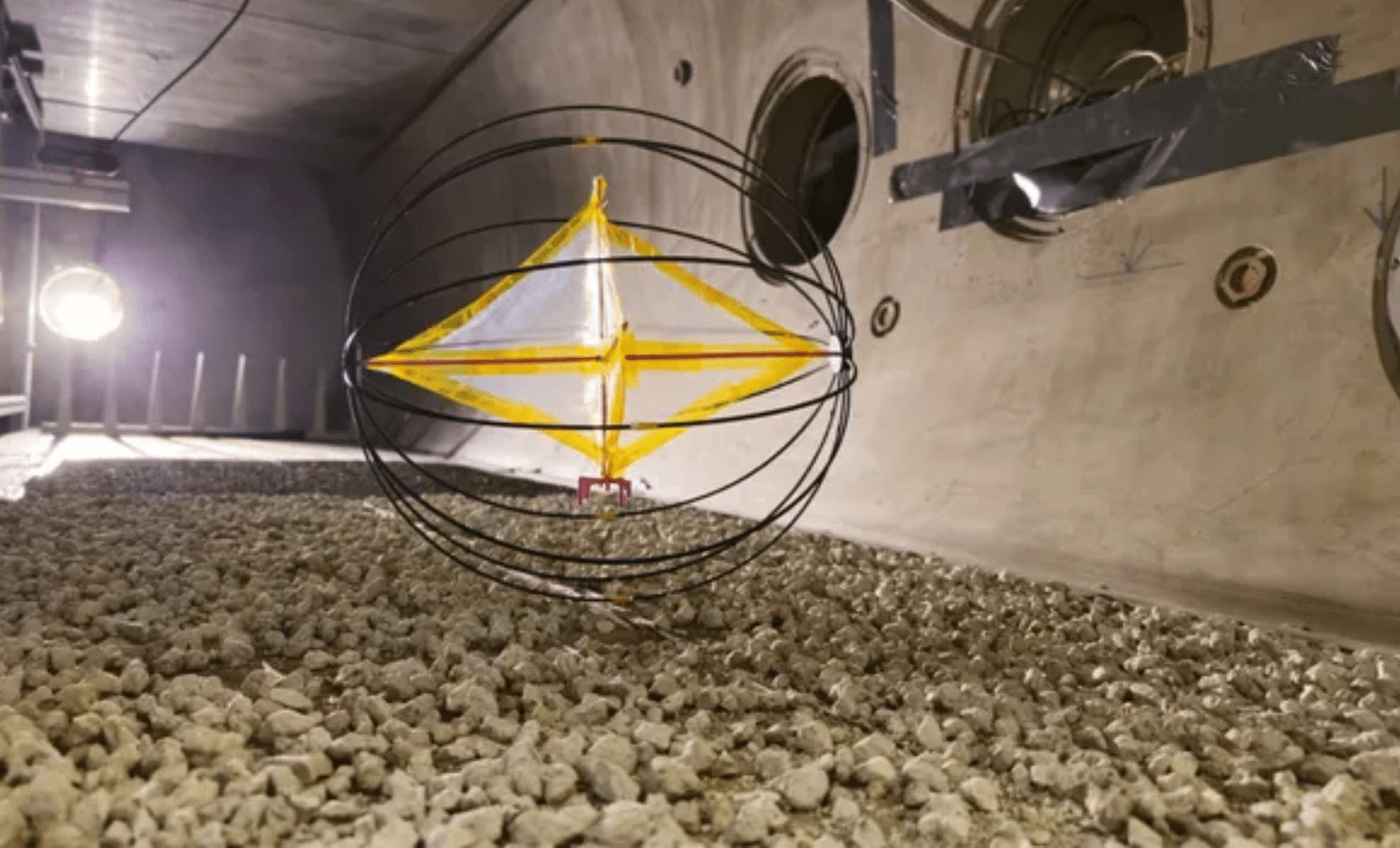
Scientists and space explorers have long been intrigued by the prospect of wind-propelled, tumbleweed-inspired rovers navigating the Martian surface. Thanks to pioneering work by Team Tumbleweed and wind-tunnel studies conducted in Denmark and the Netherlands, this innovative idea is moving closer to deployment. These rovers, driven entirely by Martian winds, are capable of traversing vast distances while gathering vital scientific information. The potential of this technology was showcased at the Europlanet Science Congress–AAS Division of Planetary Science in 2025, where research revealed their ability to travel up to 2,800 kilometers under favorable conditions.
How Tumbleweed Rovers Redefine Martian Exploration
Tumbleweed rovers represent a novel type of Martian robot, differing significantly from traditional wheeled explorers like NASA’s Curiosity and Perseverance. These lightweight, spherical devices rely exclusively on wind propulsion to roll across the planet's surface. They are designed to offer a cost-effective and efficient method to cover extensive areas of the Red Planet, all the while performing scientific measurements.
Drawing inspiration from Earth's desert tumbleweeds, this design removes the necessity for complicated locomotion or energy-hungry systems. Instead, it harnesses the potent Martian winds, known to reach high speeds in many regions. The rovers aim to travel across the difficult Martian terrain, collecting valuable data on atmospheric and surface conditions throughout their journey.


Wind Tunnel Testing Validates Rover Performance
Small-scale tumbleweed rover models recently underwent critical testing at Aarhus University in Denmark. The experiments replicated Mars-like wind speeds of around 9 to 10 meters per second (30 to 33 feet per second) within the wind tunnel. These tests were designed to mimic the stronger gusts typically observed on Mars compared to Earth.
"We’ve confirmed experimentally that tumbleweed rovers can effectively operate and collect data on Mars," stated James Kingsnorth, the lead scientist of Team Tumbleweed. During these trials, the prototypes successfully navigated various surfaces, from sandy ground to rocky paths, while onboard instruments recorded atmospheric and temperature data. Impressively, the wind-driven vehicles managed to climb gentle inclines, a noteworthy achievement considering Mars’ lower gravity.
Expanding Scientific Reach with Tumbleweed Rover Swarms
A major advantage of tumbleweed rovers is their potential to gather information from multiple locations simultaneously. Deploying large groups of these rovers across Mars would enable a broader and more detailed analysis of environmental phenomena. Each unit could cover extensive terrain, gathering atmospheric and geological measurements from diverse Martian regions.
This continuous data collection method eliminates the need for expensive, stationary equipment and could become a vital asset for future missions. Mission scientist Mário João Carvalho de Pinto Balsemão of Team Tumbleweed highlighted: “Our Aarhus wind tunnel tests have yielded key insights into the operational behavior of tumbleweed rovers on Mars.” The gathered information will assist in mapping the Mars surface and its atmospheric dynamics, supporting upcoming missions focused on habitability and human colonization efforts.
Durability and Range Expectations for Mars Wind Rovers
Surviving the harsh Martian environment poses a significant hurdle for rover design. Mars’ dusty conditions and thin atmosphere challenge conventional power systems. The wind-powered tumbleweed concept bypasses reliance on solar energy or batteries altogether.
Test results suggest these rovers can cover extensive distances under simulated Martian conditions. Typically, a tumbleweed rover might travel about 422 kilometers (262 miles) within 100 Martian sols, moving at an average rate of 0.36 kilometers per hour (0.22 miles per hour). In optimal scenarios, distances could extend to approximately 2,800 kilometers. Since wind provides their energy, these rovers can continuously operate without frequent maintenance or recharging, offering a significant edge over traditional robotic explorers.
- Categories:
- News





0 comments
Sign in to Comment