
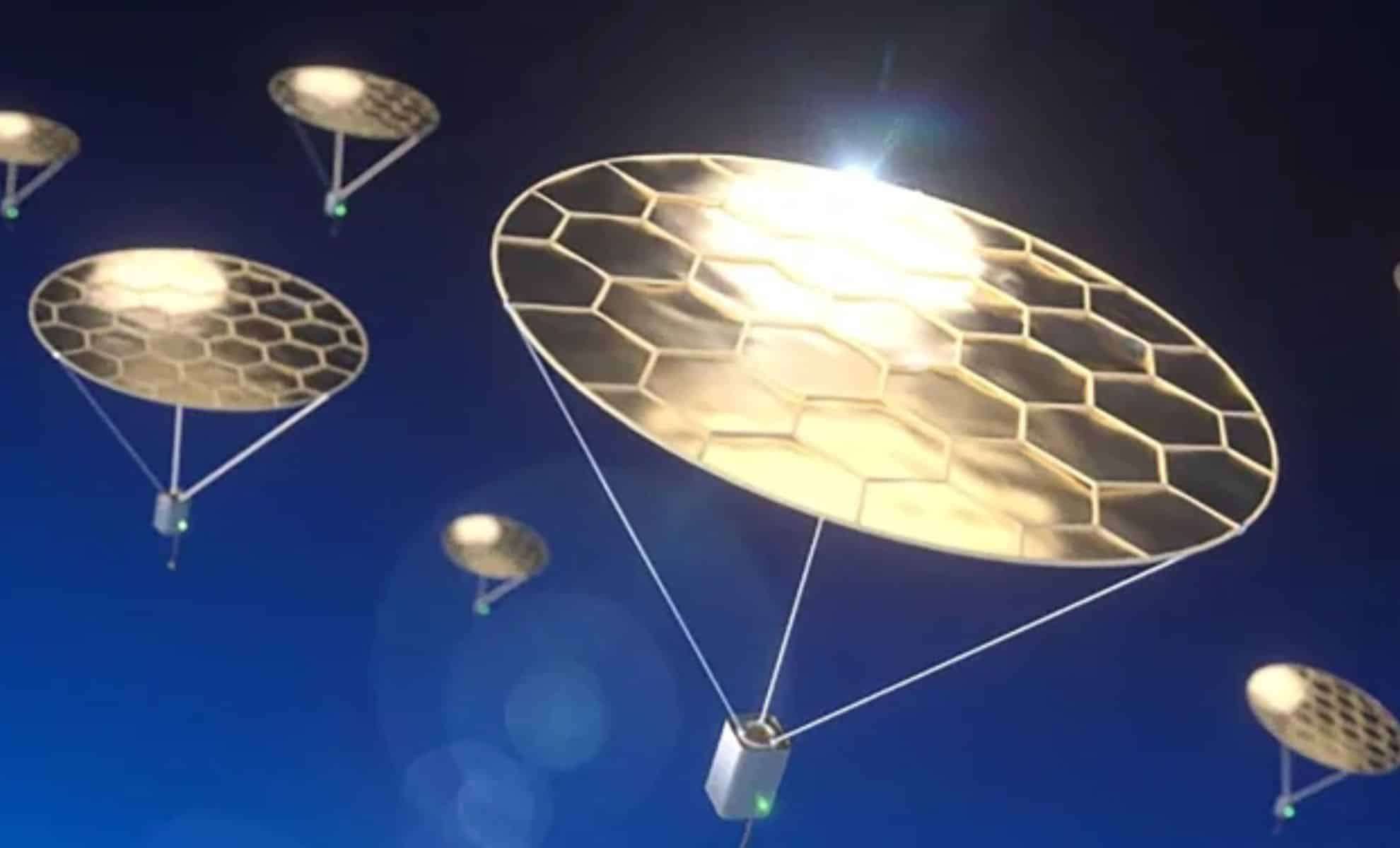
Scientists are on the verge of unlocking new exploration possibilities for one of the least accessible layers of our atmosphere using nothing more than sunlight and a coin-sized disc. Their groundbreaking research, featured in Nature, introduces ultra-light micro flyers capable of ascending into the mesosphere, a region so difficult to examine it's often nicknamed the “ignorosphere.”
If implemented successfully, these novel airborne devices could provide unprecedented insights into a zone where meteors disintegrate, auroras shimmer, and solar disturbances unleash energy—a domain traditionally unreachable by conventional scientific tools.
Accessing the Atmospheric Frontier Only Light-Driven Devices Can Reach
Positioned between 50 and 85 kilometers above the planet’s surface, the mesosphere lies too high for aircraft or weather balloons but below satellite orbits. This makes gathering data from this atmospheric layer a formidable challenge.

Researchers at Harvard University’s School of Engineering and Applied Sciences (SEAS) have innovated a solution. Their creation involves microscopic ceramic flyers, roughly one centimeter across, capable of sustained flight without traditional engines. These devices harness light itself as their propulsion source.
The mechanism behind these flyers is photophoresis, a phenomenon observed since the 1800s by William Crookes but utilized here in a novel way.
Leveraging Light’s Thermal Dynamics for Lift
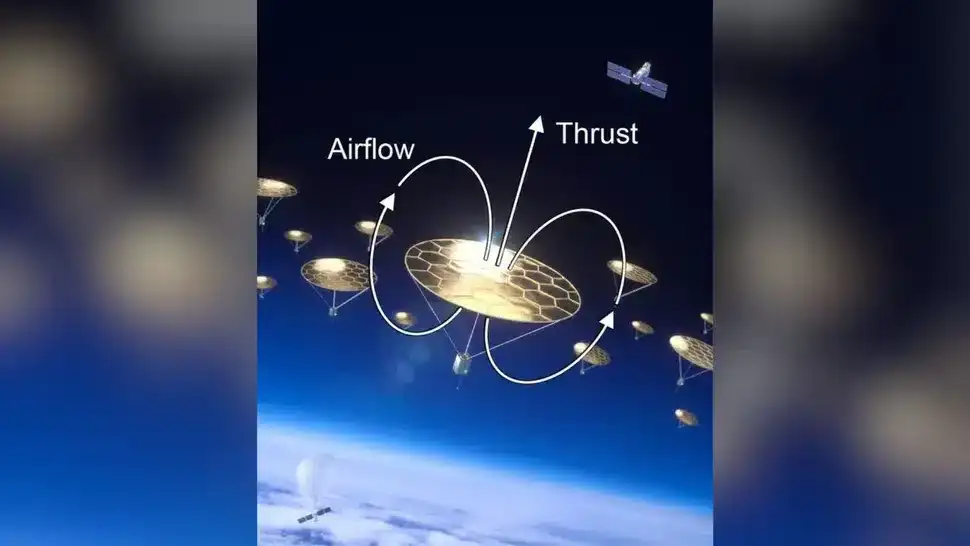
Photophoresis arises when one side of a surface heats more than the opposite side in low-pressure environments. Gas particles striking the warmer surface rebound with greater force than those hitting the cooler side, generating a slight but effective thrust. Although subtle, with proper materials and design, this effect can sustain flight for ultra-light objects.
The team engineered two ultra-thin, perforated ceramic layers connected by tiny supports. A chromium coating on the underside absorbs sunlight, warming the lower surface relative to the top. The disparity in temperature causes gas molecules to push the disk upwards, allowing it to lift off in sparse air.
This approach surpasses earlier photophoretic models that required concentrated light intensities far exceeding natural sunlight. These new flyers successfully remain airborne under simulated sunlight levels as low as 55% of direct sun. Furthermore, the perforations facilitate airflow through the disk, not just around it, triggering an additional phenomenon called thermal transpiration that produces what co-researcher Ben Schafer terms “tiny jets.”
Compact Technologies with Expansive Applications
The straightforward design of these flyers promises transformative potential. Lead researchers Ben Schafer and Angela Feldhaus have launched a company, Rarefied Technologies, to pursue practical uses. Their initial test flights with payload-free discs are planned for 2026.
By increasing the diameter to six centimeters, these disks can carry a 10-milligram load, sufficient for basic environmental sensors, a radio transmitter, and even a solar energy harvesting system. While not a replacement for satellites, Schafer envisions swarms of these sunlight-powered disks gathering atmospheric data and functioning as communication nodes high above Earth.
Future Missions Could Extend to Mars
Their application may extend beyond our planet. Because Mars has a thin atmosphere akin to Earth’s mesosphere, these disks could eventually be adapted to study Martian atmospheric conditions. They could gather climate metrics, monitor high-altitude winds, and track dust storms—all without traditional propulsion.
Back on Earth, these flyers could bridge the knowledge gap left by satellites and aircraft, accessing the mesosphere and lower thermosphere where solar storms, auroras, satellite reentry debris, and pollutant accumulation occur. Real-time measurements of these processes have been nearly unattainable until now.
Schafer highlights how this technology could dramatically improve the precision of current global climate models. Enhanced prediction of severe space weather events is just one of the many advantages these sunlight-driven micro flyers may offer.
- Categories:
- News





0 comments
Sign in to Comment