
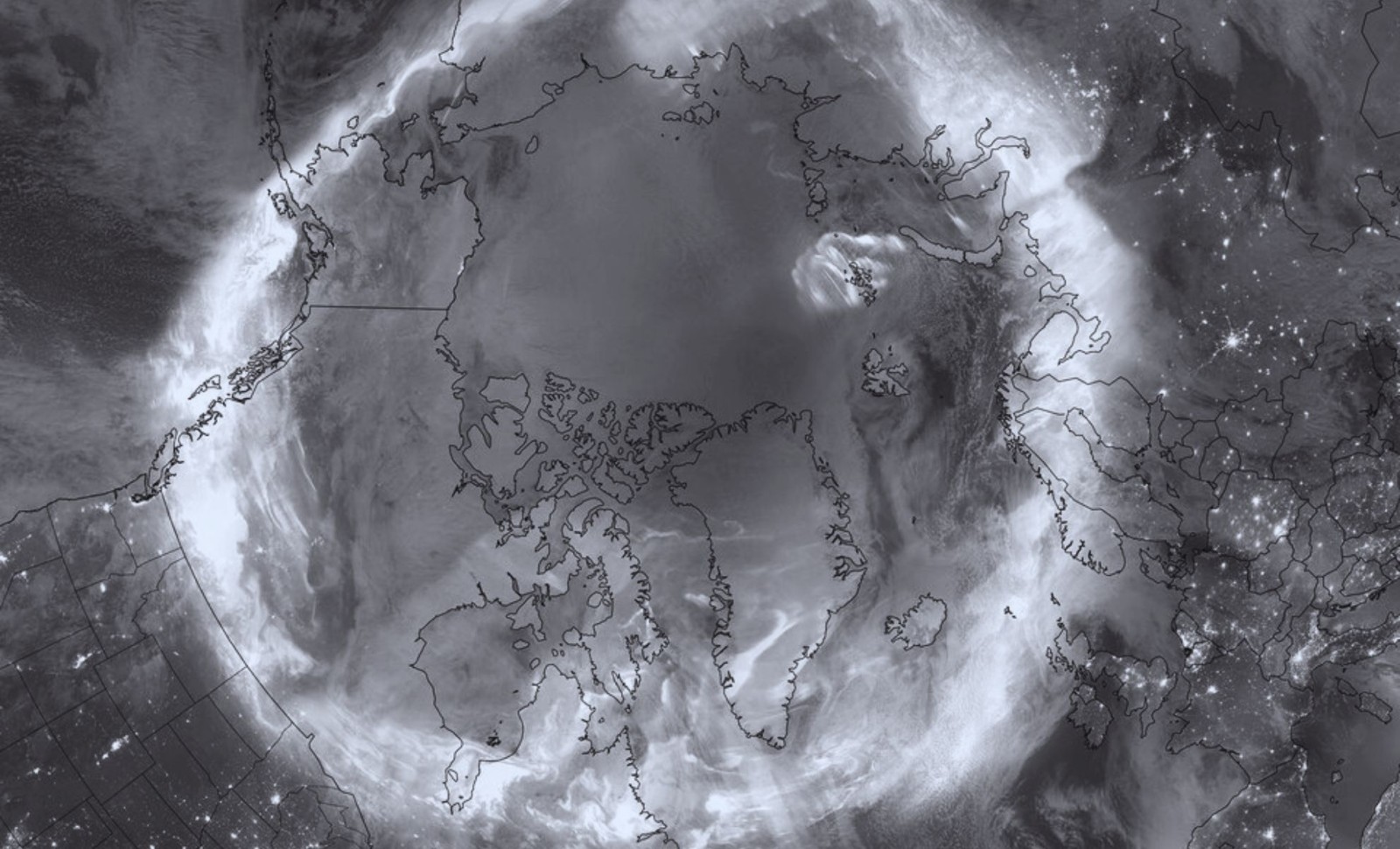
In a recent geomagnetic storm last November, the European Space Agency's Swarm mission recorded an unusual spike in high-energy protons above Earth's polar regions. This transient increase, though brief, represents a rare occurrence that sheds new light on the complex dynamics between the solar wind and our planet’s magnetic shield.
Since its launch in 2013, the trio of ESA’s Swarm satellites has been meticulously mapping Earth's magnetic field with remarkable precision. These spacecraft continually gather information on the forces sculpting our planet’s magnetosphere. The newly observed proton surge during the solar storm stands out as a significant data point in the ongoing study of space weather events.
Detection of High-Energy Protons by Swarm
The European Space Agency reports that the Swarm satellites were the first to capture this peculiar burst of energetic protons. These particles, originating from the Sun, were accelerated through their interaction with Earth’s magnetic field during a geomagnetic storm. Although the event lasted briefly, it was strong enough to register on Swarm’s sensitive detectors, offering researchers a valuable window to analyze sudden solar activity up close. Understanding the mechanisms behind these proton bursts is crucial for comprehending solar wind behavior.

Though such occurrences are infrequent, they provide essential clues for advancing our knowledge of space weather. The data collected by Swarm will enhance models of how solar wind influences Earth, especially during periods of intensified solar phenomena.
Solar and Earth Magnetic Interactions During Geomagnetic Storms
Geomagnetic storms occur when energetic particles from the Sun disturb Earth’s magnetic environment. This includes high-energy protons like those recently documented by Swarm.
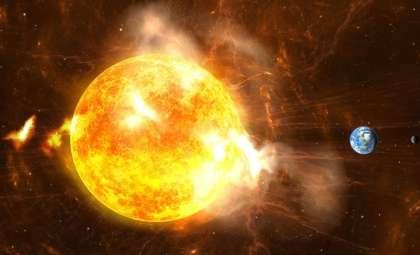
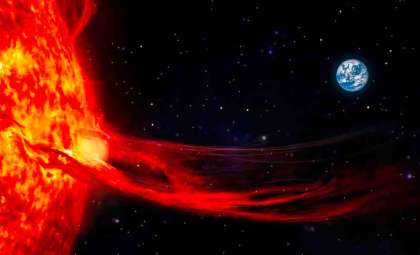
Typically, such storms are triggered by solar flares or coronal mass ejections. The interaction between these solar emissions and Earth's magnetosphere produces the vibrant phenomena linked to space weather. While the majority of these storms are mild, the event recorded in November was strong enough to cause a notable rise in proton fluxes. Scientists continue to investigate the origins of this specific spike, leveraging Swarm’s observations to unravel the mechanisms behind such occurrences.
Geomagnetic storms can have diverse effects on Earth. They often produce dazzling auroral displays near the poles. However, stronger storms can disrupt satellites, affect communications, and even cause power grid malfunctions.
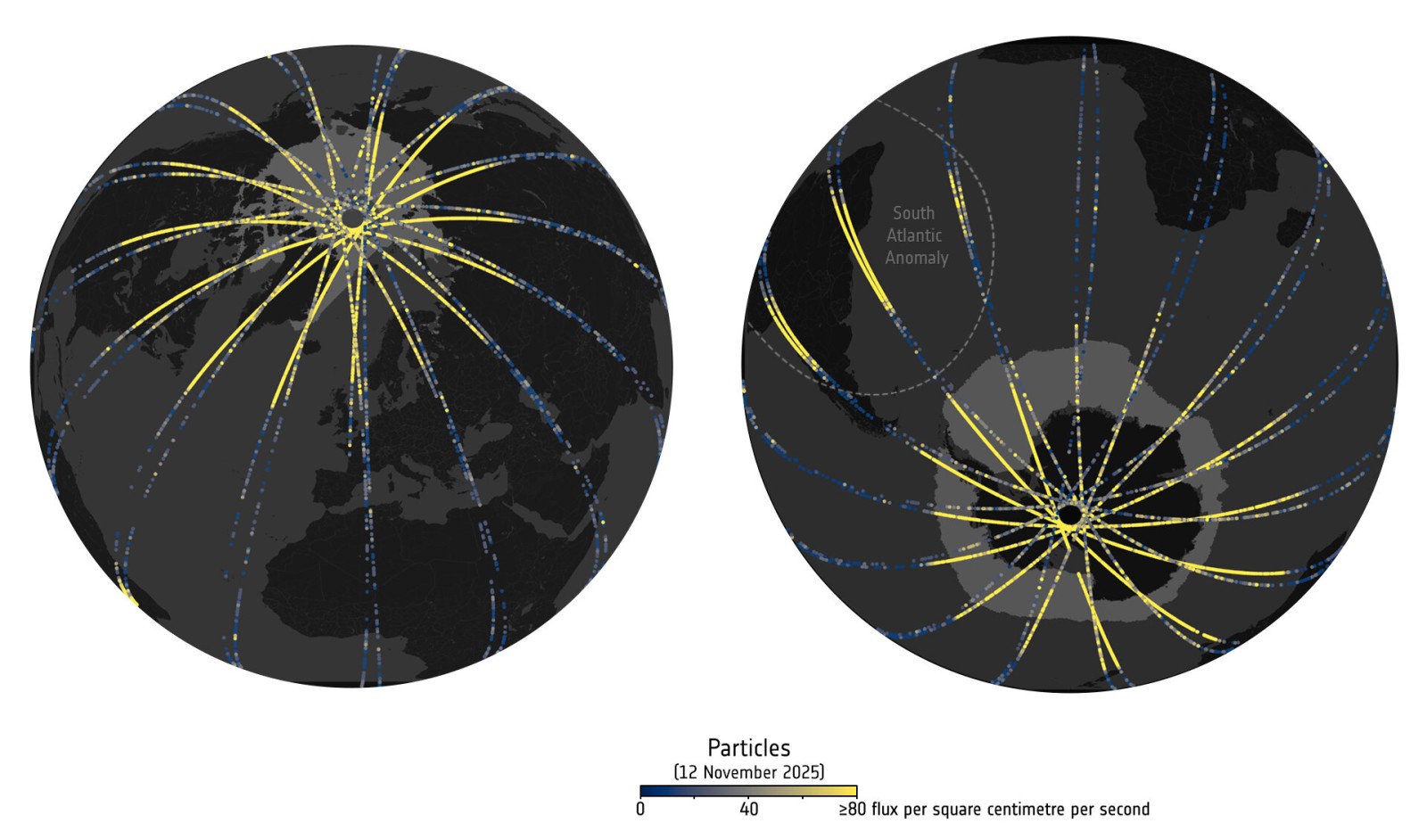
Consequences of Solar Activity on the Planet’s Environment
The Swarm mission’s ongoing magnetic field studies reveal how solar events impact technologies ranging from satellite electronics to GPS systems. Even minor disruptions to the magnetosphere, such as the November event, can trigger cascading effects in our tech-reliant society.
“Under normal conditions, Earth’s magnetic field deflects most solar wind particles; however, during a geomagnetic storm, the magnetosphere can become overloaded, allowing a substantial number of high energy protons to penetrate and give rise to several geophysical phenomena,” explained Enkelejda Qamili, a Swarm data quality analyst at ESA. “While these events are of great scientific interest, it is important to acknowledge the potential risks they pose to astronauts, spacecraft and communication.”
Understanding solar activity and its effects on Earth is vital, especially as society depends more on space-based technologies. While a catastrophic solar storm has yet to occur, continued research remains key to preparing for such possibilities.
- Categories:
- Space







0 comments
Sign in to Comment