
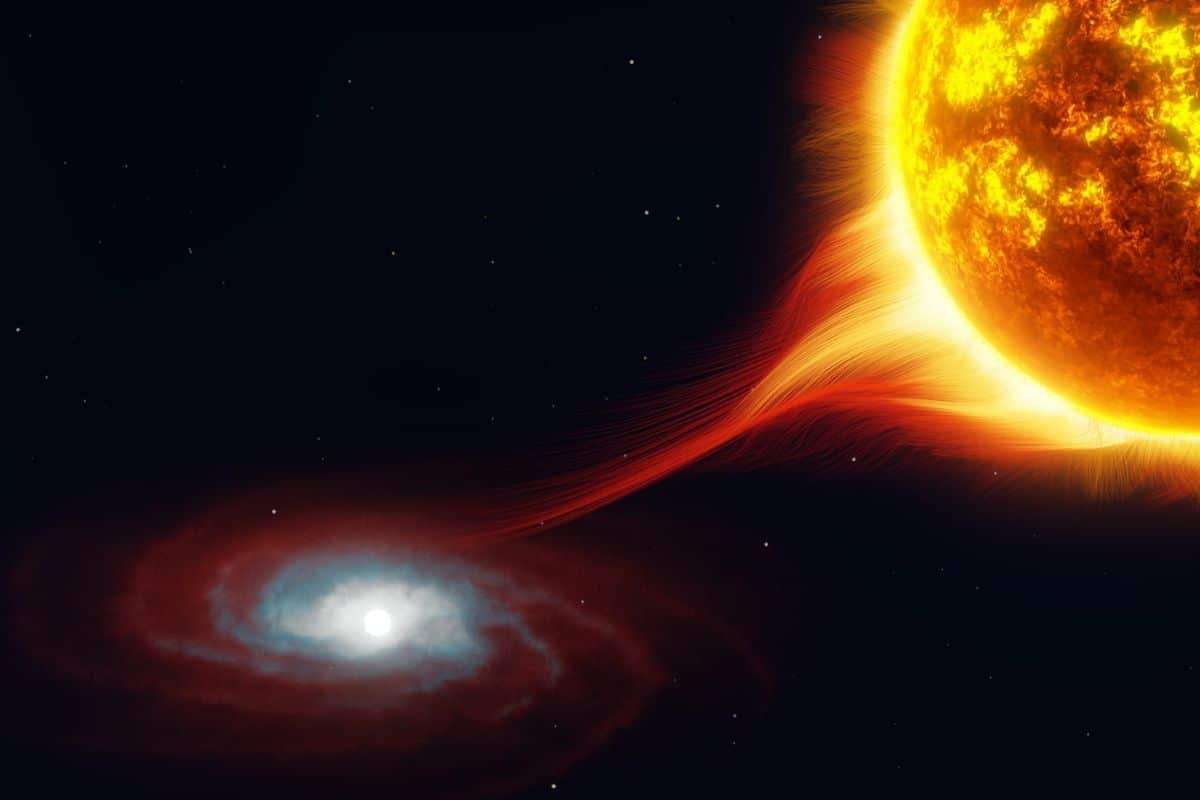
Excitement is mounting among astronomers as T Coronae Borealis, often called the Blaze Star, shows promising signs of an imminent nova eruption. After several warnings and near-misses since early 2023, this star system looks ready to shine brightly enough to be seen without telescopes for the first time in nearly eight decades.
A Long-Awaited Celestial Event Unfolds
Situated roughly 3,000 light-years away within the Corona Borealis constellation, the Blaze Star is a fascinating example of a recurrent nova. This type of stellar duo pairs a white dwarf with a red giant, with the white dwarf periodically siphoning hydrogen from its companion.
Historical records note eruptions in 1866 and 1946, with likely earlier occurrences in 1787 and as far back as 1217, when the German monk Abbot Burchard reported a "wonderful sign" glowing in the Northern Crown.

“Novae happen when the red giant’s material accumulates on the white dwarf, triggering a powerful outburst,” explained senior astronomer Edward Bloomer.
“By analyzing the emitted light, we can essentially chart the system’s dynamics and delve deeper into how nova explosions operate,” he added.
Observing Ancient Starlight in Real Time
Although observers will witness the nova erupting now, the light embarked on its journey to Earth some 3,000 years ago. This delay lets scientists use advanced techniques such as spectroscopy and multi-wavelength sensors— across ranges from X-rays to radio waves—to study the event in unprecedented detail.
T CrB ranks among just ten identified recurrent novae within our Milky Way galaxy. Many more likely await discovery. That's where the future Vera C. Rubin Observatory steps in, expected to commence operations by late 2025 or early 2026. Its comprehensive sky monitoring will help capture fleeting phenomena like this near real-time.
A Rare Opportunity for Skywatchers
At its peak brightness, the nova will rival the North Star in luminosity. Located within the compact Corona Borealis constellation between Boötes and Hercules, this event offers a spectacular sight for observers across the Northern Hemisphere using only their eyes.
“The Rubin Observatory’s broad and rapid sky coverage will allow it to detect numerous such transient phenomena by comparing frequent snapshots of the heavens,” Bloomer noted.
Locating the Blaze Star at Its Brilliance
When T CrB flares, it is expected to reach approximately magnitude +2, making it easily visible without binoculars for multiple nights.
Its position in the Corona Borealis constellation—sandwiched between the more familiar Hercules and Boötes constellations—makes it accessible to Northern Hemisphere stargazers, especially with guidance from apps and resources like TheSkyLive.com.
- Categories:
- Space








0 comments
Sign in to Comment