

In early 2018, metal detecting enthusiasts Rene Schoen and his apprentice, 13-year-old Luca Malaschnitschenko, scoured the grounds of the German island of Rügen in search of hidden relics. What initially seemed like a nondescript piece of metal turned out to be an exquisite piece of Viking silver, sparking one of the most significant archaeological excavations in the Baltic region in recent years. This unexpected discovery revealed artifacts possibly associated with the renowned Viking ruler Harald “Bluetooth” Gormsson.
An Accidental Discovery Leading to a Medieval Hoard
One weekend in January, Luca and Rene were out metal detecting on Rügen, initially believing they’d uncovered a mundane scrap of aluminum. Upon further inspection, they realized it was actually Viking silver. This prompted archaeologists to conduct a detailed dig, where they found necklaces, pearls, rings, and an impressive collection of nearly 600 coins.
Among these coins, several date to the reign of King Harald Bluetooth, who ruled Denmark between 958 and 986 CE. The Guardian reported that while many coins originated from the Bluetooth era, some dated back as far as the 8th century. The oldest piece is a Damascus dirham minted in 714, whereas the newest coin is a penny from 983.


Significance of the Historical Discovery
Of the approximately 600 coins found, roughly 100 are linked directly to Harald Bluetooth’s rule from 958 to 986 CE. These particular coins are notable for featuring some of the earliest depictions of Christian crosses on Danish currency.
“This is the largest single find of Bluetooth coins in the southern Baltic Sea region and is therefore of outstanding importance,” as excavation director Michael Schirren explained to The Local.
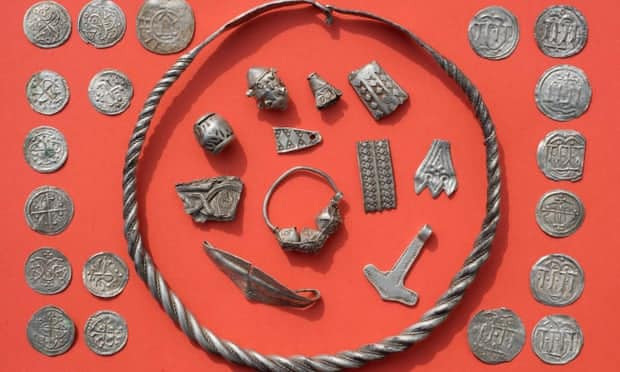
Researchers hypothesize that the treasure was concealed during a tumultuous period, possibly when Harald Bluetooth fled Denmark in the 980s after his son Svein Forkbeard assumed power.
Previous discoveries on nearby islands suggest Bluetooth and his loyalists hid valuable items while escaping. Although not confirmed, the timing and location make this scenario highly plausible.
Harald Bluetooth’s Legacy in Modern Technology
Most people know Bluetooth technology takes its name from King Harald, but the story behind it may surprise you. According to Gizmodo, the wireless communication standard was initially dubbed "Bluetooth" in 1997 by engineers inspired by Viking history. They chose the name over the original acronym, PAN, which was deemed too generic to stand out in search engines.
“It was decided then that we would go ahead and launch the SIG with the codename ‘Bluetooth’,” Jim Kardach, who worked as an engineer for Intel, stated. “But would then change the name when the marketing group came-up with the official name.”
As for Harald’s nickname, "Bluetooth" referred to a blue-tinted dead tooth he had. Over centuries, this quirky medieval detail transformed into the namesake for a global wireless technology.
- Categories:
- News













0 comments
Sign in to Comment