

Unearthed as part of a deliberate burial and intentionally damaged, a staggering collection of more than 800 artefacts emerged from a single archaeological site, challenging previous assumptions about influence, wealth, and connectivity in ancient northern England.
Referred to as the Melsonby Hoard after the nearby village in North Yorkshire, the treasure trove was initially uncovered in late 2021 by metal detector hobbyist Peter Heads and subsequently excavated in 2022 with the collaboration of Durham University. The volume and ceremonial significance of the findings have led scholars to describe this site as unparalleled.
Extensive Collection of Intentional Ruins
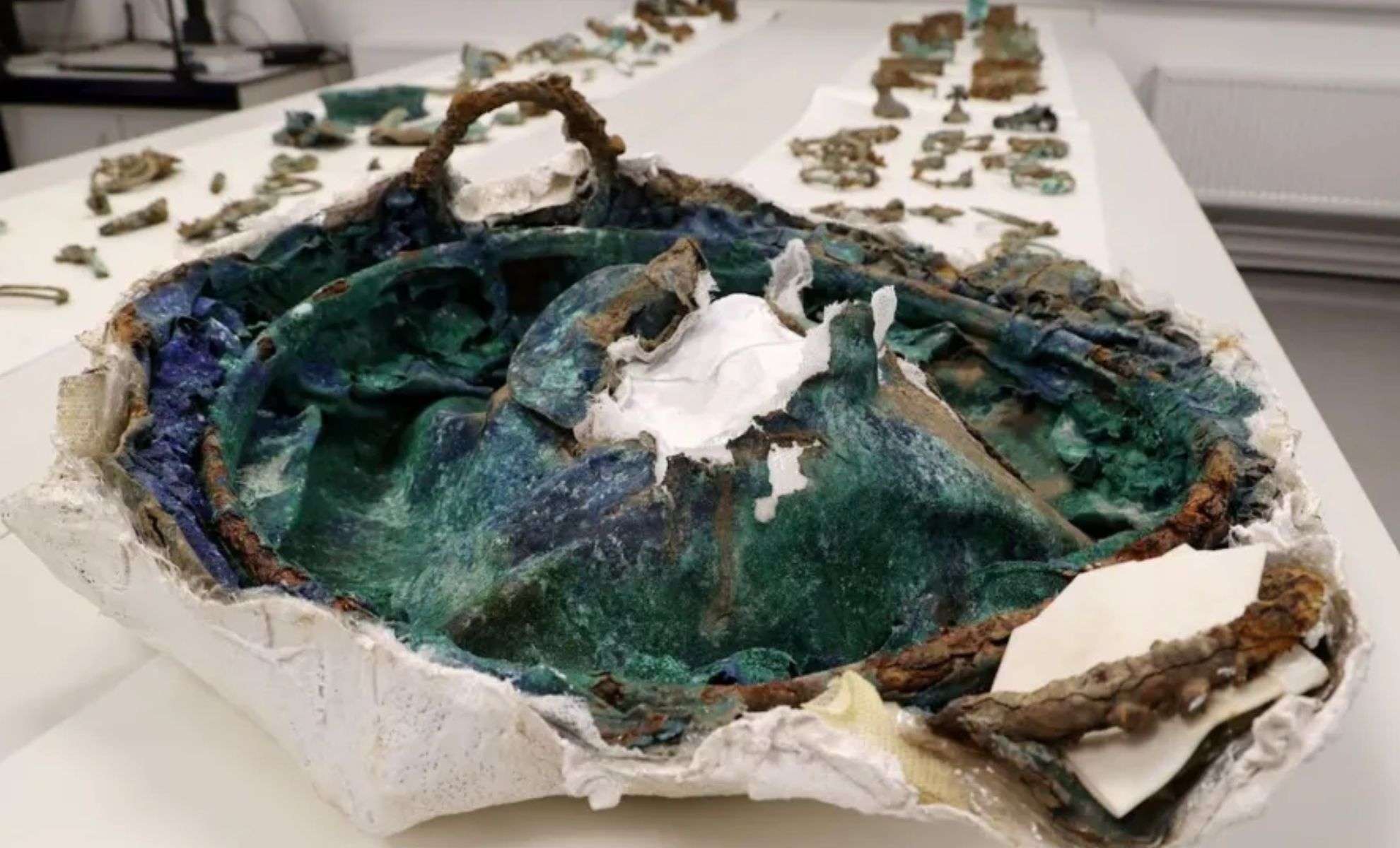
The hoard includes parts from at least seven ancient conveyances, likely either four-wheeled wagons or two-wheeled chariots, along with 28 iron wheel rims, three ritual spears, and harness components for 14 ponies. Furthermore, the assemblage features two sizeable cauldrons, one believed to have been used for mixing wine.

As detailed by Earth.com, numerous objects were subjected to burning, bending, or crushing beneath heavy stones. One cauldron was even discovered overturned, its center crushed inward. These alterations were not accidental but rather part of a ritualistic practice.
Interestingly, no human bones were recovered at the location. Nevertheless, the presence of scorched soil and ash deposits points to a possible association with a funerary pyre. Commenting on the significance of the find, Tom Moore from Durham University remarked:
The hoard “demonstrates that the elites of northern Britain were just as powerful as their southern counterparts.”
Connections Revealed Through Diverse Artifacts
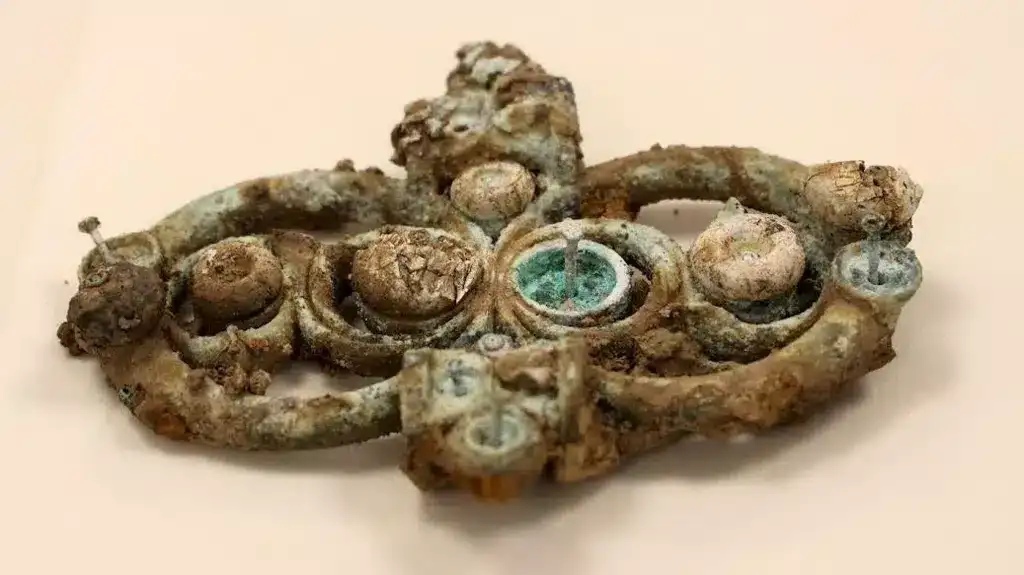
Several items were adorned with red coral originating from the Mediterranean, colored glass, and copper alloy decorations, materials absent from the native surroundings. According to BBC News, such exotic components highlight extensive trade networks and cultural interchanges connecting northern Britain to continental Europe and the Roman sphere.
Researchers propose that the hoard’s original owner belonged to a high-status group spanning Britain and beyond. Tom Moore summarized it as follows:
“Whoever originally owned the material… was probably a part of a network of elites across Britain, into Europe and even the Roman world.”
Comparisons with similar continental European discoveries reveal distinctive shared stylistic and technical qualities, signifying cultural connections through common designs, crafts, and customs.
Revealing Secrets with 3D Imaging Technology
Rather than excavating items individually onsite, researchers opted to extract a chunk of soil weighing roughly 250 kg and sent it to the University of Southampton for detailed X-ray CT scanning. This approach allowed them to explore the contents in three dimensions without disturbing the delicate remains.
The imaging uncovered intricate details such as fish motifs etched onto bent cauldrons and minute rivets securing coral in horse harness decorations. According to reports, this method not only preserved the objects but also enhanced understanding of Iron Age wagon construction, metalworking techniques, and the deliberate arrangement of the burial.
The Melsonby Hoard is now housed at the Yorkshire Museum, where efforts have been made to ensure it remains publicly accessible. Andrew Woods, senior curator at the museum, emphasized the importance of this find:
“By acquiring the hoard, we will be able to make it accessible to everyone… and cast light on to whom it may have belonged.”
Selected pieces were exhibited starting March 25, 2025, while research and conservation continue behind the scenes.
- Categories:
- News












0 comments
Sign in to Comment