
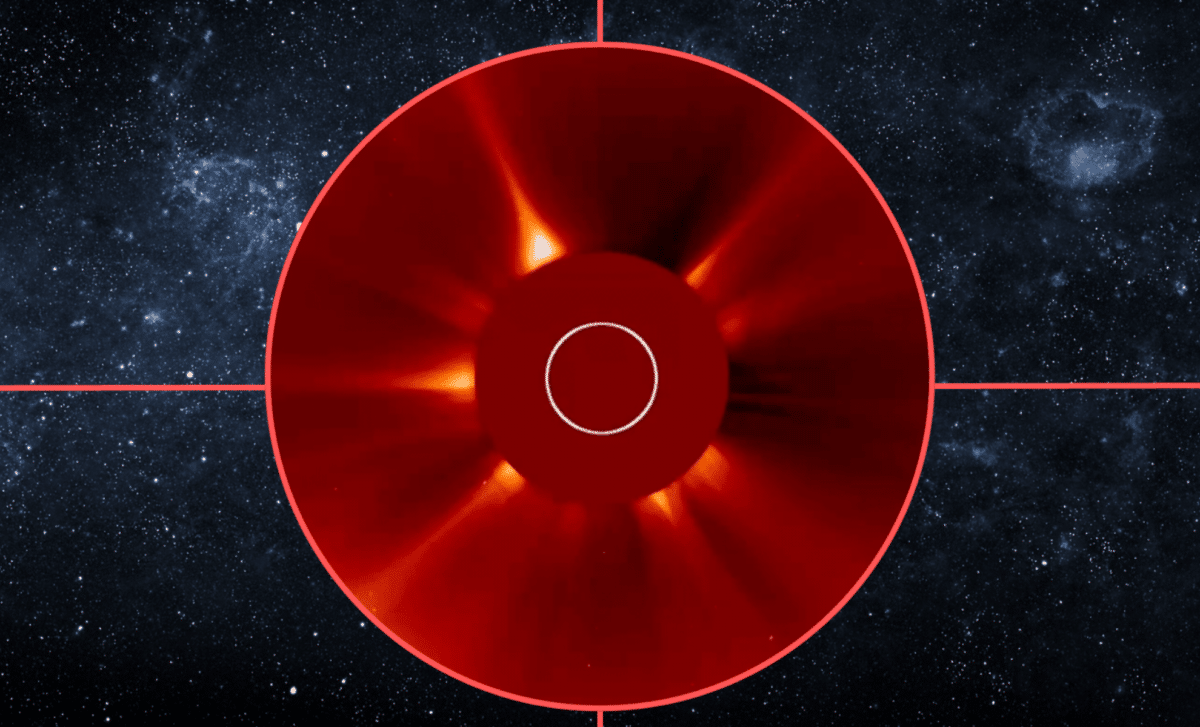
Comet MAPS, celebrated as the anticipated “Great Easter Comet,” met an untimely end when it shattered spectacularly just hours before reaching its nearest approach to the Sun. What had been expected to be a brilliant spectacle in the evening skies instead concluded with the comet's complete fragmentation, dashing hopes of an extraordinary astronomical event.
The Journey and Sudden Collapse of Comet MAPS
Comet MAPS first came to light earlier this year, sparking widespread fascination among astronomers and enthusiasts alike. Early estimates suggested it would be a sizable comet capable of producing a radiant presence in the twilight sky. However, subsequent observations revealed that the comet was considerably smaller than initially presumed.
As reported by Space.com, Comet MAPS belonged to the Kreutz family of sungrazers, notorious for their perilous trajectories that take them extremely close to the Sun's surface. These comets offer a rare glimpse into the intense solar environment, but MAPS’ fate was seemingly sealed well before it reached perihelion, its closest orbital point to the Sun.

What Triggered the Fragmentation of Comet MAPS?
As MAPS approached the Sun, it encountered devastating environmental stress. Having existed for centuries in the frigid outer reaches of space, the comet’s nucleus remained deeply frozen, near absolute zero temperature. However, the rapid heating it experienced nearing the Sun imposed severe thermal shock.
Similar to the effect of pouring boiling liquid into a chilled glass, the extreme temperature gradient caused the comet’s surface to reach temperatures exceeding 3,000°F (5,000°C), while its core stayed icy cold. This harsh contrast, compounded by intense solar gravitational forces, ultimately caused the comet to break apart catastrophically.
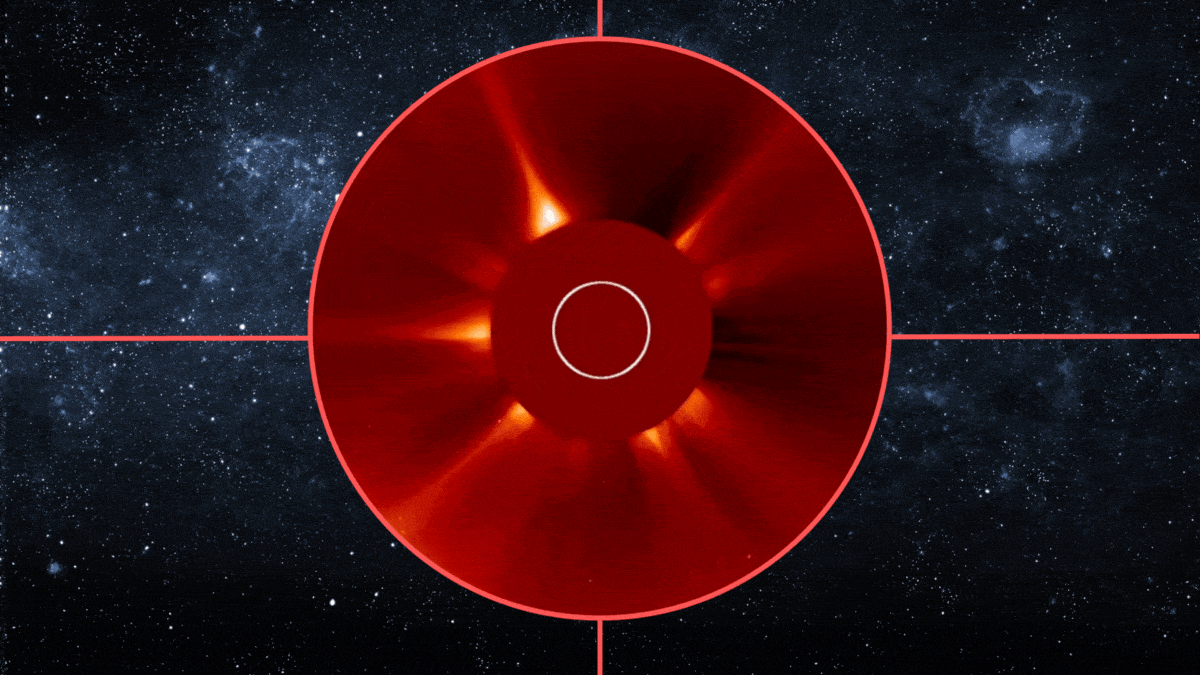
The comet’s brightness had spiked as it approached perihelion, but then it suddenly fragmented. NASA’s Solar and Heliospheric Observatory (SOHO) captured images of the debris cloud as it dispersed rapidly. When MAPS reached its closest solar approach, only a trail of dust remained.
Expectations and the Letdown for Observers
Both astronomers and casual skywatchers had eagerly anticipated a striking cometary display in the western evening sky. However, once MAPS moved behind SOHO’s occulting disk—that blocks solar glare—there was little to observe.
Upon re-emergence from behind the disk, the comet had already disintegrated. Rather than a distinct glowing tail or vibrant nucleus, a diffuse, hazy fragment cloud appeared. This outcome left the community disappointed, as the anticipated celestial spectacle never materialized, erasing hopes of witnessing Comet MAPS illuminating the sky.
Insights Gained from Comet MAPS’ Demise
Though short-lived, MAPS’ approach and break-up provided valuable scientific insight. Its destruction highlighted the extreme challenges comets face approaching the Sun, shedding light on the physical limits imposed by intense solar radiation and tidal forces.
At roughly 0.2 miles (0.4 kilometers) wide, MAPS was a relatively small member of the Kreutz sungrazer family, believed to be remnants of a much larger parent comet that fragmented long ago. Its disintegration enriches our understanding of how these fragments evolve and perish in close solar encounters.
Reflecting on Comet MAPS: A Fleeting but Important Legacy
The swift demise of Comet MAPS underscores the unpredictable and often volatile conditions that comets face in our solar system. Despite initial excitement for a vivid display, the comet's sudden disintegration exemplifies the hazards of venturing near the Sun.
Yet, its brief presence and the data collected will continue to inform cometary science, enhancing future research on sungrazing comet dynamics and solar system history. While Comet MAPS will no longer brighten night skies, its story remains a valuable chapter in our exploration of cosmic phenomena.
- Categories:
- Space





0 comments
Sign in to Comment