
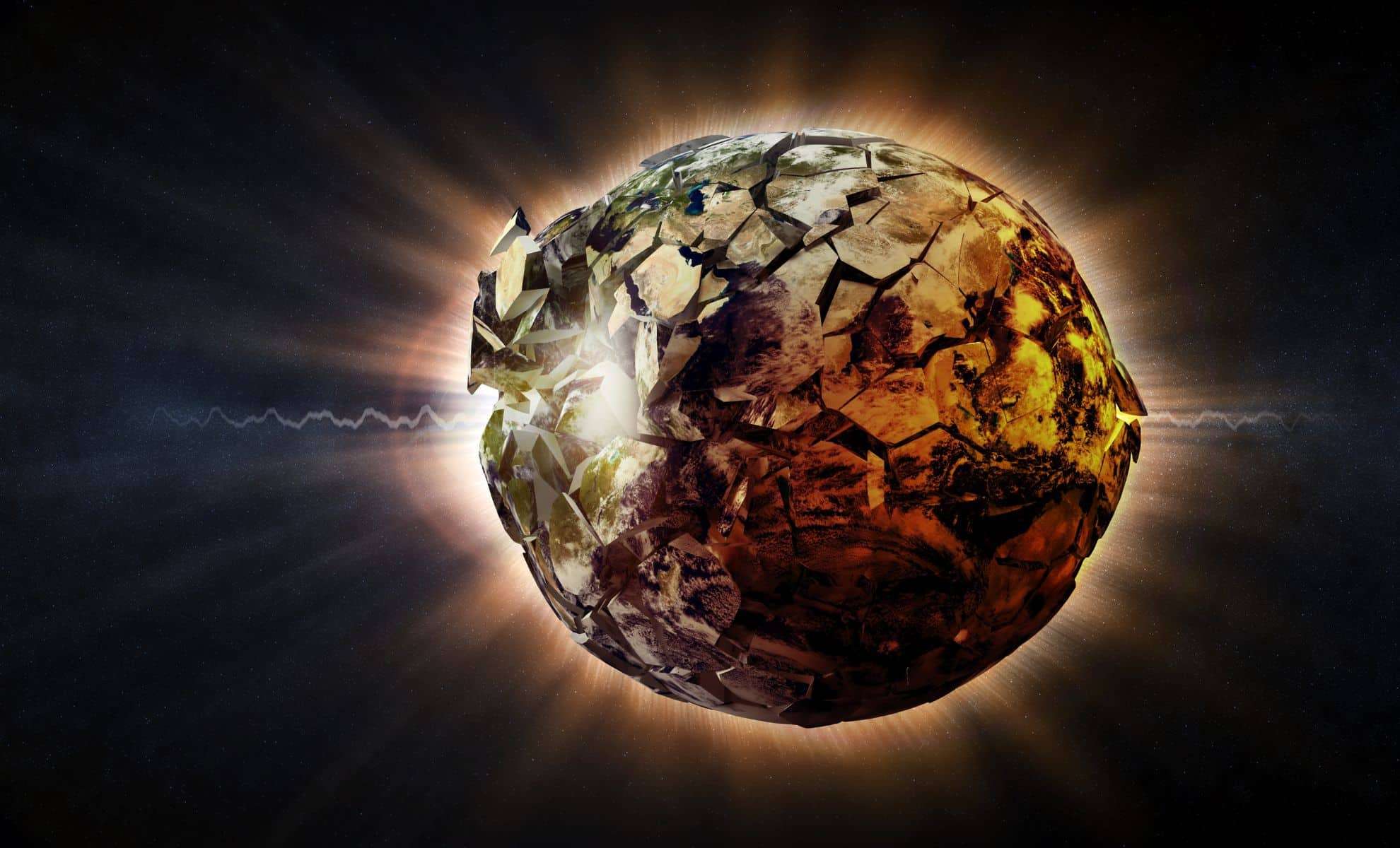
New insights from the James Webb Space Telescope (JWST) have significantly altered our perception of a planet's violent end that took place in 2020.
Initially, this event was thought to be a simple case of a star expanding as it aged, eventually engulfing its orbiting planet. However, recent evidence points to a much more intricate process.
Latest studies indicate that the planet itself may have contributed to its own destruction through complex gravitational interactions with its host star.

Webb Captures an Unprecedented Stellar Phenomenon
In May 2020, astronomers observed a rare and intense event occurring around 12,000 light-years away from Earth.
The scenario involved a planet seemingly being swallowed by its host star, which had expanded into a red giant. This event was first interpreted as a straightforward case of stellar expansion overtaking a neighboring planet.
Yet, the advanced infrared capabilities of the James Webb Space Telescope exposed a far more complex mechanism implicating the planet in precipitating its own demise.
Orbital Decay: A Key Factor in the Planet’s End
Research published on April 10, 2025, in The Astrophysical Journal challenges the notion of a passive destruction event.
Scientists propose that the planet underwent a gradual inward spiraling process called orbital decay, which brought it steadily closer to its star. This proximity eventually caused the star's outer atmosphere to strip away the planet's gaseous envelope, driving the planet toward its eventual obliteration.
Ryan Lau, the study’s lead researcher from the National Science Foundation’s NOIRLab, stated, “The remnant dust expelled by the star offers convincing proof of the events surrounding this planetary destruction.”
Discovery of a Heated Gas Ring and Dust Envelope
The JWST observations unveiled a remarkable ring of heated gas and a surrounding cloud of dust around the star.
These findings indicate that the planet was not merely consumed by the swelling star but actively contributed to the violent interaction.
As it approached the star, the planet’s encapsulating gases were stripped off, ejecting gas and dust into the stellar environment. This phenomenon produced the distinct structures captured in Webb’s images.
The unique ring formation results from gravitational forces at play as the planet encroached upon the star’s surface, highlighting how subtle orbital shifts can trigger catastrophic planetary outcomes.
Insights on the Devoured Giant
Researchers believe this planetary casualty was an enormous gas giant, potentially several times larger than Jupiter. Its large mass and composition made it especially susceptible to stellar gravitational forces.
These powerful interactions likely sped up the orbital decay, pulling the planet inexorably closer until it was finally engulfed.
The planet's substantial size played a crucial role in the dramatic and violent nature of its disintegration.
Massive planets have stronger gravitational engagements with their parent stars, which can accelerate processes like orbital decay, resulting in such cataclysmic events.
Studying this phenomenon offers astronomers a rare window into the life cycles of planets orbiting aging stars in distant solar systems.
As the James Webb Space Telescope continues to deliver groundbreaking cosmic data, discoveries like this broaden our understanding of planetary evolution and stellar dynamics.
- Categories:
- Space



0 comments
Sign in to Comment