
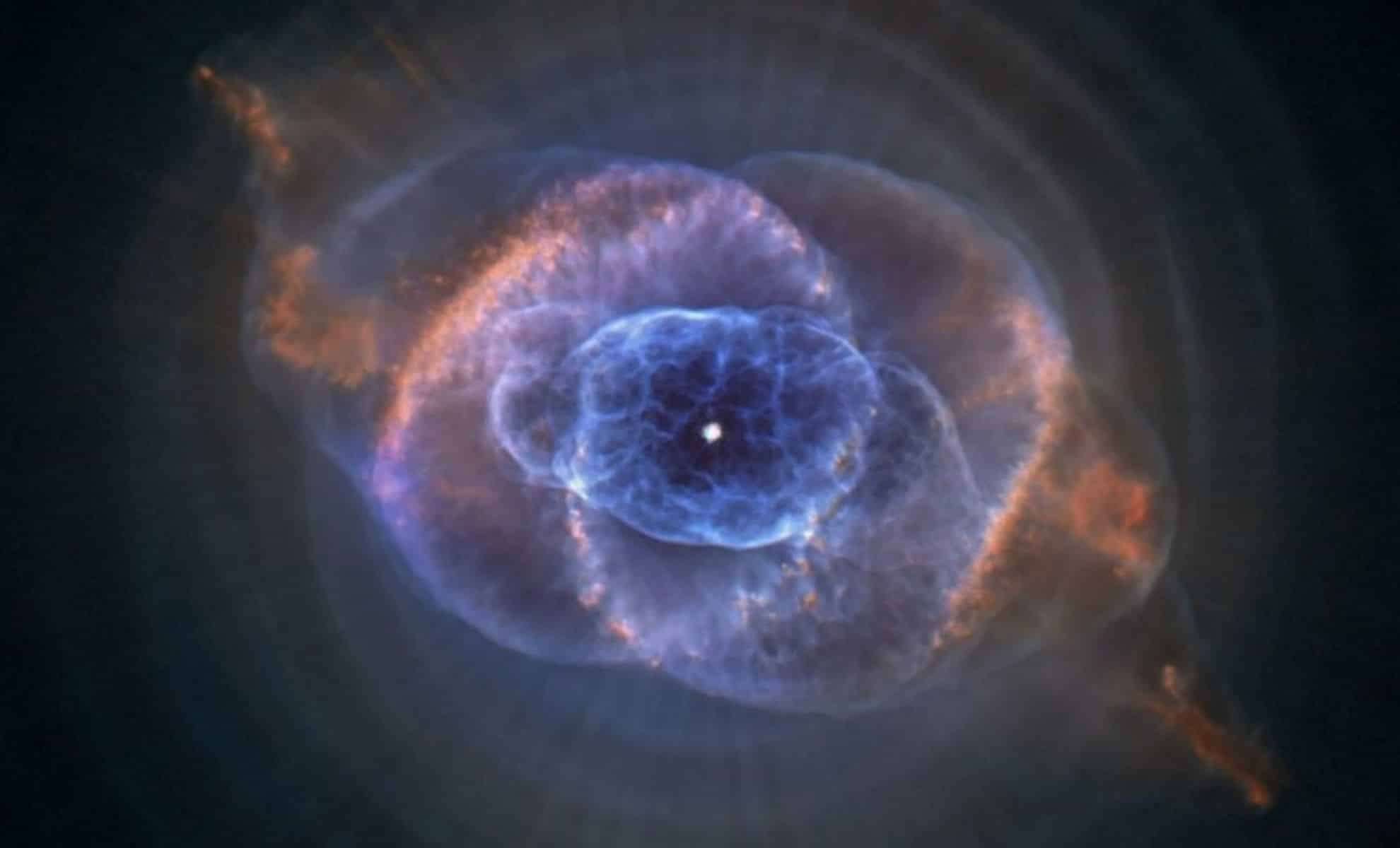
For ages, people have gazed up at the night sky, pondering the vastness and composition of the cosmos. One enduring mystery has been the idea of a center of the universe. Does a fixed point exist from which everything began? Could we pinpoint the core of all creation? Physicist Rob Coyne clarifies that such a center simply doesn't exist.
The Universe’s Expansion: A Paradigm Shift
About 100 years ago, when Albert Einstein introduced general relativity, most scientists believed the universe was unchanging and everlasting. The prevailing thought was that the universe was static, neither expanding nor contracting. Einstein himself initially favored this static model, reflecting the understanding of his era.
However, with the emergence of more powerful telescopes and deeper observations, astronomers discovered that the universe is expanding. Distant galaxies were found to be speeding away faster the further they were from us.

Revisiting Einstein’s framework, scientists realized that general relativity actually supported a universe that changes over time. This revelation fueled the acceptance of the Big Bang theory, highlighting that space itself is stretching rather than remaining fixed.
Why the “Center” Concept Is Misleading
At first glance, the expanding universe might seem to imply a central point from which everything spreads out, much like an explosion. But this is a common misconception. The universe doesn’t expand from a single center point.
Instead of galaxies moving through space, it's the space-time fabric itself that grows. This means the distance separating galaxies increases as space expands, not because galaxies are traveling outward from somewhere.
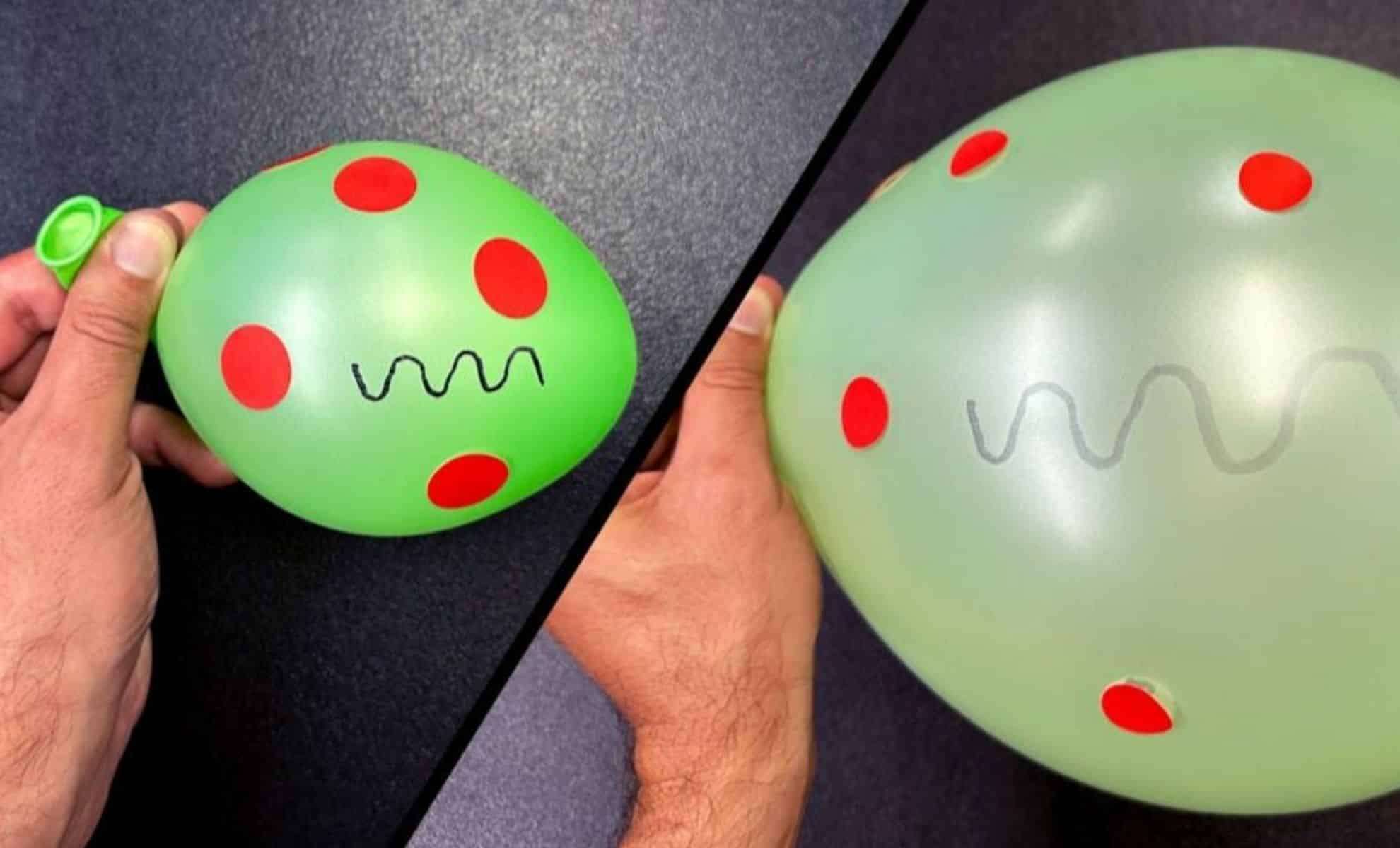
The Jet Propulsion Laboratory explains this with an analogy of a balloon adorned with dots. As the balloon inflates, the dots spread apart even though they stay glued to the surface. Similarly, galaxies remain situated in space while the spaces between them enlarge, creating the effect of galaxies receding from each other.
Space-Time: Understanding Dimensions Beyond Intuition
The balloon metaphor, while helpful, falls short because it is two-dimensional, whereas our universe encompasses four dimensions—three spatial dimensions plus time. Space and time form a combined framework known as space-time, complicating how we normally think about the cosmos.
As Coyne points out, “the thing we think of as the ‘center’ of the balloon is a point somewhere in its interior, in the air-filled space beneath the surface.”
Unlike the balloon’s interior, our universe has no 'inside' space to define a central location. Any direction you travel would not lead you to a focal center because no such point exists.
Rethinking Our Intuition About Space and Time
These ideas challenge common sense because they force us to revise how we view the relationship between space and time. In everyday life, we consider space static and time continuously flowing forward. But on the cosmic scale, space and time are intertwined as one entity.
This interconnection, called space-time, means that as the universe expands, it's not only space that stretches but also the interaction between space and time evolves—making the universe behave in ways that defy ordinary intuition.
- Categories:
- News








0 comments
Sign in to Comment