
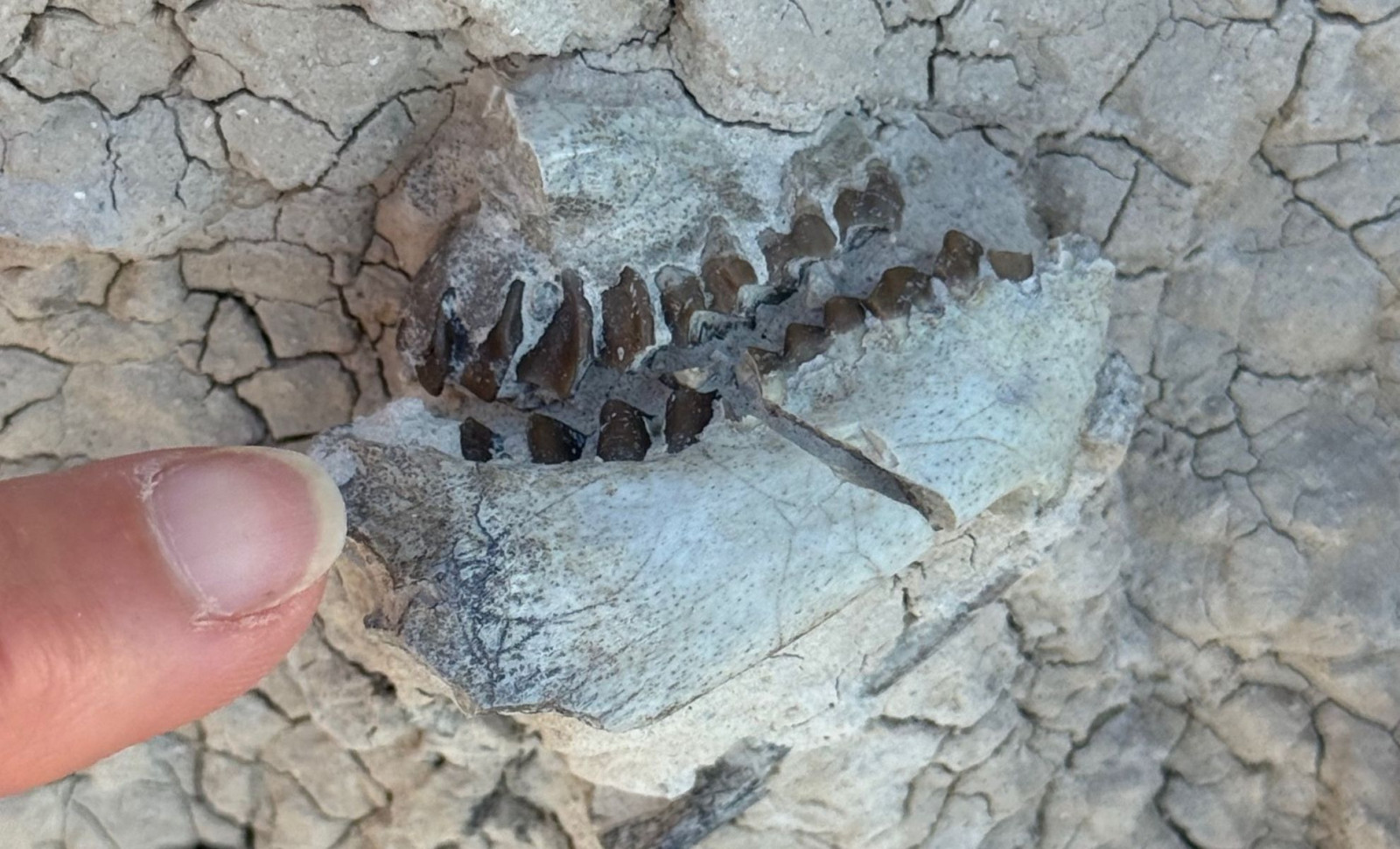
While trekking in South Dakota, a hiker stumbled upon a fossilized tooth row no bigger than a house key, uncovering a 16.3-million-year-old relic from the Badlands. This miniature fossil belonged to Leptauchenia, an unusual mammal that inhabited prehistoric North America long before humans appeared.
On August 1, 2025, Badlands National Park officials shared news of this remarkable find, which adds to the park’s extensive record of ancient life. The Badlands are renowned for their dramatic landscapes and exposed sedimentary rock layers, which act as a vast natural archive preserving prehistoric creatures through time.
Meet the Leptauchenia
Translating roughly as “small llama,” Leptauchenia was far from an ordinary llama. According to Badlands National Park, these creatures have been described by paleontologists as “monkey-faced little sheep with llama-like features.” They belonged to a now-extinct group called oreodonts, whose closest living relatives are camels.

“Oreodonts lived from the Middle Eocene through the end of the Miocene (from about 40 million to 5 million years ago). They were a type of animal called an artiodactyl, which is an even-toed hoofed mammal,” the authors wrote in a release featured on the U.S. National Park Service (NPS) website.
These plant-eaters once roamed across North America. While earlier theories suggested they lived near water, fossil research now supports that they thrived in drier habitats.
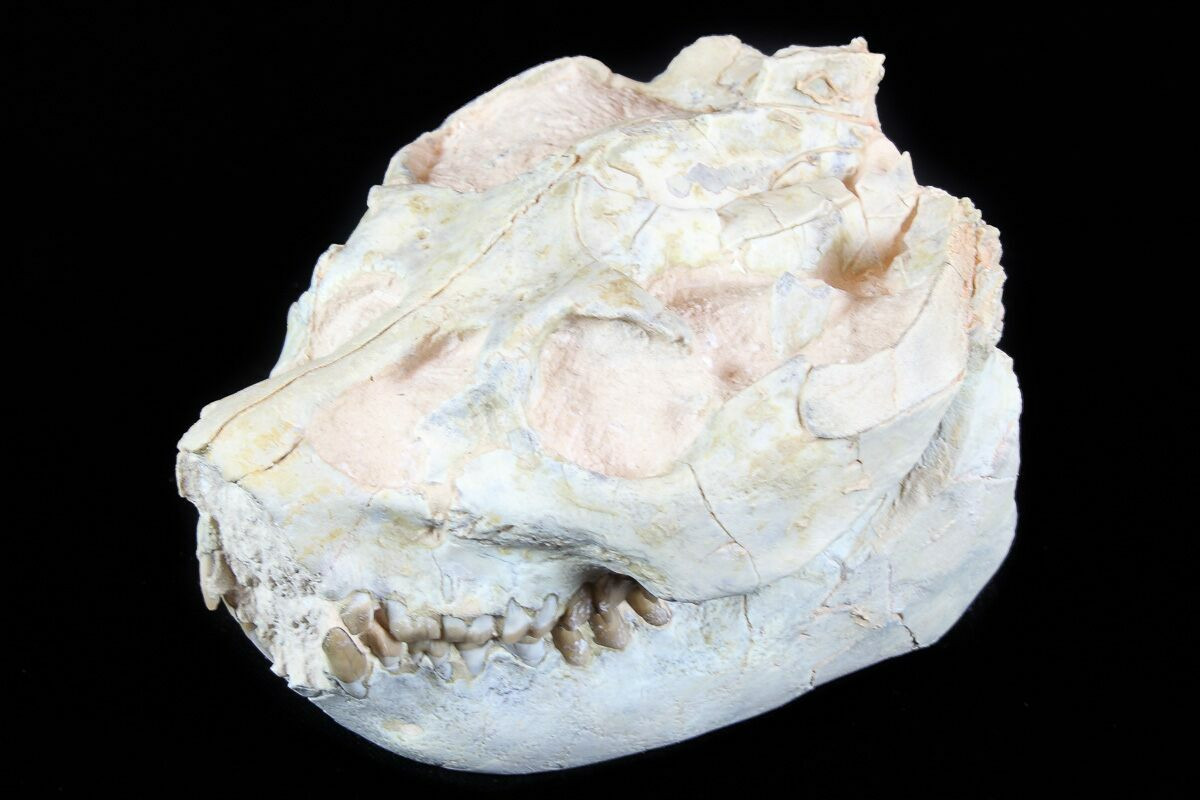
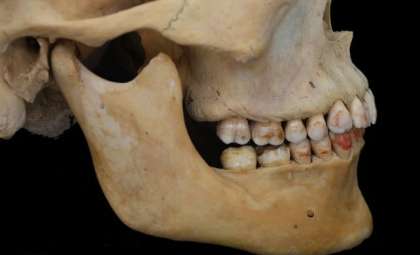
“We know this partially because of the shape of their teeth – being flat and low, oreodont teeth were meant for chewing and grinding plants,” they added.
FossilEra.com highlights that most Leptauchenia remains have been found in fossilized sand dunes, indicating these animals were well adapted to desert-like environments rather than freshwater settings.
A Fossil-Rich Landscape
Badlands National Park is a prime destination for finding ancient fossils. Oreodonts are the most frequently uncovered creatures here, making finds like this a common but exciting event. Erosion continuously exposes new fossils as layers of sedimentary rock wear away.
Situated in southwestern South Dakota, the park's modern dry, cracked soil tells the story of dramatic environmental shifts over millions of years, transforming the landscape from lush habitats into today’s arid terrain.
An Unexpected Paleontological Find by a Walker
As The Kansas City Star reports, the discovery of this grayish row of tiny teeth emerging from a butte thrilled both scientists and visitors. Park officials confirmed the specimen's identity in an August 1 Facebook announcement. Despite its small size, this fossil offers significant insight into the prehistoric world.
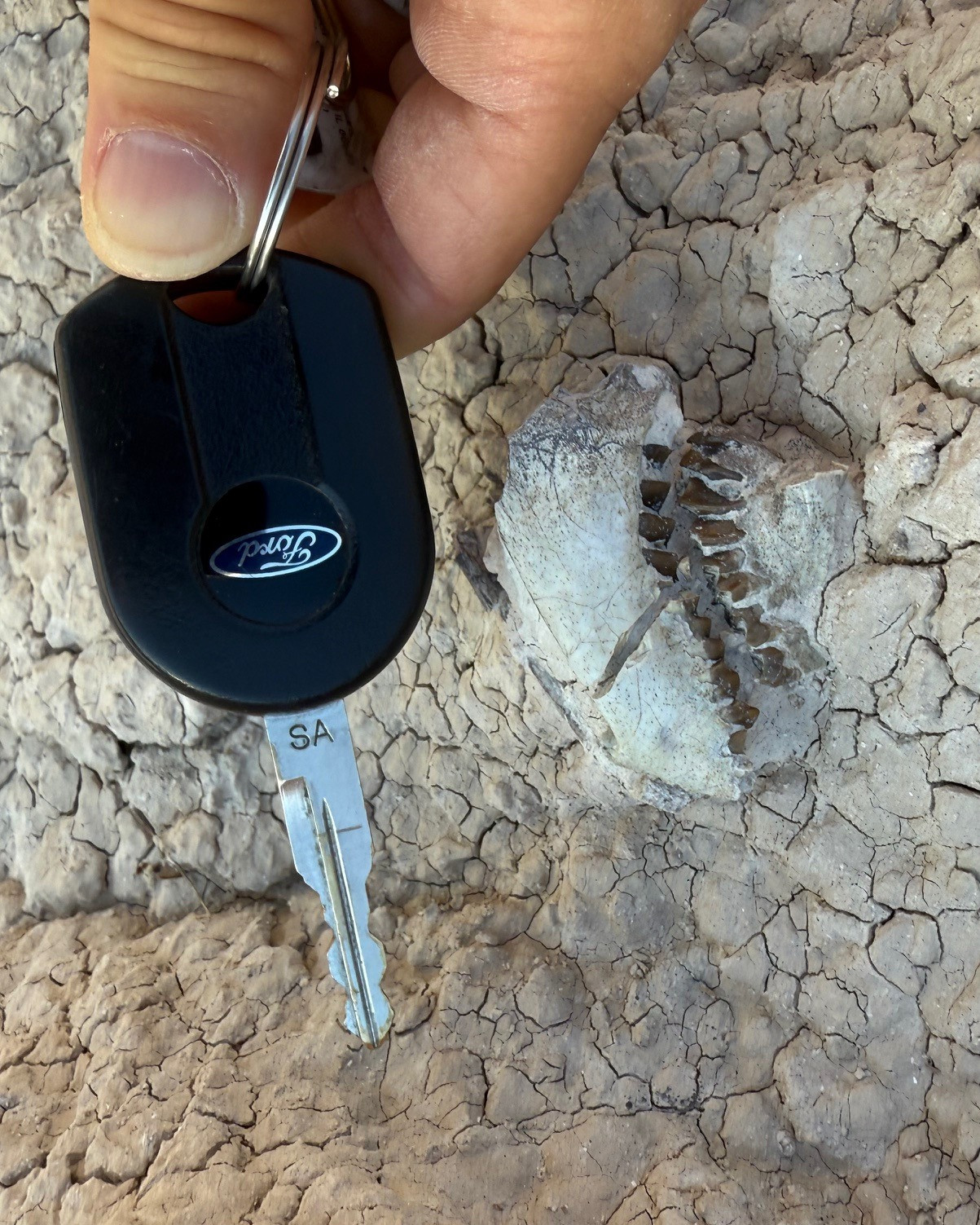
This find highlights the importance of public awareness regarding fossils and the protection of park lands. When hikers discover fossils such as teeth, bones, or fragments, reporting them to officials ensures their proper preservation and scientific study.
- Categories:
- Science







0 comments
Sign in to Comment