
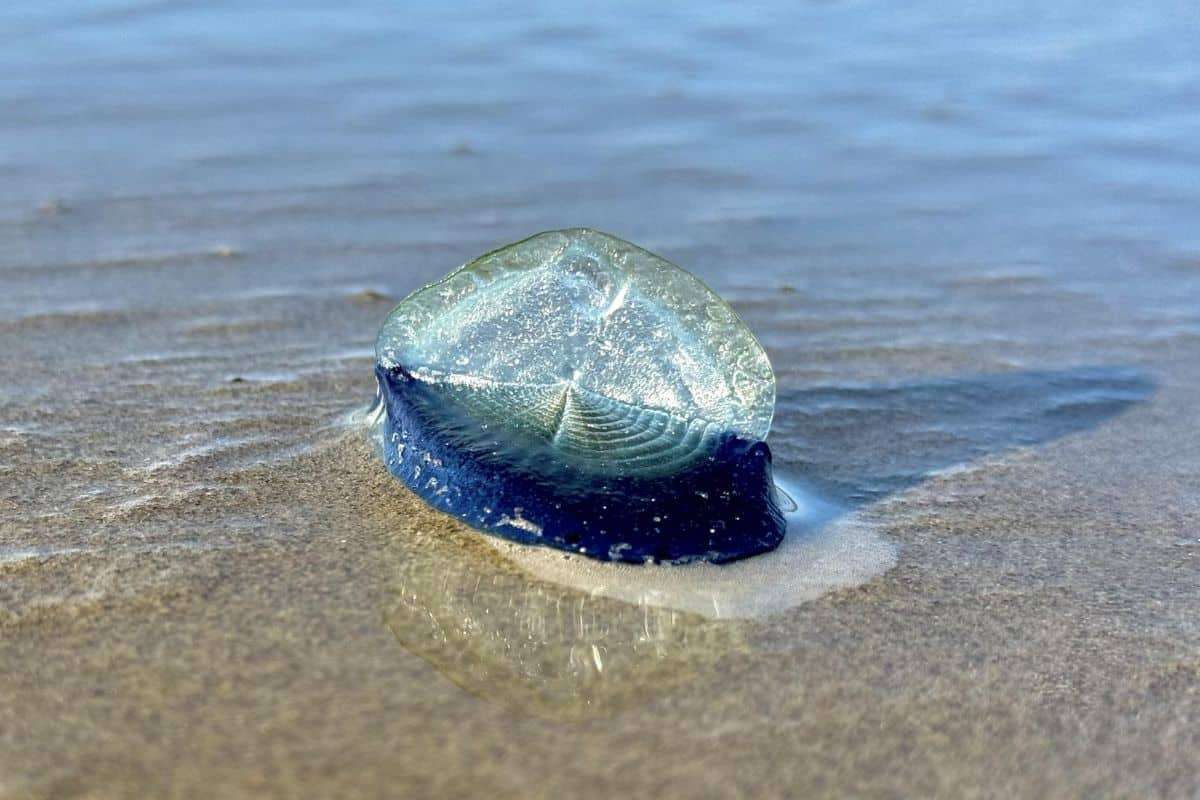
Recently, Northern California beaches have been covered by thousands of translucent blue creatures known as by-the-wind sailors (Velella velella). These sudden strandings occur due to shifts in seasonal ocean currents and winds, creating a mesmerizing natural display for visitors.
Meet the Velella Velella: Ocean Drifters Powered by Wind
Often mistaken for jellyfish, Velella velella are actually more closely related to the Portuguese man o’ war (Physalia physalis). Rather than single organisms, each is a floating colony made up of numerous polyps, each fulfilling a unique function.
Growing up to 4 inches (10 centimeters), their distinctive S-shaped sails allow them to glide effortlessly along the ocean’s surface, driven purely by wind currents. Hanging beneath are tiny tentacles that capture microscopic prey.
How Winds and Upwelling Cause These Mass Strandings
This surge of velella sightings corresponds with the West Coast entering upwelling season, an oceanographic event where cold, nutrient-rich deep waters rise to the surface and alter the marine ecosystem.
Jennifer Stock, an education specialist at the Greater Farallones National Marine Sanctuary, notes that these organisms act as natural markers of the changing seasonal winds and currents.
“The true start/end of that season shifts every year based on a wide set of variables, but the presence of velellas indicates a shift in winds and currents, and the velellas, which are propelled by wind/current alone, get directed to the beaches.”

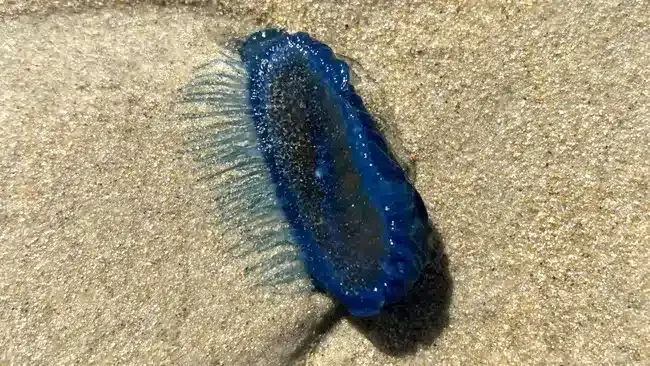
Stranded and Vulnerable
Once these by-the-wind sailors are washed ashore, they are unable to return to the sea as they lack any active means of movement. If the tide fails to carry them back, they perish and eventually desiccate under the sun.
Though their sting is mild compared to their more dangerous relatives, experts still recommend caution when encountering them. Handling may cause minor skin irritation, and it’s best to avoid contact with eyes or face afterwards.
Connection Between Strandings and Weather Patterns
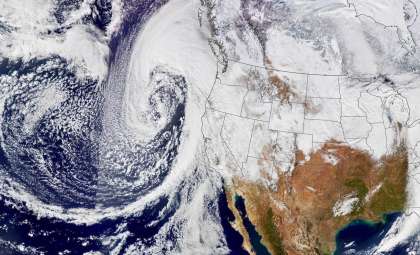
Live Science reports that recent northward winds and coastal storms have helped transport these delicate colonies toward the San Francisco Bay Area. Oceanographers anticipate that this phenomenon could persist as long as current weather trends continue.
Raphael Kudela, a marine scientist at the University of California, Santa Cruz, explains: “I would say if we get a nice high pressure system, which is generally associated with nice clear skies, but also upwelling, it’s going to really concentrate them just offshore.”
He continues, “And then all we need is a break in that — a low [pressure system] coming through or the high weakening — and then we would probably see a nice big raft of them come washing into the beaches.”
A Captivating but Temporary Ocean Display
While this mass arrival is a seasonal and familiar event, the vivid clusters of blue colonies lining the shore remain a captivating sight for beach visitors and marine observers alike. Kudela reflects, “It’s kind of cool to see,” adding, “They’re really beautiful.”
Their ethereal presence serves as a striking example of the dynamic interplay between atmospheric conditions, ocean currents, and marine ecosystems.
- Categories:
- News







0 comments
Sign in to Comment