

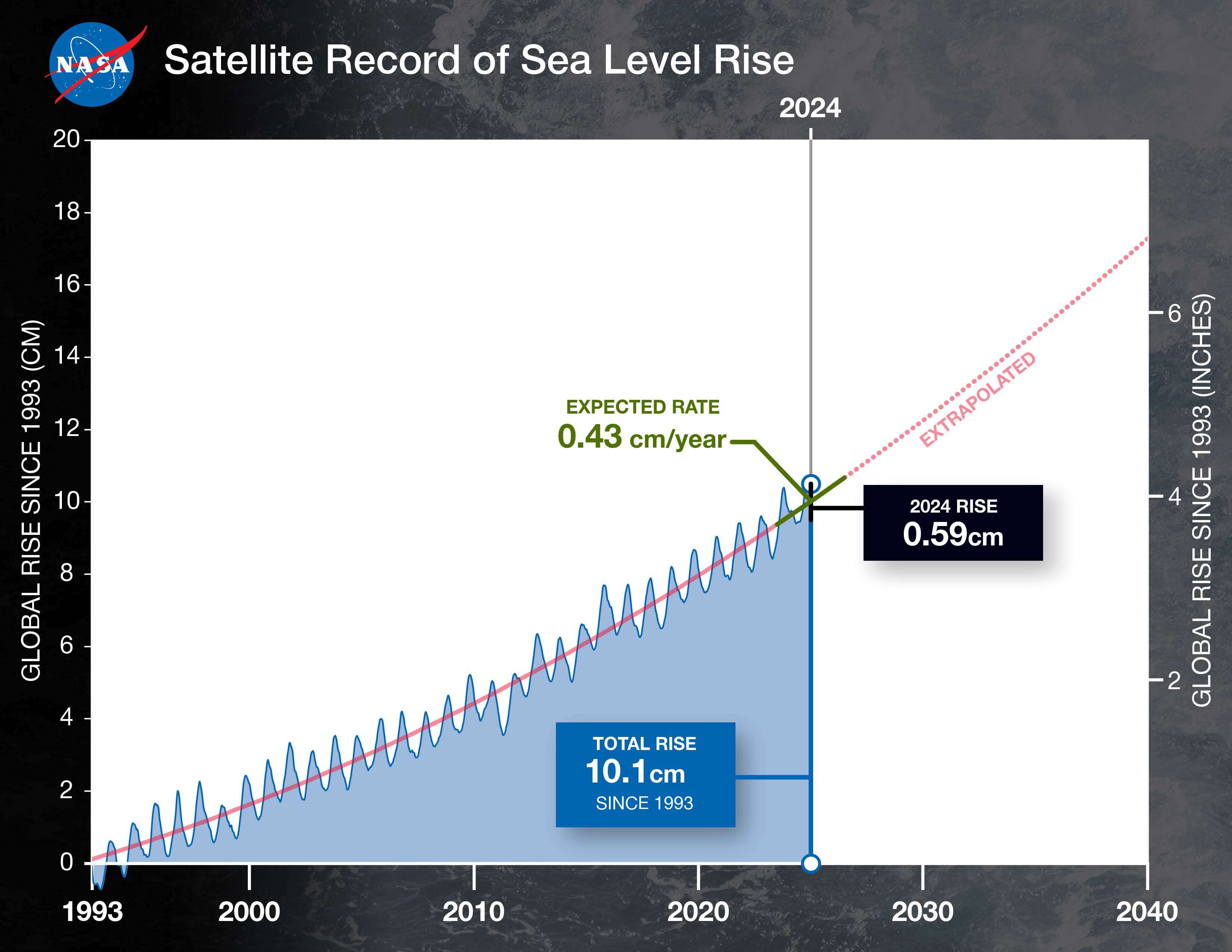
Recent findings from NASA expose a startling trend: in 2024, global sea levels increased at a rate surpassing previous expectations, alerting climate researchers to the intensifying effects of global warming. This abrupt rise, primarily caused by thermal expansion—where warming oceans cause seawater to expand—though only 0.59 cm, signals notable changes in the dynamics influencing sea level alterations and underscores significant shifts in oceanic patterns.
Data Reveal an Unforeseen Rise
This year, worldwide sea levels elevated by 0.59 cm, outpacing the anticipated 0.43 cm. This development has raised alarms among specialists, highlighting a transformation in the mechanisms driving sea level changes. Historically, melting glaciers and ice sheets contributed most to rising seas. Yet in 2024, thermal expansion became the predominant factor, accounting for approximately two-thirds of the increase, demonstrating how warming oceans now play a pivotal role.
NASA’s report illustrates the direct link between rising global temperature hikes and expanding ocean waters. As Earth’s temperatures climb, oceans absorb much of this heat, causing seawater expansion—a gradual yet increasingly influential contributor to sea level rise, shifting the impact balance away from melting ice towards oceanic warming processes.

The Warming Oceans and Their Far-Reaching Effects
Recorded as the warmest year on record, 2024 underscores the escalating danger posed by ocean heating. Oceans capture rising thermal energy, expanding seawater volume without requiring additional meltwater from ice melt, with severe consequences for coastal zones worldwide. Increasing sea levels intensify flooding and shoreline erosion, threatening habitats, infrastructure, and communities.
Thermal expansion extends beyond surface waters. Intensified storms including hurricanes and cyclones churn the ocean, mixing warm surface water with cooler depths. This vertical mixing enhances seawater expansion and is especially marked in regions experiencing El Niño events. Consequently, ocean warming not only quickens sea level rise but also complicates predictions of future ocean behavior.
The Growing Risk to Coastal Populations
Rapid sea level increases endanger coastal populations, exposing them to heightened risks of inundation and erosion. Densely inhabited and infrastructure-heavy areas such as Miami, New York City, and island nations like the Maldives face amplified vulnerabilities. Additionally, saltwater encroaches on freshwater reserves, jeopardizing vital aquifers and clean water access.
The rising seas also disrupt marine biodiversity. Increased ocean temperatures correlate with widespread coral bleaching and shifting marine habitats, jeopardizing the equilibrium of ocean ecosystems. These changes threaten fisheries and global food security as species distributions are altered.
Satellite Technology Key to Monitoring Ocean Changes
Critical to this understanding is NASA’s Sentinel-6 Michael Freilich satellite, launched in 2020, which provides precise measurements of global sea surface height. Alongside its upcoming counterpart, Sentinel-6B, this mission is essential in tracking ocean levels and refining forecasts of marine trends.
Building on the legacy of earlier ocean-monitoring satellite missions beginning with TOPEX/Poseidon in 1992, these instruments deliver invaluable long-term data. Their continuous observations enable researchers to better grasp ocean warming, sea level rise, and the overarching consequences of climate change.
- Categories:
- Science












0 comments
Sign in to Comment