
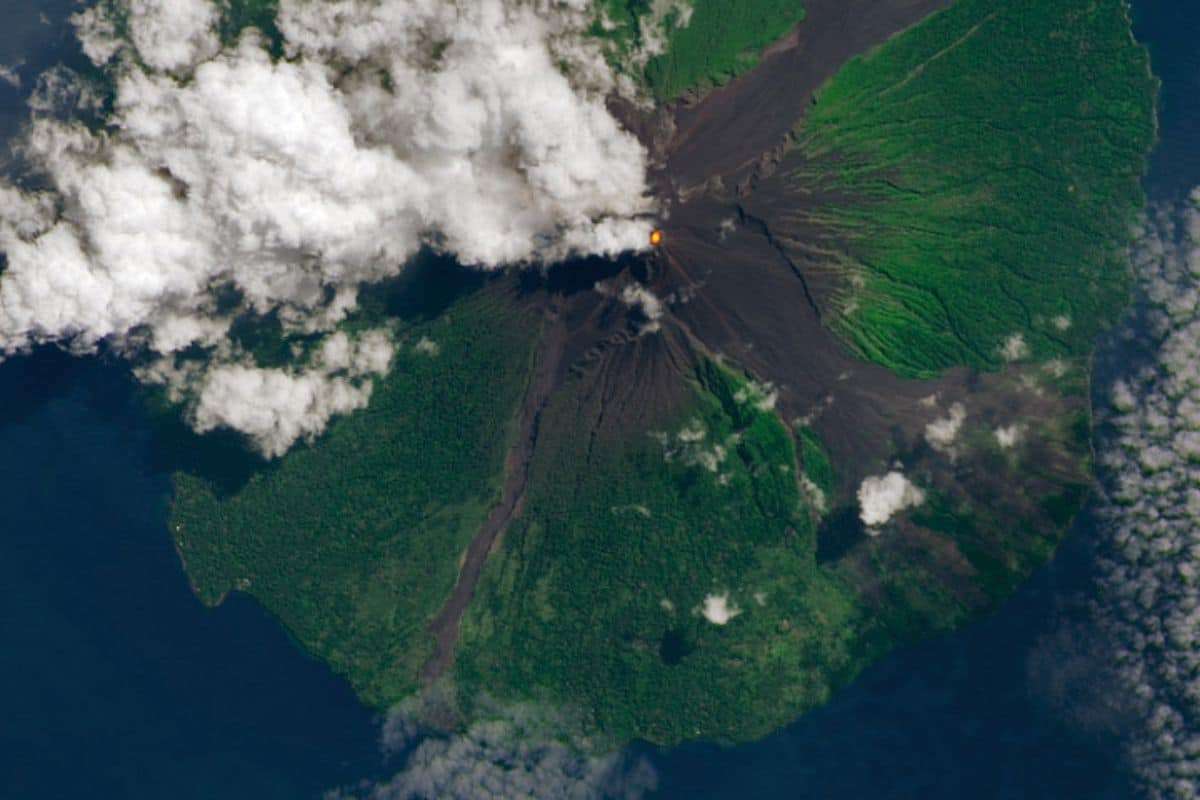
The Kavachi volcano, often dubbed the “sharkcano,” has recently erupted, sending an enormous plume of discolored water rising through the Pacific Ocean, captured vividly from space.
Situated in the Solomon Islands, this submarine volcano is well-known for its frequent eruptions and a unique habitat that supports species like the scalloped hammerhead and silky sharks, which have adapted to survive in its harsh, acidic waters.
A Fiery Force Hidden Below the Surface
Located roughly 15 miles (24 km) south of Vangunu Island, Kavachi ranks among Earth’s most active underwater volcanoes. Although its summit rises 3,600 feet (1,100 meters) from the ocean floor, it remains submerged just 65 feet (20 meters) beneath the waves. The volcano’s name stems from the sea deity of the Vangunu people, known as “Rejo te Kvachi” or “Kavachi’s Oven.”

On May 14, 2022, NASA’s Landsat 9 satellite documented an impressive image of a vast plume erupting from Kavachi, marking activity that began in October 2021 and persisted for weeks. The Smithsonian’s Global Volcanism Program reports continued eruptions, with similar plumes observed in August 2023 and April 2024.
A Thriving Ecosystem in a Hostile Environment
One of the most remarkable aspects of Kavachi is its marine biodiversity. In 2015, explorers documented sharks swimming within the active crater. Specifically, they spotted scalloped hammerhead sharks (Sphyrna lewini) and silky sharks (Carcharhinus falciformis) navigating the extreme conditions almost undisturbed.
The volcanic waters are intensely hot and acidic, laden with particulate matter, conditions intolerable to most wildlife. Researchers speculate these sharks may possess adaptations that help them sense upcoming eruptions, providing enough time to flee.
Explosive Activity and Fleeting Islands
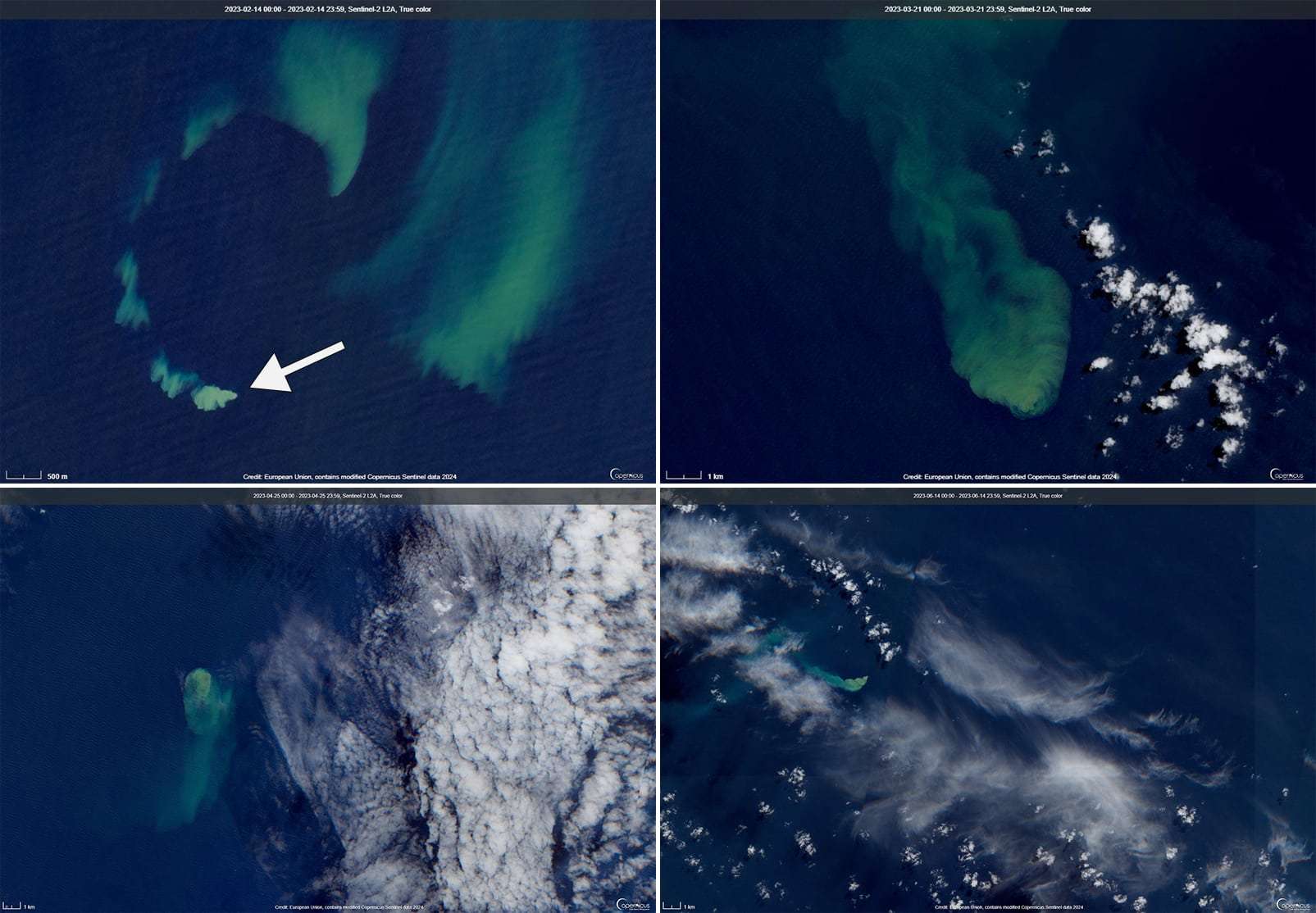
Kavachi’s eruptions are classified as phreatomagmatic, involving violent steam explosions when magma meets seawater, propelling a chaotic mix of superheated water, ash, molten rock, and lava fragments. The resulting plume turns nearby waters an unsettling brown-green color.
The volcano’s eruptions can be so forceful that they create temporary islands. On several occasions, new landforms spanning up to half a mile (1 km) wide have emerged, only to submerge shortly thereafter. A similar phenomenon occurred in Japan in 2023, when an underwater blast formed a transient island before the ocean reclaimed it.
The Future of the Sharkcano
Given Kavachi’s unpredictable nature, further eruptions seem inevitable. Local communities frequently witness steam and ash rising from the ocean surface, signaling persistent volcanic activity beneath the waves.
The presence of resilient sharks and other sea creatures in this extreme habitat challenges current knowledge about life in deep-sea ecosystems. Ongoing research seeks to understand how these species endure and adapt to such intense heat and acidity.
- Categories:
- News







0 comments
Sign in to Comment