
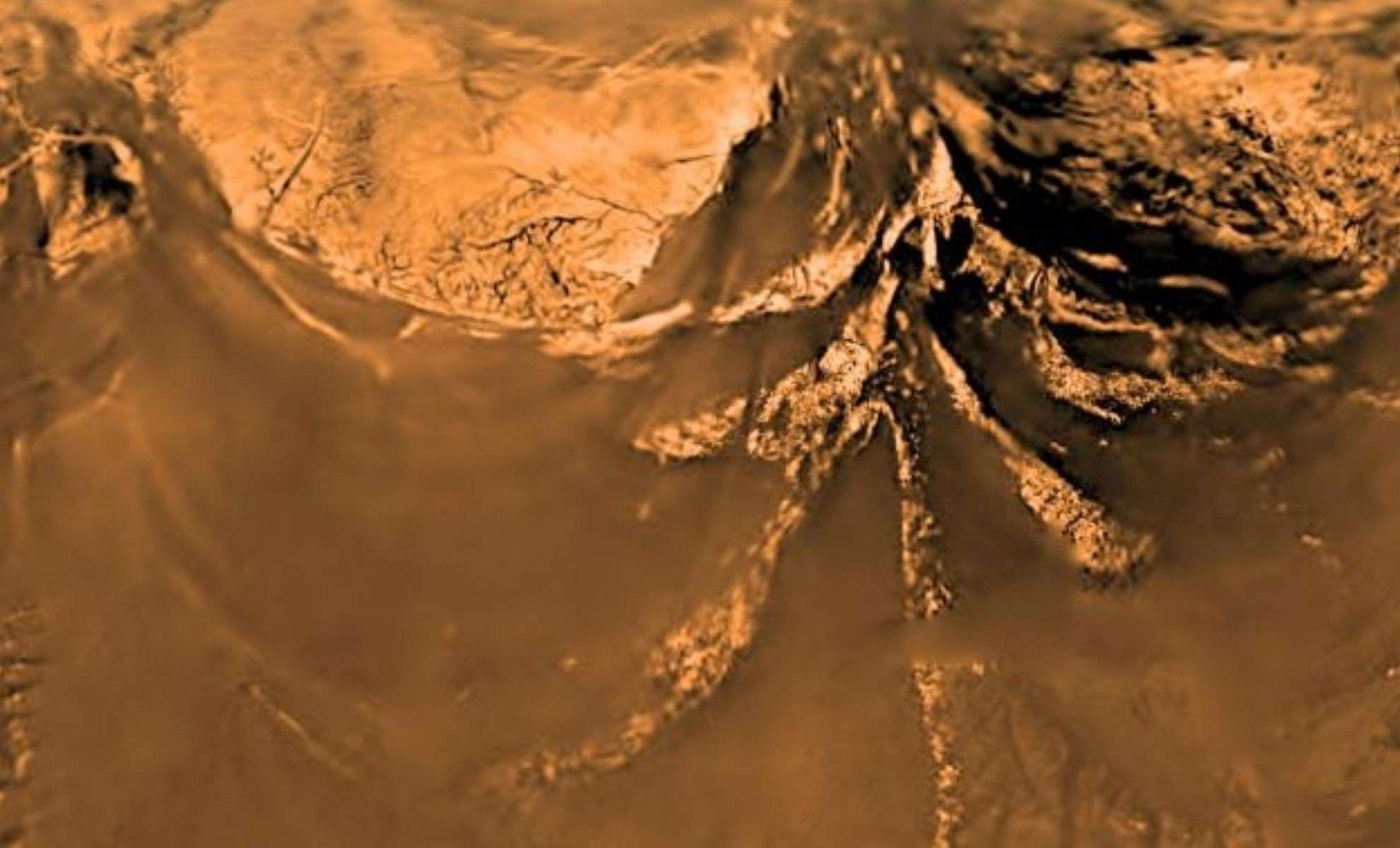
In the distant reaches of our solar system, Titan, Saturn’s largest moon, has astonished researchers by revealing an unusual chemical interaction. A recent publication in the Proceedings of the National Academy of Sciences (PNAS) details how polar and nonpolar molecules, which typically repel each other, can surprisingly crystallize together under extreme cold, defying classical chemistry principles. This discovery challenges existing theories about molecular behavior and prompts new inquiries into Titan’s unique chemical environment.
Bridging Chemistry and Cosmic Conditions
A collaborative investigation spearheaded by Chalmers University of Technology and NASA’s Jet Propulsion Laboratory reveals how hydrogen cyanide, a strongly polar compound, can bond with nonpolar hydrocarbons like methane and ethane. These interactions occur under conditions analogous to the frigid surface of Titan, indicating potential novel molecular assemblies in places once considered chemically restrictive.
“Hydrogen cyanide is found in many places in the universe—for example, in large dust clouds, in planetary atmospheres, and in comets,” the researchers noted.
Add Cosmo Herald as a Preferred Source

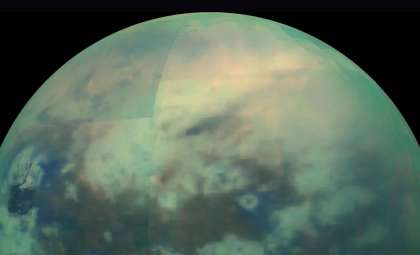
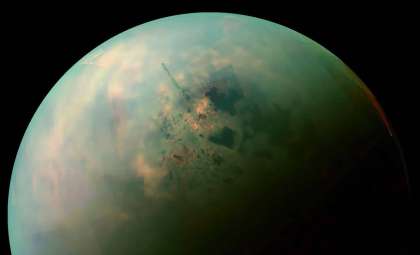
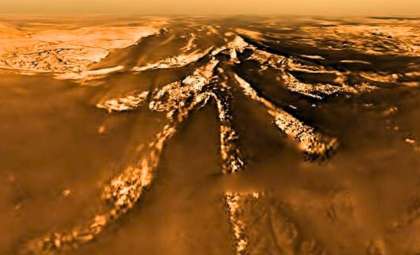
On Titan, where temperatures plunge to nearly -180°C, molecules display interactions that challenge standard expectations. The moon’s terrain—featuring seas, dunes, and a thick orange smog—bears resemblance to Earth's primordial landscape. As India Today highlights, Titan offers a unique window into an environment similar to early Earth billions of years ago.
Challenging Chemistry: When Polar Meets Nonpolar
The heart of this research confronts one of chemistry’s fundamental truths: polar and nonpolar substances generally do not mix. This principle explains phenomena on Earth, such as why water and oil separate. Yet, under Titan’s extreme cold of roughly -180°C, this rule no longer holds.
Phys.org reports that in lab experiments replicating Titan’s atmospheric conditions, scientists combined hydrogen cyanide with liquid methane and ethane. Unexpectedly, these concoctions formed stable co-crystals containing both polar and nonpolar molecules bonded together in solid form.
“Can the measurements be explained by a crystal structure in which methane or ethane is mixed with hydrogen cyanide? This contradicts a rule in chemistry,” said Martin Rahm, associate professor at Chalmers.
Through spectroscopy, researchers confirmed that while molecular chemistry remained intact, the structural arrangement inside the crystals was novel. Advanced computer models further demonstrated these formations are stable and likely to arise under Titan-like low temperatures.
New Molecular Arrangements Shape Titan’s Landscape
The formation of these co-crystals could play a key role in Titan’s distinctive geology, including its methane lakes and vast dune systems. The moon’s intricate surface features may partly result from the accumulation and behavior of these combined molecular structures over time.
“The discovery of the unexpected interaction between these substances could affect how we understand Titan’s geology and its strange landscapes of lakes, seas and sand dunes,” said Rahm, as cited by Phys.org.
Scientists have long been curious about the fate of the abundant hydrogen cyanide in Titan’s atmosphere once it settles onto the moon’s surface.
The recent analysis proposes that instead of remaining as separate deposits, hydrogen cyanide may integrate with hydrocarbons within co-crystalline structures. NASA’s upcoming Dragonfly mission, set to reach Titan by 2034, could potentially confirm whether these compounds exist naturally on the moon or are unique to laboratory conditions.
- Categories:
- Space




0 comments
Sign in to Comment