
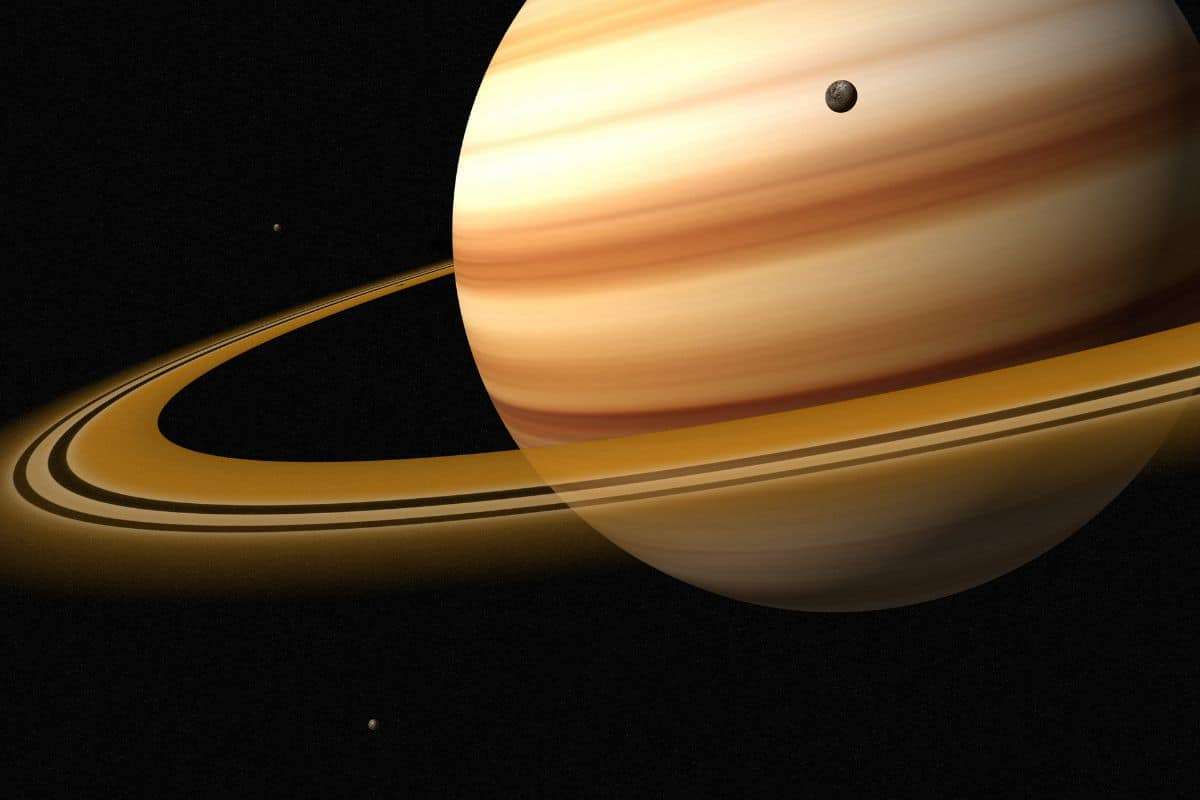
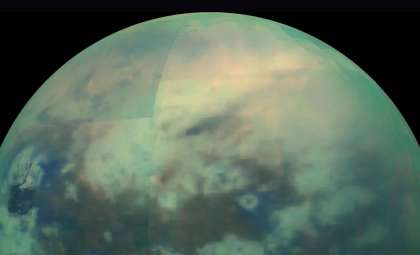
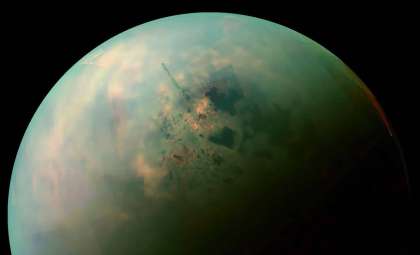
Titan, Saturn’s largest moon, has attracted significant attention as a candidate for extraterrestrial life due to its thick atmosphere, rich organic chemistry, and liquid bodies on the surface. These factors have positioned Titan as a prime subject in the search for life beyond Earth.
Distinctive Attributes of Titan and Its Potential for Hosting Life
Scientists are intrigued by Titan because of its distinct features that resemble certain Earth-like properties. It is unique in our solar system for having a dense atmosphere dominated by nitrogen and methane. Such an atmosphere supports chemical reactions capable of producing complex organic molecules.
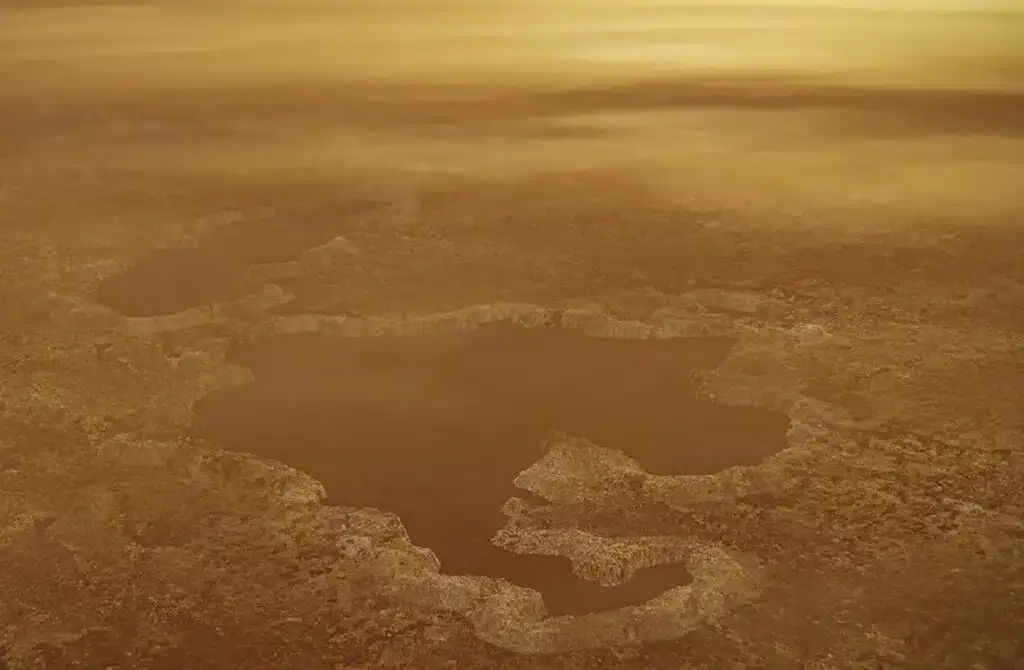
Unlike Earth, Titan’s lakes and seas consist of liquid methane and ethane, creating a very different but intriguing environment. Beneath its frozen surface lies a subsurface ocean of liquid water, and many researchers have considered the possibility that this hidden water could sustain life forms.

Recent Findings Temper Optimism About Life on Titan
However, according to a new study led by Antonin Affholder at the University of Arizona, the likelihood of life existing on Titan may be much lower than previously anticipated.
This research explored whether simple microbial life could survive on Titan by utilizing fermentation, a metabolism that doesn’t depend on oxygen—relevant given Titan’s lack of free oxygen.
Glycine was identified as a potentially vital organic molecule that might support life if transported to Titan’s subterranean ocean. The team, however, found that the transfer of glycine from the surface to the liquid ocean beneath is extremely limited.
Ice Layer Prevents Organic Compounds from Reaching Ocean
A major challenge for life on Titan is the thick shell of ice covering its ocean. This ice, measuring between 50 and 200 kilometers (31 to 124 miles) thick, acts as an effective barrier, obstructing the movement of organic molecules from the surface into the underwater habitat that life might colonize.
Despite the surface’s abundance of organic materials, their ability to penetrate the icy crust to reach the ocean is severely restricted.
The Planetary Science Journal notes that the glycine availability in the liquid water below could sustain only a minuscule amount of carbon—approximately 7.5 kilograms (16.5 pounds). This quantity is far too small to support a robust ecosystem.
An Extremely Sparse Biosphere Scenario
Should life be present on Titan, this study concludes it would exist in extremely low densities. The biosphere might contain fewer than one cell per liter of water throughout Titan’s massive underground ocean. To conceptualize, even the entire ocean would support only a sparse population impossible to form a complex living system.
Affholder commented, “A biosphere of this scale would average less than one cell per liter over Titan's expansive ocean.” This highlights the remote chances of discovering a detectable or sustainable biological community on the moon.






0 comments
Sign in to Comment