
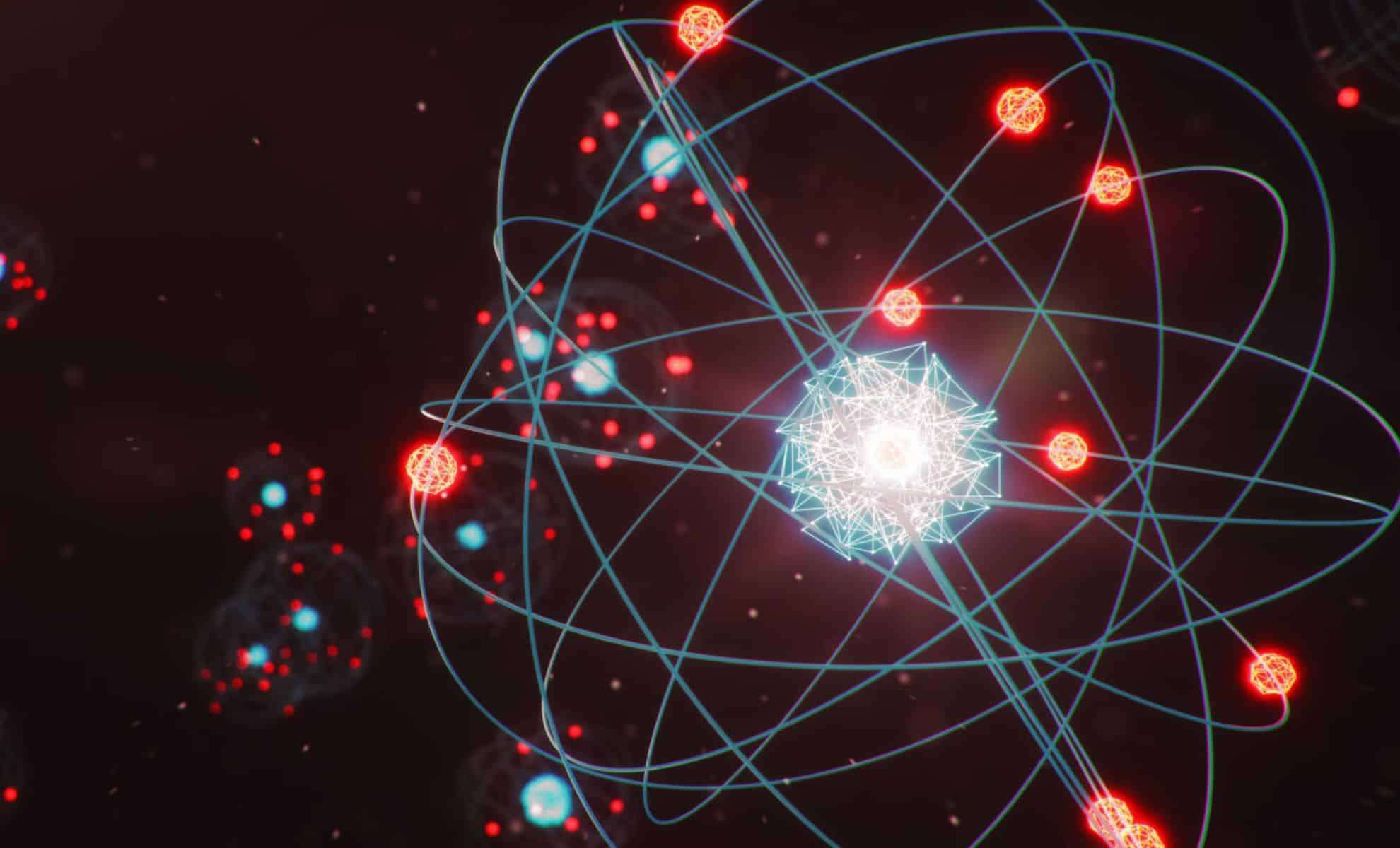
Scientists at the University of Jyväskylä in Finland have identified a surprising irregularity—a distinct “bump”—in the nuclear binding energies of lanthanum isotopes. This novel finding overturns prevailing nuclear physics assumptions and prompts a reevaluation of atomic nucleus composition. The breakthrough came through highly precise mass measurements of neutron-heavy lanthanum isotopes, leveraging state-of-the-art nuclear mass spectrometry tools. These results carry significant weight for astrophysics, offering fresh perspectives on the formation of heavy elements via the r-process, responsible for elements such as gold and platinum during cataclysmic events like neutron star collisions.
The anomaly emerges specifically as the neutron count shifts from 92 to 93, implying a sudden alteration in nuclear configuration that existing theoretical models fail to predict. The research team achieved this by deploying the JYFLTRAP Penning trap mass spectrometer to ascertain the exact masses of six different lanthanum isotopes.
The Significance of the Nuclear Anomaly
This newly uncovered nuclear bump poses substantial challenges for existing astrophysical frameworks and impacts the calculation of neutron-capture reaction rates. These rates are vital for understanding how rare-earth elements emerge in neutron star merger conditions. The r-process, occurring in these extreme cosmic environments, is fundamental to the universe's heavy element composition. A key aspect involves determining neutron separation energies, which indicate the energy needed to remove a neutron from the atomic nucleus.

The unexpected behavior identified by the researchers suggests current models are insufficient. Improved neutron-capture rate calculations from this work enhance our comprehension of the r-process's rare-earth element production, yet they also highlight the necessity for further model refinements.
“It gives information on the structure of the nucleus and is an essential input to calculate astrophysical neutron-capture rates for the rapid neutron capture (r) process taking place at least in neutron-star mergers, as evidenced, e.g., by the kilonova observation from the merger GW170817,” explains Kankainen.
Ongoing research aims to clarify the nuclear structure behind the bump by employing additional techniques like laser and nuclear spectroscopy to gain deeper insights into this phenomenon.
Highlights From the Lanthanum Isotope Mass Research
Broader Consequences for Astrophysics
The nuclear bump discovery extends beyond atomic-scale physics, potentially revolutionizing our grasp of astrophysical element formation. Should this irregularity stem from a shift in nuclear structure, it promises to illuminate processes that synthesize elements heavier than iron, particularly in neutron-star mergers.
Given the essential role of neutron-rich isotopes like lanthanum-152 and lanthanum-153 in the r-process, this observation may prompt significant revisions in astrophysical theories. Researchers plan to continue exploring this nuclear peculiarity with sophisticated experimental and theoretical tools, aiming to enhance our understanding of how heavy elements shape cosmic evolution.
“After I did the mass data analysis and calculated the two-neutron separation energies, I was surprised to find this feature. None of the current nuclear mass models can explain it. There are some hints it could be caused by a sudden change in the nuclear structure of these isotopes, but it will require further investigations with complementary methods, such as laser or nuclear spectroscopy,” says PhD researcher Arthur Jaries from the University of Jyväskylä.
This revelation marks only the beginning of a journey toward deeper knowledge about heavy element origins and the forces driving the universe’s most cataclysmic phenomena.
Future Directions in Nuclear Research
Upcoming studies will employ complementary approaches such as laser spectroscopy and nuclear resonance techniques to probe lanthanum isotopes’ structural complexities and uncover the root cause of the nuclear bump. These efforts will support the refinement of neutron-capture rate models and improve predictions about neutron-rich isotope behavior in astrophysical contexts.
As nuclear models evolve under the influence of these new findings, they will shed light on the processes forming heavy elements and refine our understanding of stellar dynamics and cosmic events like neutron star mergers. The continued advancement of this research could unravel fundamental questions about the universe’s formation and evolution.
- Categories:
- Physics










0 comments
Sign in to Comment