
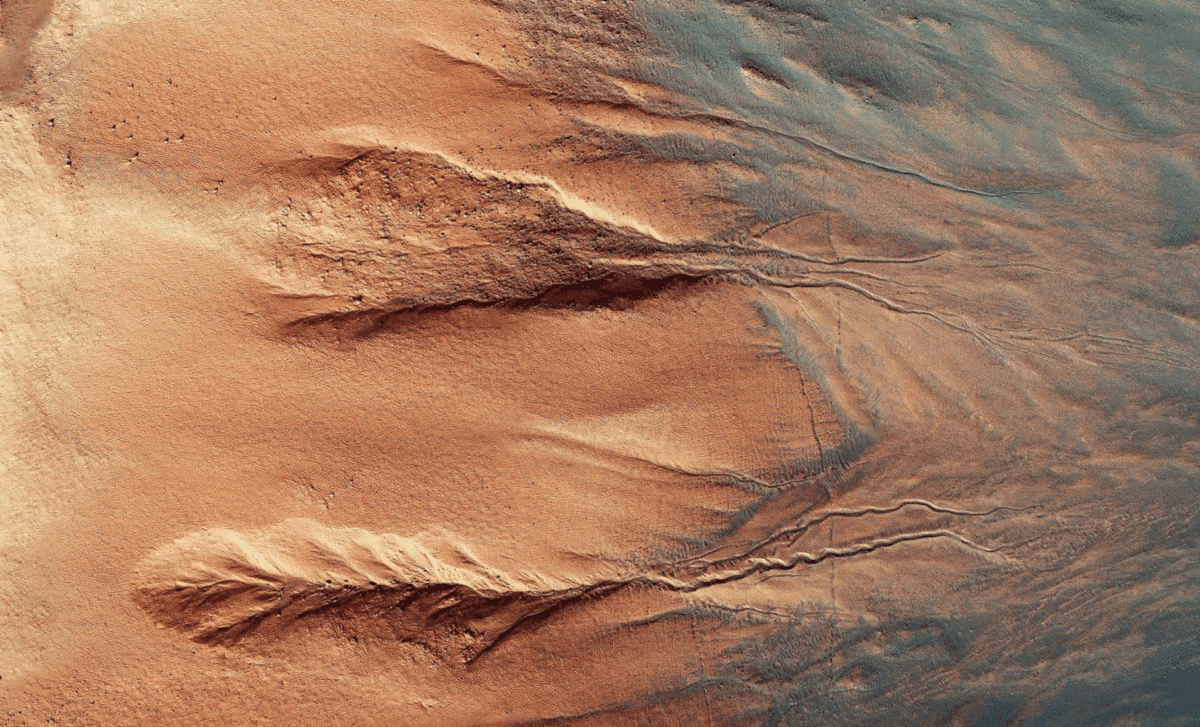
For years, Mars has captivated researchers with its enigmatic gullies etched across vast sandy dunes. These elongated formations initially hinted at the possibility of ancient flowing water or even signs of past life. Yet, recent investigations point to an unexpected agent behind these distinctive landscapes: dry ice. Despite the planet’s frigid, barren conditions, frozen carbon dioxide on Mars appears to be reshaping its surface in fascinating ways. A revolutionary study sheds light on this unusual mechanism, offering fresh perspectives on planetary geology.
Decoding the Enigma of Martian Gullies
When NASA’s robotic explorers first observed these gullies, the resemblance to terrestrial riverbeds led scientists to connect them with liquid water activity. However, the extreme cold on Mars, with winter temperatures reaching as low as minus 190°F (minus 123°C), makes the stable presence of liquid water nearly impossible. This begs the question: what actually carves these intriguing channels?
The answer lies in a peculiar natural phenomenon tied to Mars’ thin, CO₂-rich atmosphere. During the harsh Martian winters, carbon dioxide condenses into layers of dry ice blanketing the terrain. As temperatures rise with the arrival of spring, this solid CO₂ sublimates directly into gas—bypassing the liquid phase entirely. This rapid phase change generates pressure capable of sculpting the landscape.

Dry Ice: Mars’ Subtle Landscape Shaper
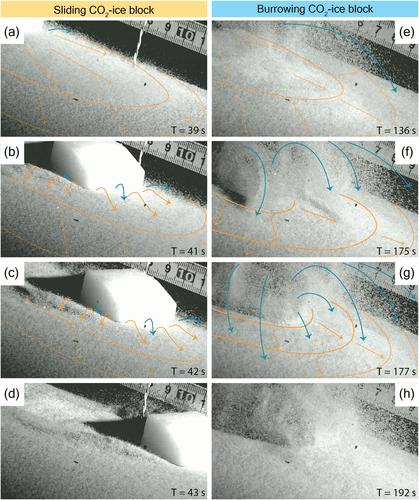
Leading this breakthrough, Dr. Lonneke Roelofs of Utrecht University and her team recreated Martian environmental conditions in laboratory settings. Their results revealed an extraordinary process: as dry ice sublimates, the released gas builds pressure beneath the ice blocks, blasting surrounding sand outward.
This phenomenon drives the movement of dry ice chunks sliding down dune slopes, gouging deep gullies along their paths. Previously unseen in lab conditions, this mechanism now offers a compelling explanation for the Martian gullies’ formation.
Seasonal Dynamics Behind Gully Creation
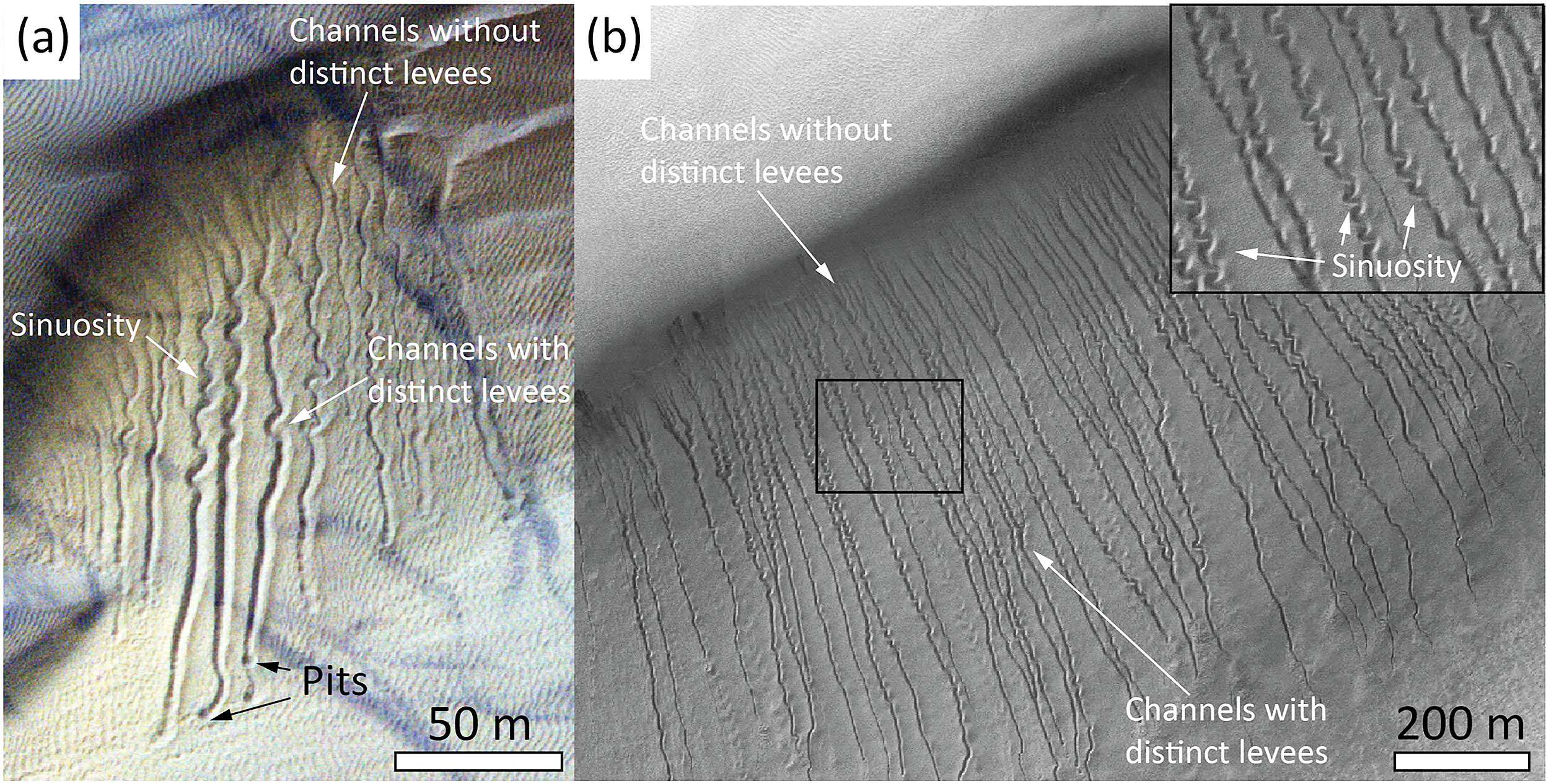
Understanding this process requires examining Mars’ seasonal cycles. Winter causes thick CO₂ ice to form, especially on colder, shaded dune faces. Come springtime, as temperatures climb, much of this ice sublimates away. However, residual dry ice fragments trapped in shaded pockets may detach and slide down slopes, carving the distinctive gullies observed.
By utilizing a specialized “Mars chamber” at the Open University, researchers successfully replicated these slope conditions. Blocks of dry ice pictured descending similarly carved distinct channels in the sand, validating the sublimation-driven erosion hypothesis.
“After finding the right slope, we finally saw results. The CO2 ice block began to dig into the slope and move downwards, just like a burrowing mole or the sandworms from Dune,” commented Simone Visschers, a master’s student working on the project.
A New Chapter in Planetary Geology
This discovery revolutionizes how we interpret geological processes beyond Earth. Mars’ distinctive environment—its carbon dioxide atmosphere and severe cold—enables surface shaping mechanisms unseen on our home planet.
“Mars is our nearest neighbor. It is the only rocky planet close to the ‘green zone’ of our solar system. This zone lies exactly far enough from the Sun to make the presence of liquid water possible, which is a prerequisite for life,” explained Roelofs.
Beyond the hunt for water, exploring these Martian gullies challenges current geological models. Roelofs notes that investigating landscapes shaped under alien conditions invites new questions and reveals insights applicable to Earth’s own geological phenomena.
Understanding Mars’ gullies helps to rethink planetary geology, broadening our approach to interpreting terrain evolution on both planets.
- Categories:
- News




0 comments
Sign in to Comment