

Unlike many animals, human reproductive activity doesn’t align with a specific season. Babies are born year-round, couples engage in relationships across all months, and reproduction isn’t confined to a limited time. The concept of a distinct mating season in humans initially seems misplaced.
However, birth data have revealed some intriguing patterns. Notably, in many Western nations, a surge in births occurs in September, hinting at conception peaks in late December. This observation has often led to speculation that environmental factors such as cold weather, reduced daylight, or increased indoor activity during winter might influence human reproduction.
Yet, this explanation grows less convincing when broader patterns are considered. Insights from internet search trends, religious festivities, holiday timings, and social media sentiment reveal a more complex picture. These combined signals indicate that while calendars can shape sexual behavior, the mechanisms differ significantly from those seen in strictly seasonal breeders.

Humans Lack a Fixed Breeding Period
Scott Travers, an evolutionary biologist from Rutgers University, discusses this in Forbes. He emphasizes concealed ovulation as a key factor explaining why humans don’t have a defined mating season. While many mammals display visible signs of fertility—through behavior, scent signals, or physical changes—human ovulation is mostly hidden.
This invisibility means sexual activity in humans isn’t constrained to a narrow fertility window. People engage in sexual relationships beyond peak conception days. Furthermore, human intimacy encompasses pair bonding, parenting, social connection, and sustained cooperation, extending well beyond mere reproduction.
Franklin H. Bronson explored a related idea in The Quarterly Review of Biology, describing humans as essentially fertile year-round. His analysis acknowledged that external factors like nutrition, temperature, and daylight duration (photoperiod) might still influence reproductive patterns.
The Significance of December Beyond Weather
The traditional biological hypothesis was straightforward: if environmental factors like light exposure or temperature governed human fertility, then Northern and Southern Hemisphere countries should exhibit opposite conception peaks—December in the North corresponding to June or July in the South.
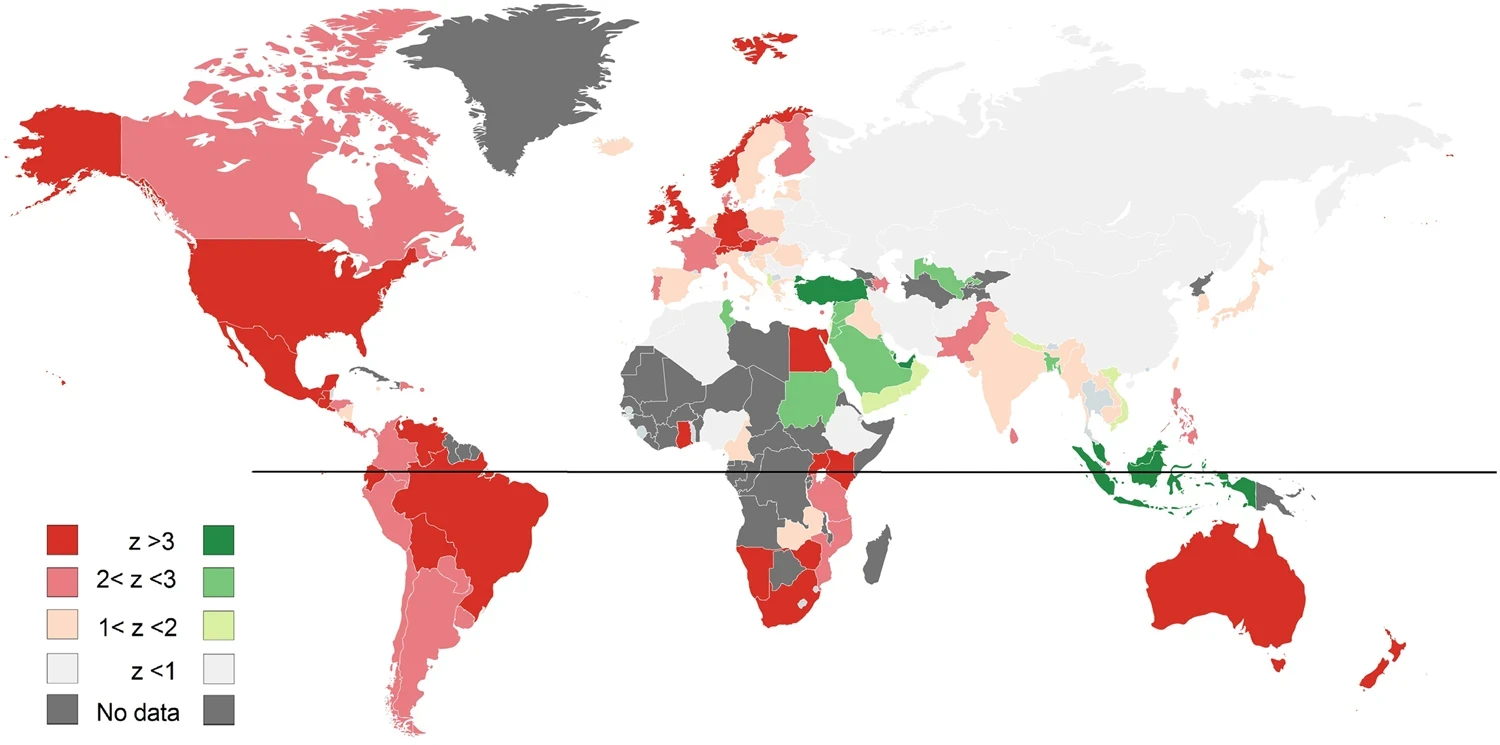
The 2017 study published in Scientific Reports provided new insights. Researchers Ian B. Wood and Pedro L. Varela analyzed global online behavior using Google Trends data from 129 countries paired with birth statistics where available.
Contrary to the seasonal breeding model, their findings revealed that online searches related to sex increased around major cultural and religious holidays. In predominantly Christian countries, spikes coincided with Christmas, whereas in Muslim-majority countries, increases appeared near Eid-al-Fitr and Eid-al-Adha.

This evidence weakens the direct winter-environment explanation, as both Northern and Southern Hemisphere Christian countries showed elevated sexual interest around Christmas, without a corresponding June solstice-related peak in the South.
Holiday Timings Outperform Solstice in Predicting Sexual Interest
The Scientific Reports researchers contrasted biological versus cultural drivers. If biology alone explained a human mating pattern, countries in the same hemisphere should show similar trends. Instead, the data correlated better with religious affiliation and associated festive periods than geographic season.
Specifically, 77% of Muslim-majority nations exhibited significant rises in sex-related searches during Eid-al-Fitr week. In Christian-majority countries, 80% showed increases around Christmas week, independent of hemisphere location. For Orthodox Christian countries celebrating Christmas in early January, the alignment reached 91%.
The shifting lunar Islamic calendar provided further confirmation. Since Ramadan and Eid dates move through the Gregorian calendar, sexual interest peaks shifted accordingly, supporting a cultural rather than a purely climatic influence.
The dataset also documented a pronounced decline during Ramadan in Muslim countries, a period marked by religious fasting and daytime abstinence. This shows the pattern reflects the cultural meaning of holidays, not merely a general holiday effect.
Increased Searches Align With Birth Surges
Beyond analyzing search trends, the team matched spikes to subsequent birth records approximately nine months later. Wherever birth data existed, the times of increased sexual interest anticipated birth rate rises.
While not every search query necessarily corresponded to sexual activity or conception, the widespread replication of this pattern across religions, latitudes, and shifting festival dates strengthened the argument.
The researchers also explored public sentiment via Twitter in seven countries with sufficient data: Australia, Argentina, Brazil, Chile, Indonesia, Turkey, and the United States. They found that peaks in sex-related searches often coincided with periods of elevated positive mood and relaxed social control, tying sexual interest to a collective holiday spirit.
To quantify mood, the study used an approach called eigenmoods, which tracks complex emotional patterns beyond simple happiness metrics. Distinct mood shifts during Christmas and Eid-al-Fitr weeks further supported the link between cultural festivities and sexual behavior.
Humans Do Not Exhibit a Universal Breeding Season
Overall, the evidence does not support a single, universal human mating season. Bronson’s work highlights environmental influences on human reproduction, and Travers explains why humans lack strict seasonal breeding due to concealed ovulation. The global cultural data add important context, demonstrating how social and religious calendars significantly impact sexual activity.
Consequently, calling any period a human mating season requires caution. Human conception can occur at any time, influenced by an interplay of relationships, opportunity, privacy, health, contraception, social customs, and religious beliefs. The observed rhythm differs fundamentally from the instinct-driven seasons seen in many animal species.
- Categories:
- News












0 comments
Sign in to Comment