
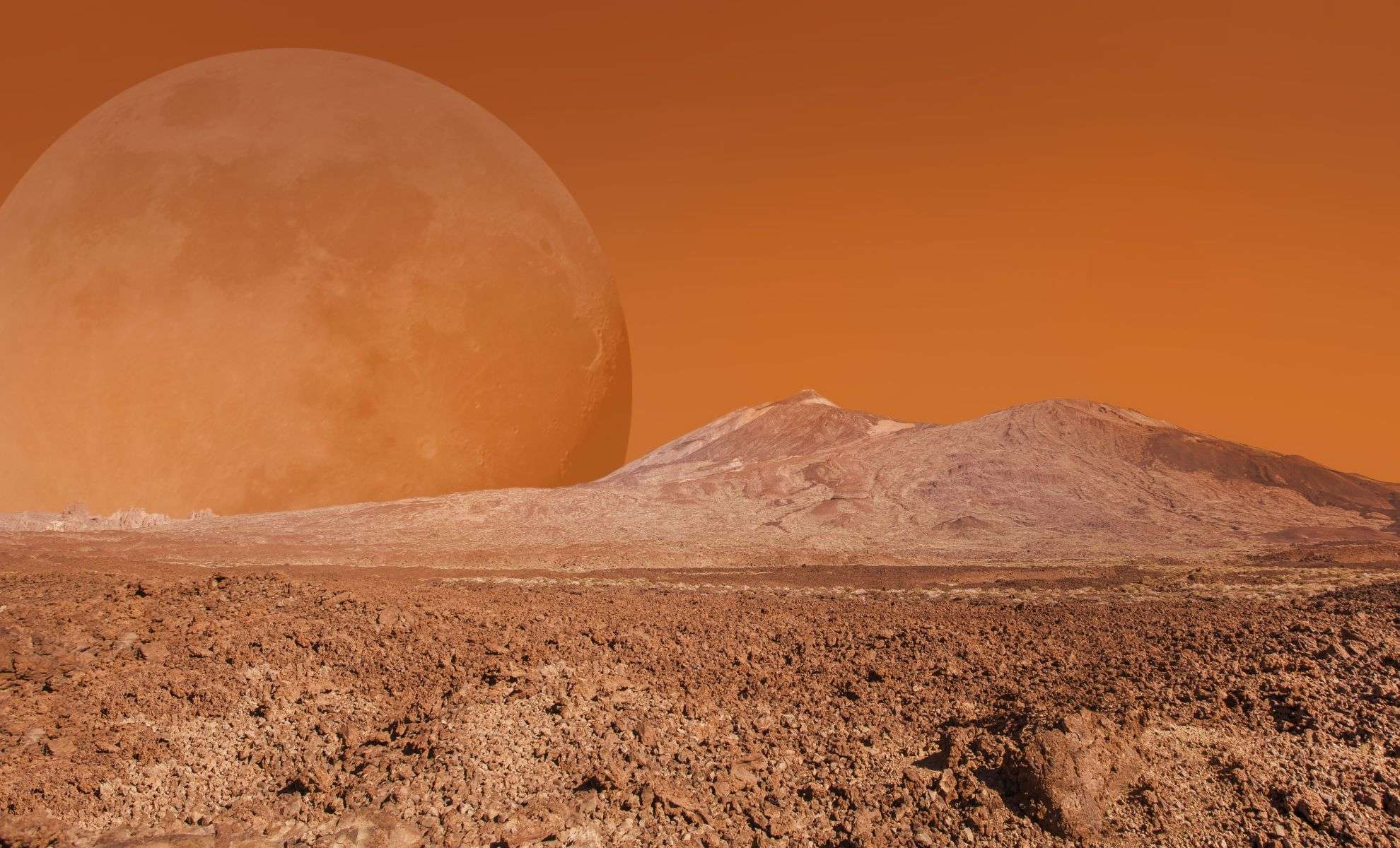
Mars, known as the fourth planet from the Sun, captivates astronomers with its unique features. Although much smaller than Earth, this reddish planet hosts two tiny moons that have long puzzled researchers. Discovered by the American astronomer Asaph Hall in 1877, these moons follow distinctive orbits that provoke ongoing debates about their formation and significance in Mars’ history.
Phobos and Deimos: The Small but Intriguing Mars Satellites
In stark contrast to Earth’s moon, Mars’ moons are remarkably diminutive. Phobos measures roughly 14 miles (22 kilometers) across, whereas Deimos is about half that, at 7 miles (12 kilometers) wide. Unlike the spherical shape of Earth’s moon, these moons are irregularly shaped, resembling asteroids in their appearance. Often described as "potato-like" and possessing dark surfaces comparable to freshly laid asphalt, Phobos and Deimos stand out among other celestial bodies in the solar system.
While their irregularities diverge from typical moons, these bodies are classified as such due to their orbit around the Red Planet. Scientists continue to debate whether they are genuine moons or simply asteroids captured by Mars’ gravitational field. Their unusual size, shape, and composition fuel theories that differ from the standard lunar formation models.

Exploring Hypotheses on Their Origins
The genesis of Phobos and Deimos is still uncertain. One widely discussed idea proposes that these moons are former asteroids ensnared by Mars’ gravity, which would account for their small, lumpy shapes. However, Mars’ relatively weak gravitational pull complicates this scenario, making asteroid capture a challenging process.
Alternatively, some researchers suggest these moons were forged from debris after a colossal impact struck Mars. This collision could have propelled material into orbit, later coalescing to form Phobos and Deimos. This theory mirrors the widely accepted explanation for Earth’s moon formation. Presently, neither theory has definitive evidence, leaving their origins an open scientific question.
Future Missions to Shed Light on Mars’ Moons
Answers to the mysteries surrounding Mars’ moons may arrive soon. The Japan Aerospace Exploration Agency (JAXA) plans to launch the Martian Moons Exploration (MMX) spacecraft in 2026. This mission will closely study the moons and retrieve samples from Phobos, potentially revolutionizing our understanding of whether these moons share characteristics with asteroids or possess deeper links to Mars.
Should the samples reveal that Phobos and Deimos originated from Martian material, scientists could gain insights into the planet’s early environment and formation. This possibility excites experts like Christopher S. Edwards, an astronomy professor at Northern Arizona University, who notes that these samples might unlock secrets of Mars' ancient past.
The forthcoming MMX mission not only targets moon exploration but also aims to enhance understanding of Mars’ habitability. Discovering that these moons are composed of Mars’ primordial debris could shed light on the planet’s early atmosphere, climate, and prospects for life.
Meanwhile, researchers continue to observe Phobos and Deimos remotely through telescopes and space probes. Although comparatively small and irregular, these moons’ distinctive traits and uncertain origins make them fascinating objects for ongoing scientific investigation.
- Categories:
- News






0 comments
Sign in to Comment