
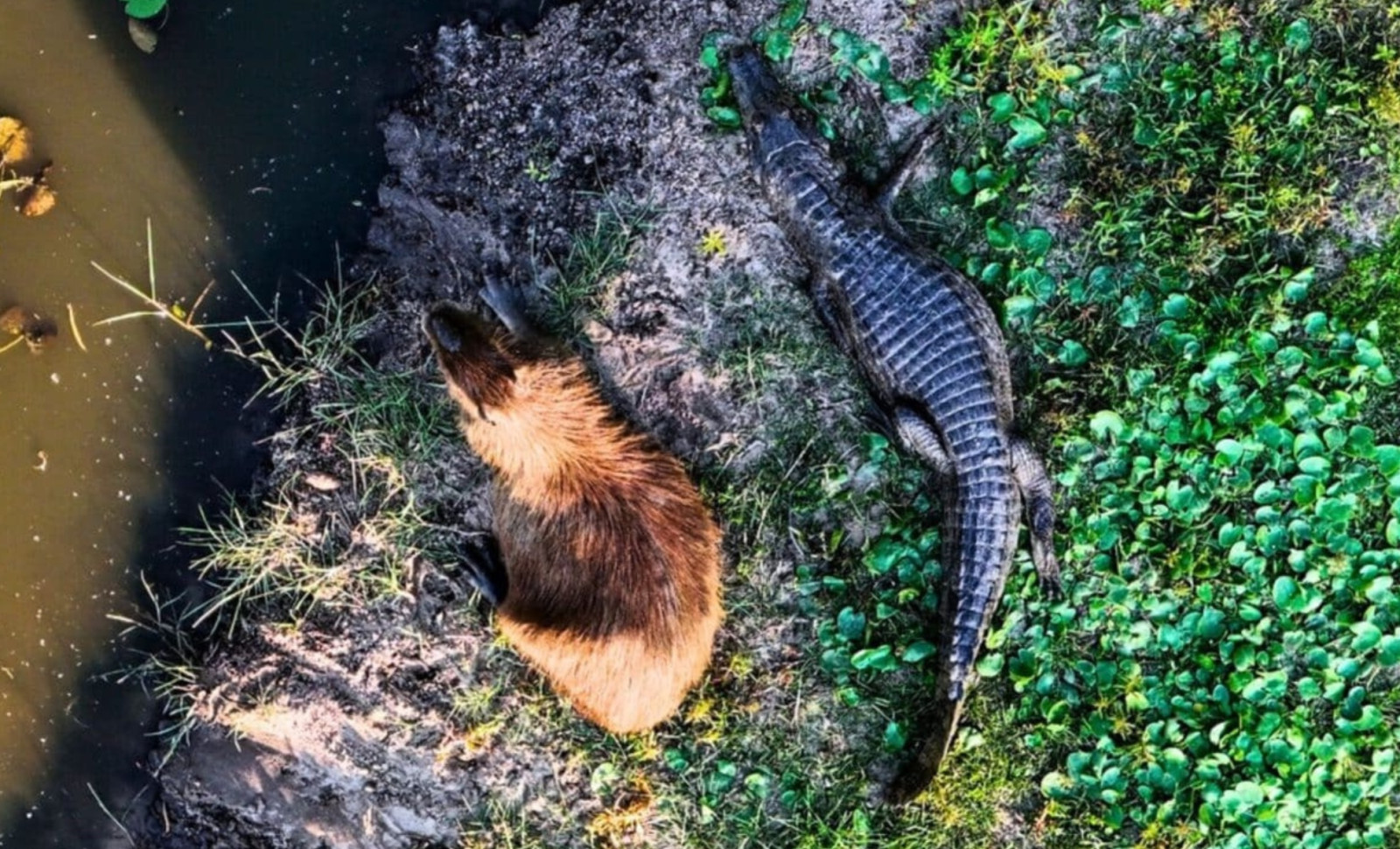
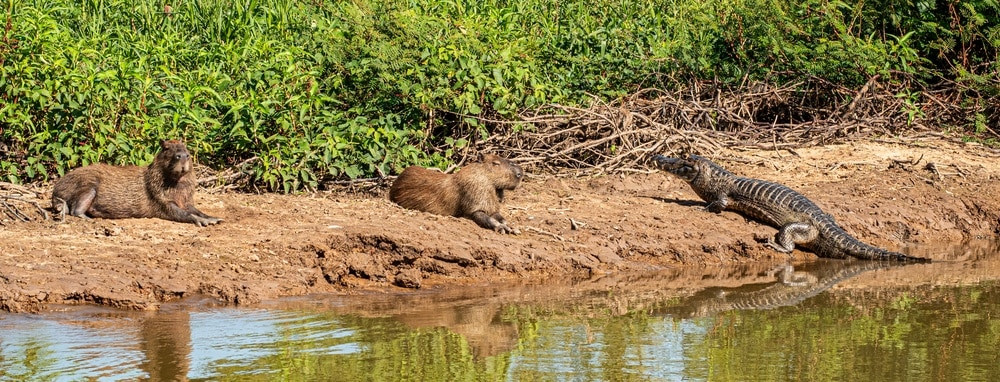
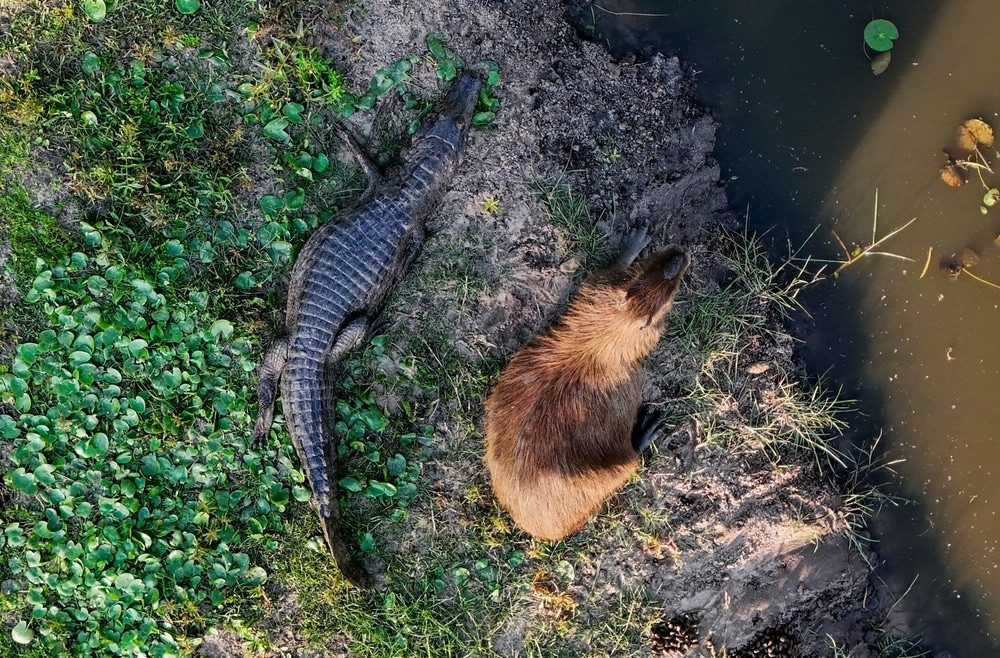
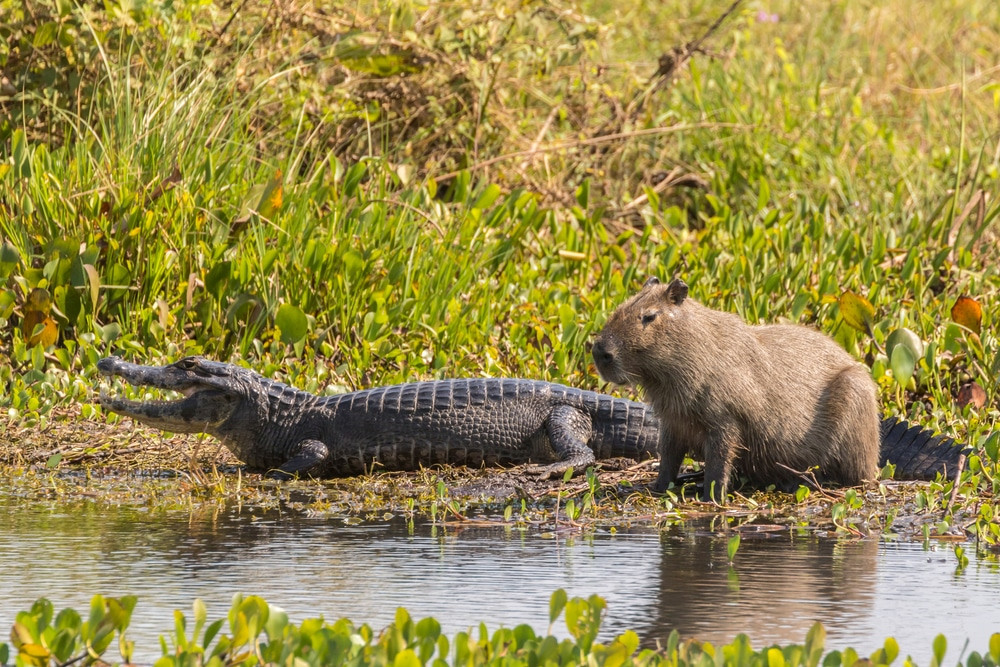
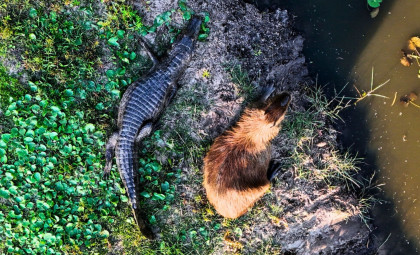
Capybaras, known as the largest rodents on the planet, coexist peacefully in South American aquatic habitats alongside caimans without frequent predation. Field studies show that adult capybaras infrequently fall prey to these crocodilian species despite sharing environments. Remarkably, there are reports of both animals resting in close proximity in natural settings.
This avoidance mainly stems from the capybara’s ability to defend itself effectively. Dr. Elizabeth Congdon, a specialist in capybara ecology and associate professor at Bethune-Cookman University, explained to IFLScience that caiman attacks on capybaras are unusual when alternative food sources exist. “Capybaras have large, sharp teeth and sufficient body mass to pose a threat. The potential injury risk to caimans makes them a less appealing target,” Congdon noted. Even a single defensive bite could handicap a caiman’s capability to hunt later on.
Adult capybaras can weigh over 45 kilograms and possess strong incisors capable of delivering serious wounds. The species Hydrochoerus hydrochaeris can reach lengths up to 1.3 meters and weigh up to 79 kilograms. Its smaller relative, H. isthmius, measures about one meter and weighs around 28 kilograms. Both thrive in forest and wetland areas stretching from Panama down to Argentina, with the larger species prevalent from Venezuela through the Amazon basin and northern Argentina.

Defensive Physical Traits Enhance Survival
Capybaras (Hydrochoerus hydrochaeris) exhibit adaptive features that aid survival in habitats filled with predators. Their webbed feet and high-set sensory organs allow them to stay mostly submerged while scanning for danger. They can hold their breath for up to five minutes underwater, enabling swift escapes from threats in aquatic environments. These brown, short-haired rodents have blunt faces, short limbs, small ears, and nearly invisible tails.
Semiaquatic by nature, capybaras favor living near lakes, swamps, and rivers, diving and swimming often to evade predators like jaguars and anacondas. Their daily routine involves grazing during early morning and late evening followed by daytime periods of rest in sheltered riverbank areas. This predictable activity places them squarely within caiman-inhabited zones.
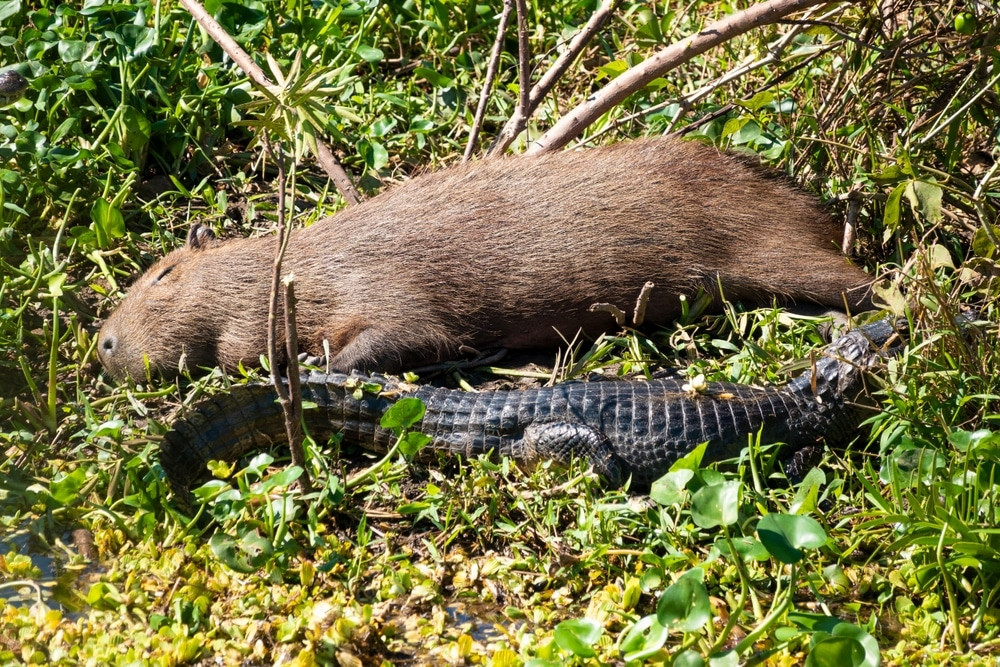
Dr. Congdon emphasized the uncommon nature of adult predation. “Such incidents are infrequent, especially when more accessible prey like fish are present. I’ve observed capybaras and caimans peacefully coexisting side-by-side,” she shared with IFLScience. Caimans seem to weigh the risk of injury against the benefits of hunting capybaras and often decide against it.
The notable exception applies to young capybaras. “Juveniles are vulnerable and become snacks for various predators, including birds of prey,” Congdon added. Young capybaras face threats from ocelots, anacondas, harpy eagles, and caimans, with markedly higher mortality rates than fully grown adults.
Group Living Strengthens Defense Mechanisms
Capybaras rely heavily on social groups to boost survival odds. Herds can include over a dozen members, with individuals taking turns acting as lookouts while others feed or rest, minimizing the risk of surprise attacks. These groups congregate along river and lake shores.
The animals communicate using various vocal signals—such as chirps, whistles, and purrs—to maintain group cohesion and warn about danger. Studies by Barros and team cataloged numerous calls with context-specific meanings in captive populations. Scent marking also plays a critical role in territory delineation and social bonding, as detailed in a 1984 study by Macdonald and colleagues exploring anatomical and chemical aspects of these behaviors.
Dr. Congdon’s research includes an article on female mate selection and social structures published in the Journal of Mammalogy. Her work investigates how capybara group dynamics influence reproductive success and social stability. Herrera and Macdonald previously documented dominant males securing more mating opportunities, reinforcing a male-biased social hierarchy.
Human Expansion Triggers Novel Human-Wildlife Interactions
Although capybaras maintain balanced relationships with wild predators, interactions with humans have led to distinct challenges. In 2021, residents in Nordelta, an affluent suburb near Buenos Aires, noticed an uptick in capybara activity. Gardens suffered damage, pets encountered the rodents, and fences offered little deterrence. These animals navigated residential areas with little concern.
The Nordelta development was constructed over former wetlands that once served as natural capybara habitat. As urbanization expanded, fragmenting these ecosystems, capybaras ventured into altered environments. Conservationists point to habitat fragmentation and urban sprawl as key factors prompting these encounters. In some cases, capybaras are considered agricultural pests due to feeding on melons, grains, and squash crops.
Capybaras receive legal protections in multiple South American nations but are also hunted and farmed in some regions. Their meat is consumed locally, with the smaller species more frequently hunted and the larger species often raised for meat and leather production. According to the International Union for Conservation of Nature, both species are currently classified as least concern.
Diet and Digestive Specializations
As herbivores, capybaras primarily consume grasses and aquatic vegetation. They spend much of the day sheltered along riverbanks. Their diet also extends to cultivated crops like melons, grains, and squash when available.
Congdon’s research featured in Zoo Biology investigated digestive adaptations in captive capybaras. Results highlighted their ability to efficiently process fibrous plant matter, ensuring nutrient uptake from low-quality forage. This digestive efficiency provides a vital survival advantage in resource-limited habitats.
Female capybaras typically give birth once annually, producing litters of three to eight offspring following a gestation period around 100 to 110 days. This reproductive strategy helps maintain stable populations despite juvenile predation.
Significance of Caiman Species in Coexistence
The crocodilian species sharing ecosystems with capybaras are specifically caimans, including the yacare caiman. These differ from true crocodiles in both size and behavior patterns. The peaceful coexistence primarily involves caimans rather than the larger crocodile species.
Caimans generally favor fish and smaller animals when accessible. Their risk-averse hunting tactics mean that taking on a large rodent with formidable teeth poses too great a threat. The threat of injury strongly discourages predation on adult capybaras. The 1993 study by Herrera and Macdonald documented competitive and mating behaviors shaping male capybara social hierarchies.
Dr. Congdon noted that although caimans may hunt capybaras in desperate conditions, these events are rare. “While capybaras are not completely off the menu, attacks are infrequent,” she remarked.
- Categories:
- News










0 comments
Sign in to Comment