
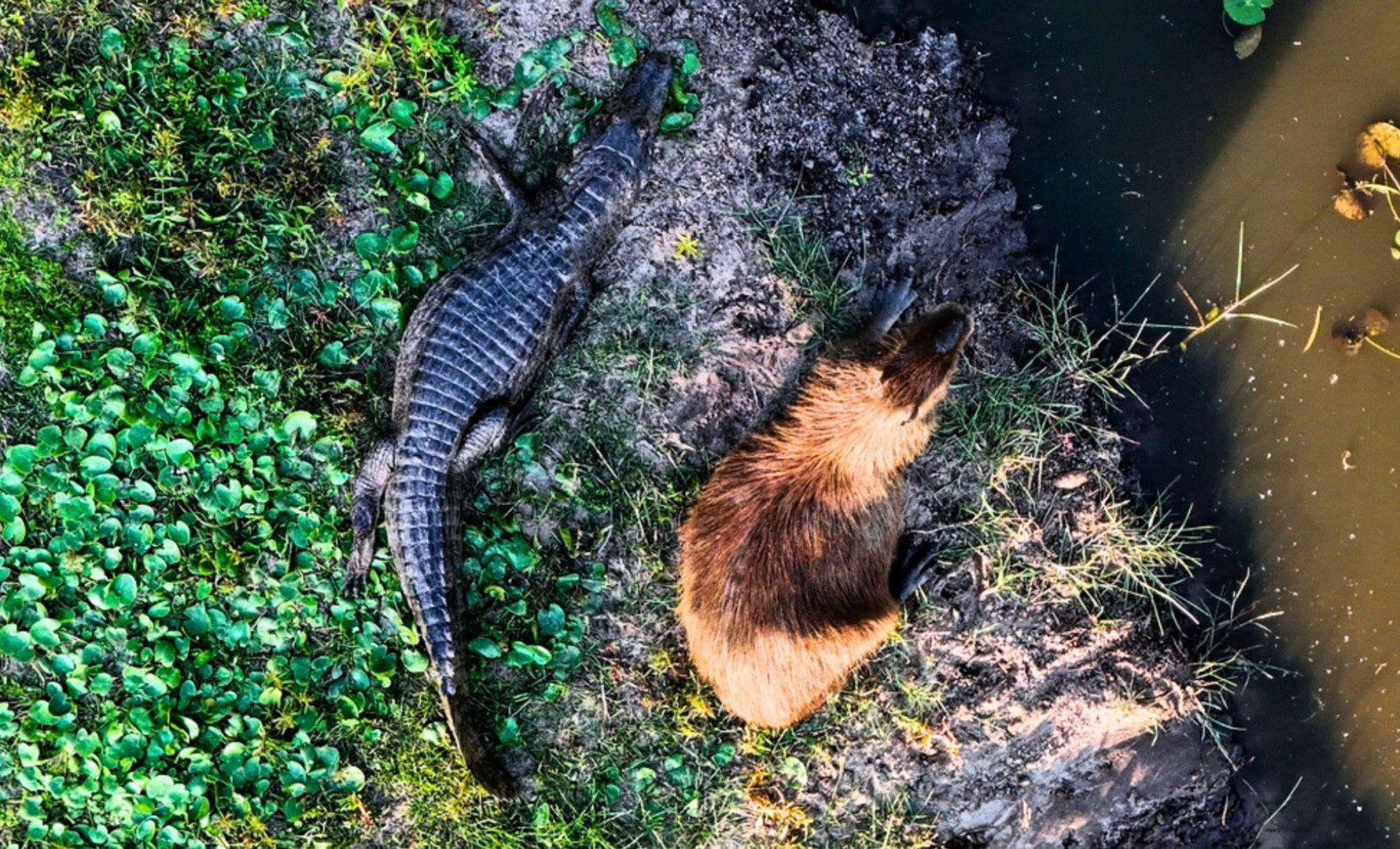
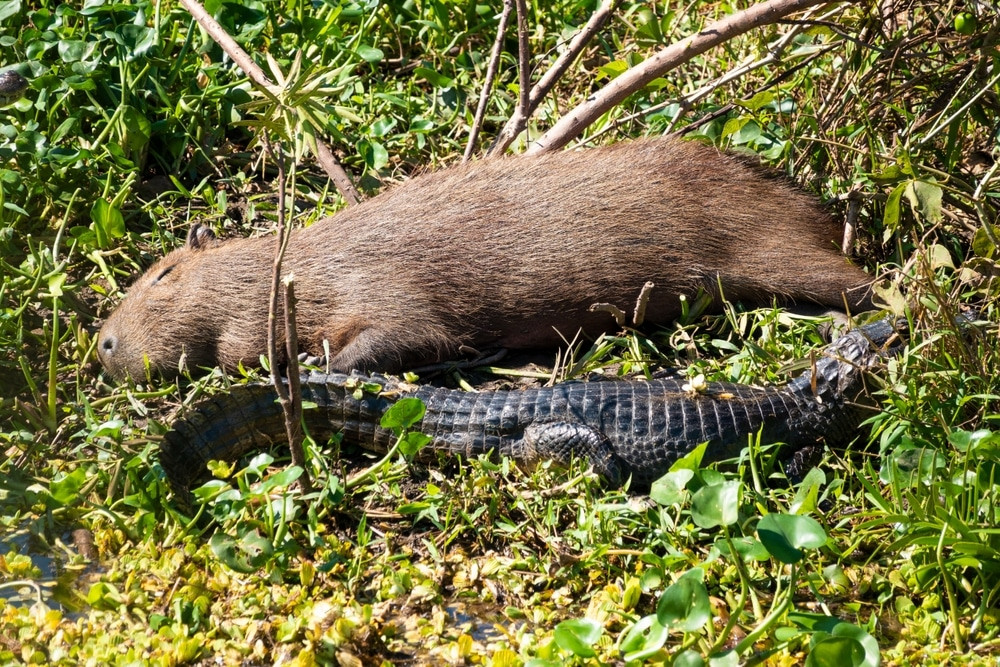
Along the riverbanks and wetlands of South America, the capybara—a sizable herbivorous rodent—navigates habitats shared with formidable predators like crocodilians. Remarkably, these two often coexist peacefully, with capybaras frequently seen resting near these reptiles without alarm. This unusual tolerance has piqued the interest of scientists studying their interactions.
More recently, capybaras have emerged in urban settings such as suburban Argentina, where perceptions differ sharply. Here, they are viewed less as peaceful cohabitants and more as nuisances, responsible for damaged property and incidents involving pets, prompting calls for control measures.
This scenario invites a deeper ecological inquiry: how does a species that flourishes alongside predators in the wild become a source of tension within human-dominated landscapes?

Why Predators Usually Avoid Hunting Capybaras
Capybaras (Hydrochoerus hydrochaeris) coexist with crocodilians such as the yacare caiman across vast regions of their native habitat. Despite sharing these environments, adult capybaras seldom fall prey to these reptiles. Dr. Elizabeth Congdon, an expert on capybaras and an associate professor at Bethune-Cookman University, explained to IFLScience that caiman attacks on capybaras are infrequent, particularly when alternative prey like fish is plentiful.
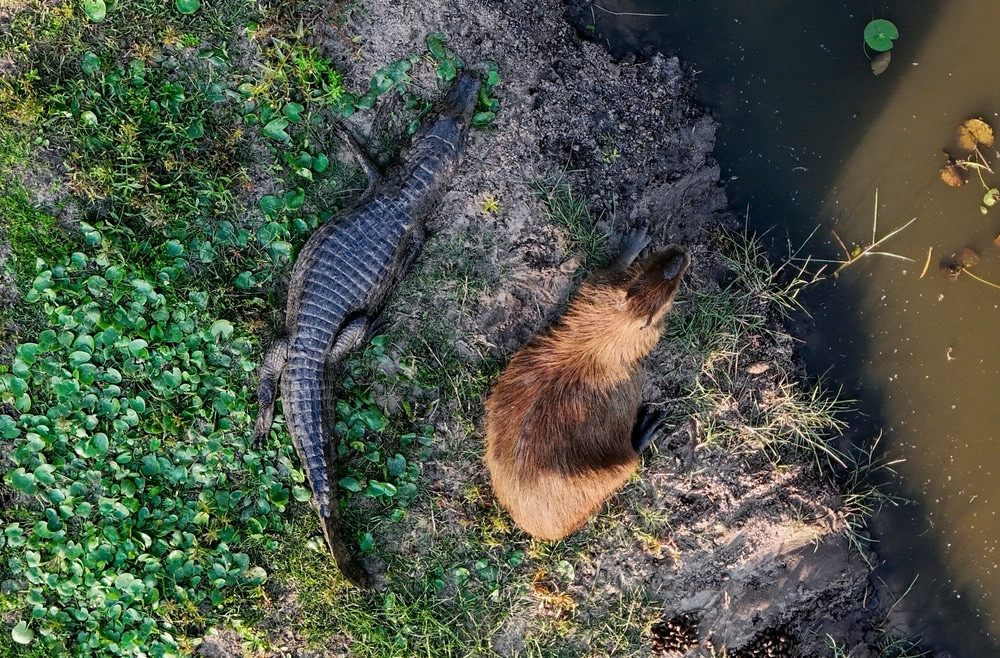
Adult capybaras weigh over 45 kilograms and are equipped with robust incisors capable of delivering bites. This combination of size and defensive ability likely deters predators from engaging, except in desperate situations. “Their powerful teeth and substantial body mass make them a risky target,” Dr. Congdon noted.
Capybaras are also adapted for aquatic environments. Their webbed toes and elevated sensory organs allow them to stay mostly submerged while monitoring danger. They can hold their breath underwater for up to five minutes, facilitating escape. These water-adapted features are detailed in the Rainforest Alliance’s capybara profile, which also emphasizes their preference for wetlands and riverine habitats.
Although young capybaras face threats from predators like ocelots, anacondas, and harpy eagles, mature individuals usually evade caiman predation. This is credited to predators’ tendency to avoid risky prey when easier options exist.
Conflicts Arise in Urbanized Settings
The dynamics change notably in human settlements. In 2021, residents of Nordelta, an affluent Buenos Aires suburb, noticed more frequent capybara visits. Reports emerged of ravaged gardens, confrontations with pets, and animals infiltrating yards. A USA Today report with footage captured these roaming rodents within the neighborhood.

This region was once part of rich wetlands that supported native capybara populations. Urban development has fragmented these ecosystems, pushing capybaras into modified environments. Conservationists link the resulting human-wildlife clashes to expanding urban sprawl and diminishing natural habitats, highlighting how wildlife often returns when ecological buffers disappear.
While capybaras enjoy legal protection in various South American nations, they are also subject to hunting and farming. The Rainforest Alliance notes their meat and skins are commercially valuable, and farming operations have arisen partly to alleviate hunting pressures. These farms bring forward considerations of welfare standards, legal oversight, and land resource management.
Group Living as a Survival Strategy
In their natural habitats, capybaras depend on more than physical defenses; they live socially. Groups commonly consist of over a dozen individuals, with members rotating sentinel duties to watch for predators while others eat or rest, lowering risk of surprise attacks.
Communication is equally vital. Capybaras use various vocal signals—such as chirps, whistles, and purrs—to stay connected and alert each other to danger. Their application of scent marking helps maintain territorial boundaries and group cohesion. These behavioral traits, widely observed both in the wild and captive settings, underscore their advanced social intelligence.
A number of detailed studies have investigated capybara social and ecological behavior. Dr. Congdon’s work, including a paper published in the Journal of Mammalogy, explores how female mate selection and group interactions influence stability, reproduction, and dispersal patterns within capybara populations.
Additionally, her 2019 Zoo Biology article examines the digestive efficiency of captive capybaras, showcasing how their ability to break down tough plant fibers allows survival on nutrient-poor diets, a significant advantage in resource-scarce environments.
- Categories:
- News












0 comments
Sign in to Comment