
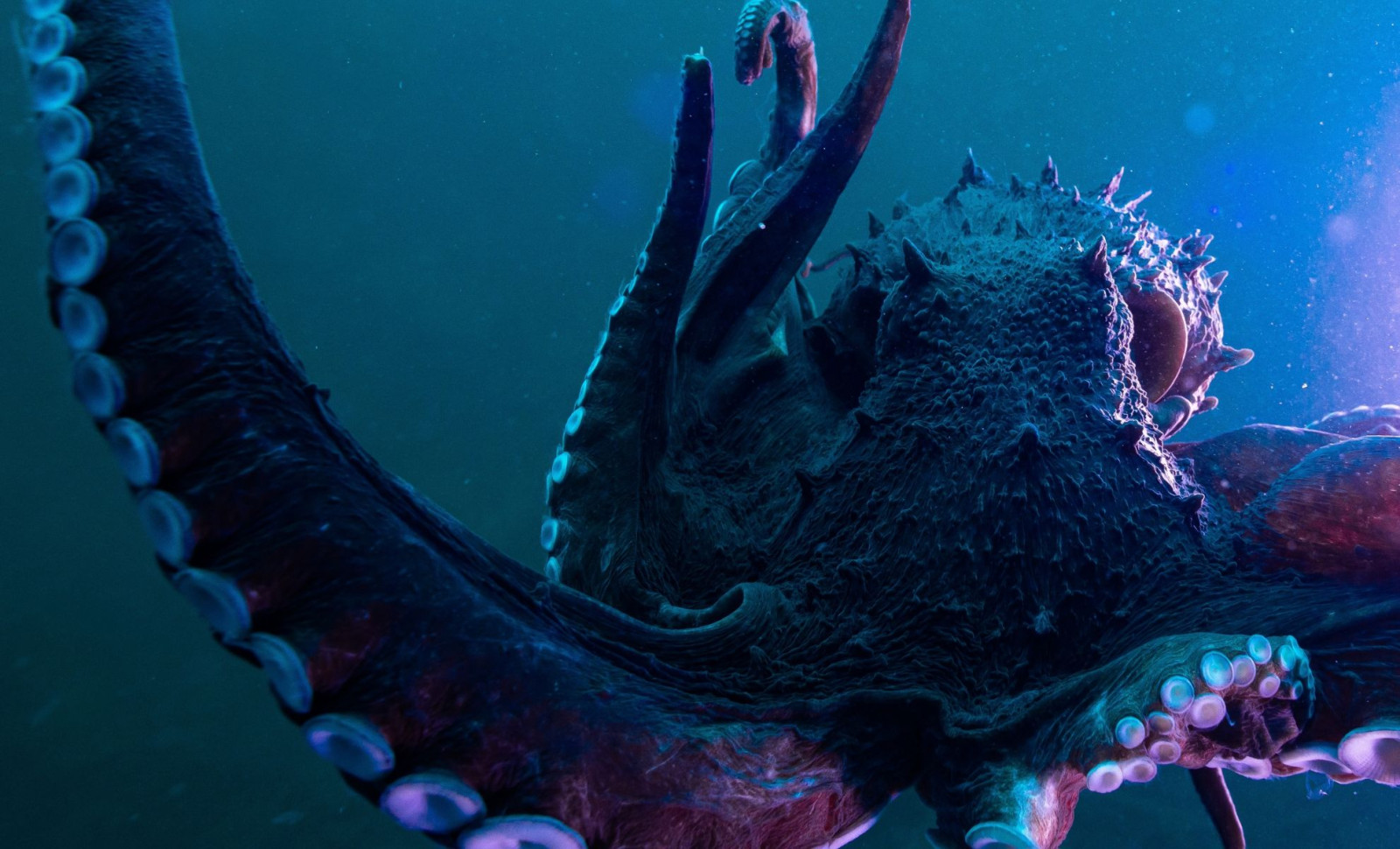
Enormous octopuses, reaching lengths of up to 62 feet, inhabited the ancient seas during the dinosaur era. Recent paleontological finds indicate that these colossal invertebrates were among the dominant predators of the Cretaceous period.
Historically, the Cretaceous oceans were thought to be ruled by massive vertebrate hunters such as mosasaurs and plesiosaurs. However, new evidence introduces towering marine invertebrates, often dubbed “krakens,” as equally formidable rivals.
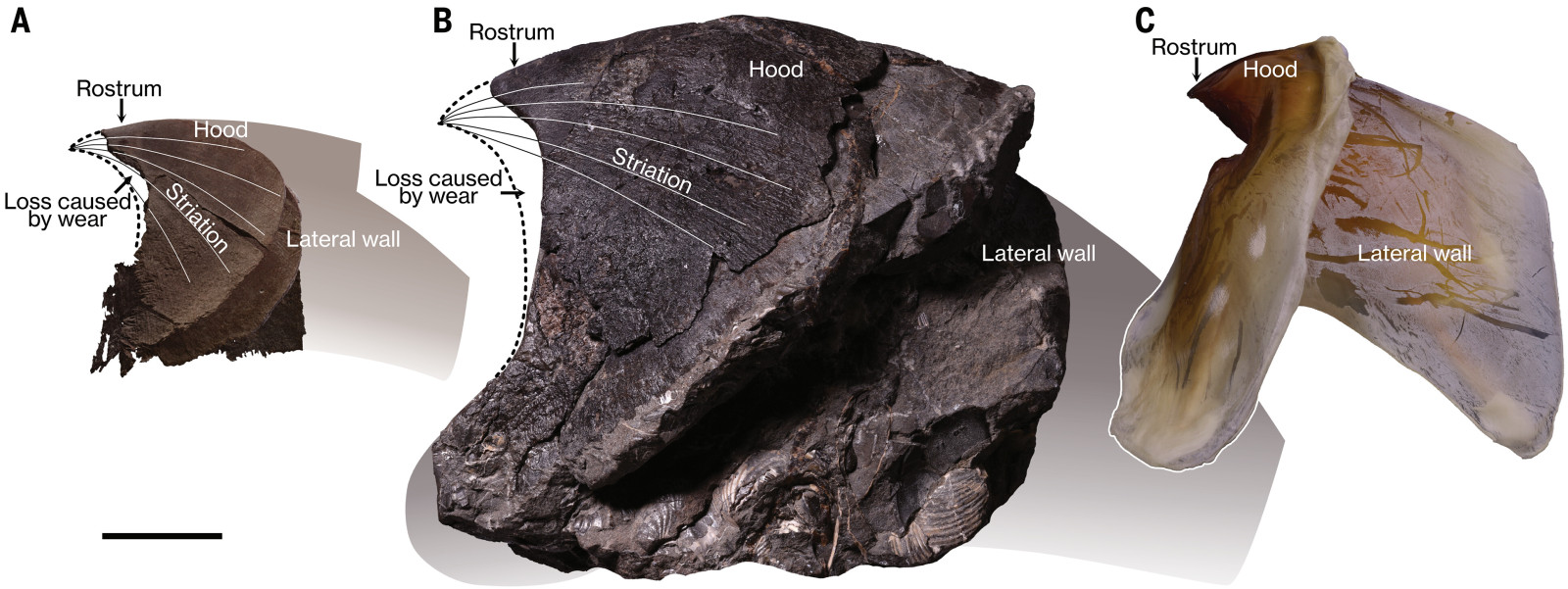
Researchers from Japan and Vancouver Island have unearthed fossilized mandibles of two extinct octopus species, Nanaimoteuthis jeletzkyi and Nanaimoteuthis haggarti, transforming our understanding of ancient cephalopods.

Record-Breaking Giants of the Sea
Estimates suggest Nanaimoteuthis haggarti could reach lengths up to 62 feet, placing it among the largest invertebrates known to science. Such size surpasses many marine reptiles from the same epoch, including mosasaurs. By analyzing fossil jaw remains, scientists deduced a correlation indicating larger jaws corresponded with greater overall body length.
The recent study published in Science highlights fossils from rock layers approximately 100 to 72 million years old, pushing back the timeline of these apex cephalopods. These formidable creatures likely preyed on shelled organisms such as mollusks.
“Octopuses are known today as highly intelligent animals, but they are extremely difficult to study in deep time because they lack hard external shells,” said Yasuhiro Iba, a paleontologist from Hokkaido University in Japan. “A major motivation for this study was to reveal this almost invisible history of octopuses.”
Rethinking Cretaceous Ocean Predators
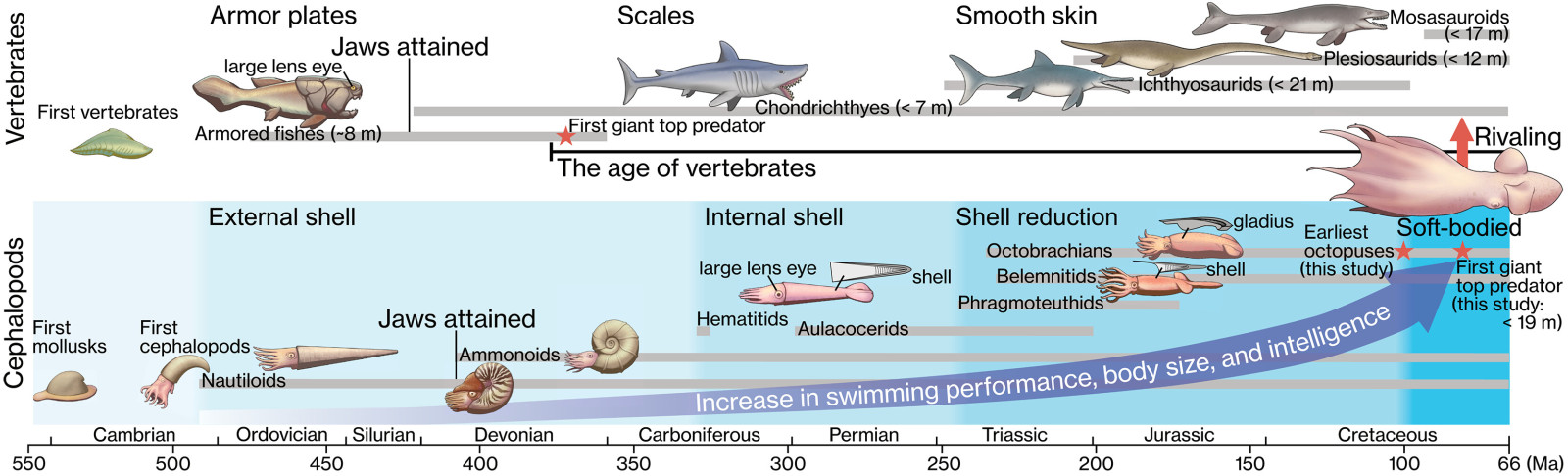
Until now, the dominant hunters of the Cretaceous seas were considered large marine vertebrates like massive reptiles and fish. The newfound fossils of these giant cephalopods offer a new perspective on the oceanic food chain.
The wear on Nanaimoteuthis jaw fossils indicates they attacked hard-shelled prey, marking them as adept predators.
“These findings revise the view of the Cretaceous ocean as a world dominated only by large vertebrate predators,” Iba explained. “They show that giant invertebrates — octopuses — also occupied the top of the food web.”
Rather than exclusive dominance by large vertebrates, these discoveries suggest colossal invertebrates also played a crucial role. This might have driven evolutionary pressure on coexisting creatures to develop tougher protective shells.
Exceptional Intelligence and Hunting Techniques
The immense size of these octopuses is striking, yet what truly distinguishes them is their cognitive abilities. The fossil jaw wear patterns reveal advanced hunting strategies. The asymmetrical abrasion hints at lateralized behavior linked to complex brain functions, similar to modern octopuses known for their problem-solving skills and tool usage.
“Both groups increased swimming performance, body size, and intelligence at the expense of defensive hard parts,” the researchers wrote. “Long after the rise of vertebrate top predators, octopuses evolved body plans capable of rivaling them.”
This evidence suggests that ancient octopuses may have been far more intelligent than previously recognized. The jaw wear patterns imply they skillfully dismantled hard-shelled prey, much like modern octopuses use their tentacles to open containers or evade confinements. Their intelligence likely gave them an edge as hunters in their ecosystems.
- Categories:
- News








0 comments
Sign in to Comment