
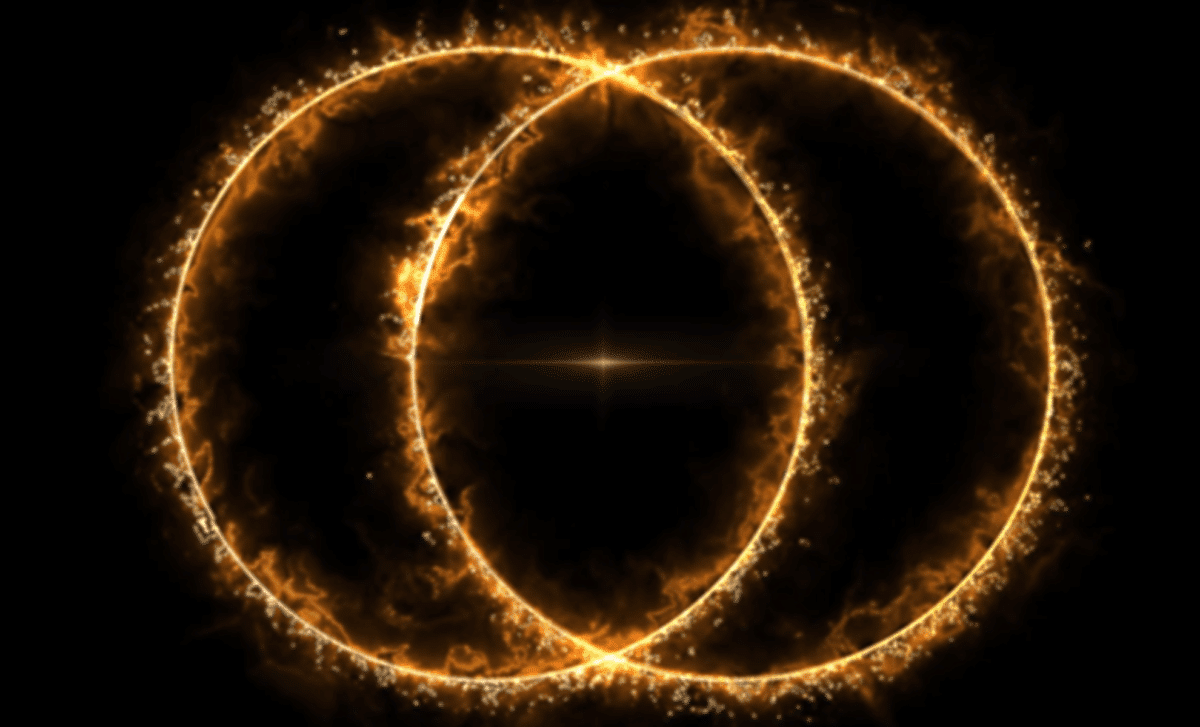
Scientists have unveiled a remarkable cosmic discovery that is altering our perception of the universe: the Odd Radio Circles (ORCs). These vast, circular formations of radio emission, first spotted just a few years ago, remain a captivating puzzle for astrophysicists. The newest breakthrough, detailed in a study in the Monthly Notices of the Royal Astronomical Society, was achieved with the vital contributions of volunteers involved in the RAD@home Astronomy Collaboratory citizen-science project.
Exploring the Intrigue of Odd Radio Circles
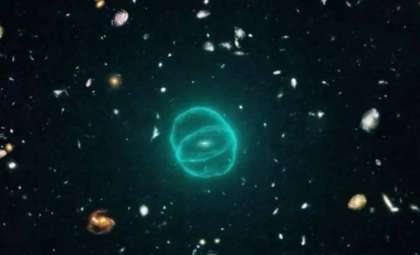
Odd Radio Circles (ORCs) stand as one of the most intriguing cosmic phenomena detected recently. These gigantic rings, which can extend beyond 300,000 light-years across, are more than mere astronomical oddities — they may hold key insights into the universe’s fundamental makeup and evolution. The RAD@home Astronomy Collaboratory has been pivotal in uncovering these mysterious rings, with citizen volunteers identifying unusual space structures overlooked by automated detection methods. The discovery of RAD J131346.9+500320 introduces the largest and most remote ORC known, residing in a galaxy observed as it appeared when the cosmos was about 6.9 billion years old.
Since their initial identification just six years ago, the cause of ORCs remains a subject of scientific debate. Hypotheses range from shockwaves caused by merging black holes or colliding galaxies to the effects of powerful galactic winds. Detected primarily through radio telescope observations, ORCs emit signals across immense distances, revealing sprawling formations that challenge standard galactic and cosmic paradigms. The existence of these enormous, faint radio structures compels astronomers to re-examine their models of cosmic development.

The Rare Double-Ring Configuration: A Cosmic Marvel
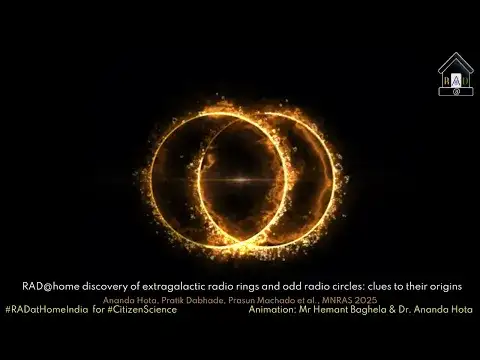
The recently identified ORC RAD J131346.9+500320 is particularly remarkable due to its distinct double-ring shape, a phenomenon previously seen only once among known ORCs. Ananda Hota, founder of the RAD@home initiative, described ORCs as “some of the most stunning and enigmatic cosmic constructs we have observed,” highlighting the exceptional character of this finding. The overlapping rings in this formation imply a complex interplay of galactic forces, possibly involving a combination of energetic winds, jet emissions, and dynamic interactions between the galaxy’s central black hole and its environment.
This double-ring structure likely points to a colossal galactic event — such as a massive explosion or merger at the galaxy’s core — producing shockwaves that expanded outward, shaping these perfect circular patterns. Investigating this feature provides critical clues on the co-evolution of black holes and their host galaxies, revealing mutual influences exerted over billions of years. Such studies enhance our understanding of galaxy formation mechanisms, the nature of supermassive black holes, and the grand-scale processes orchestrating cosmic history.
Interpreting Radio Signals and Their Astronomical Importance
The emergence of ORCs emphasizes the vital role radio signals play in unveiling the universe’s hidden features. Unlike visible light, which is often blocked by interstellar dust and gas, radio waves can traverse these obstacles to expose phenomena otherwise invisible. These signals typically originate from extremely energetic events, frequently linked to the activity of supermassive black holes and their jets. The luminous rings observed from ORCs may result from materials expelled at relativistic speeds from galactic centers, sculpting the space around them.
ORCs further reveal that cosmic gas and plasma are much more dynamic and heterogeneous than previously assumed. They uncover intricate interactions between black holes, galaxy formation, and the surrounding cosmic medium.
“ORCs and radio rings are not isolated curiosities,” said Pratik Dabhade, a coauthor of the study and researcher at the National Centre for Nuclear Research in Poland. “They are part of a broader family of exotic plasma structures shaped by black hole jets, winds, and their environments.”
This perspective highlights the significance of investigating these phenomena as they offer essential insights into the dynamic behaviors governing galaxies and their energetic centers.
The Impact of Citizen Science on Astronomy’s Future
The discovery of ORCs underscores the expanding contribution of citizen science to astronomical breakthroughs. The RAD@home program empowers volunteer participants to sift through deep-space imagery, identifying noteworthy features that might escape automated analyses. This collective human effort enhances research efficiency and has already led to the detection of new ORCs, broadening the horizons of cosmic exploration.
Initiatives like RAD@home illustrate how citizen involvement can transform the way we explore the cosmos. While state-of-the-art telescopes and sophisticated data algorithms remain fundamental, human pattern recognition is invaluable in detecting subtle anomalies. This collaboration between professionals and enthusiasts promises to propel future discoveries, as dedicated amateurs continue to unveil secrets from the universe’s most distant regions.
The Role of Galactic Winds in Shaping Odd Radio Circles
Galactic winds—powerful outflows of gas and charged particles from galaxies—are believed to be crucial in forming ORCs. Driven by the extreme forces near supermassive black holes, these winds may propel matter across significant distances, generating the distinct radio-emitting rings characteristic of ORCs. Although this field is still emerging, scientists suspect galactic winds significantly influence the distribution of material within galaxies and their ambient space.
By studying how galactic winds interact with their environment to create these structures, astronomers gain deeper insights into galactic evolution. The influence of such winds on ORCs suggests they are active agents in cosmic architecture, not merely passive remnants. The presence of multiple ORCs in varied cosmic locales supports this view, showcasing the diverse and complex outcomes shaped by galactic winds.
- Categories:
- News





0 comments
Sign in to Comment