
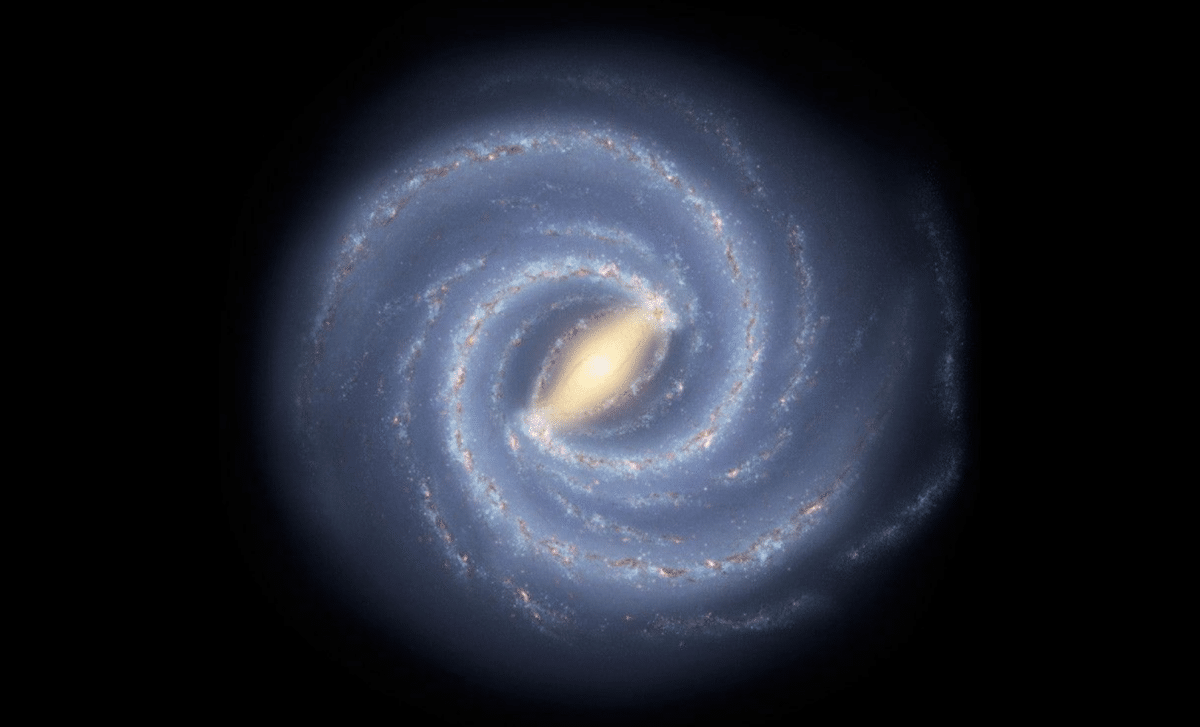
A group of astronomers has introduced an innovative method for modeling the growth and transformation of galaxies. Featured in Monthly Notices of the Royal Astronomical Society, the COLIBRE project delivers the most comprehensive and lifelike simulations to date, tracing galactic development from the earliest billion years post-Big Bang all the way to now. Crucially, these simulations integrate cold gas and cosmic dust, elements vital to forming stars, enabling a more authentic representation of galaxies as observed by the James Webb Space Telescope.
Essential Elements: Incorporating Cold Gas and Cosmic Dust
Historically, galaxy simulations have lacked two fundamental ingredients: cold gas and cosmic dust. These materials are not only widespread in galaxies but also serve as star-forming building blocks. Their omission in past models led to incomplete and less precise reconstructions of galactic formation. The recent Monthly Notices of the Royal Astronomical Society publication reveals how COLIBRE overcame this challenge by successfully embedding these critical components, enhancing the fidelity of galaxy evolution models.
“Much of the gas inside real galaxies is cold and dusty, but most previous large simulations had to ignore this,” said Professor Joop Schaye, project leader from Leiden University. “With COLIBRE, we finally bring these essential components into the picture.”
Add Cosmo Herald as a Preferred Source

By integrating cold gas and dust, researchers crafted a far more accurate model of galactic behavior over cosmic time. Leveraging supercomputing capacity and advanced algorithms, the study simulates the complex interactions of these substances with unmatched precision.
Advancements in Computing: Capturing the Universe in High Definition
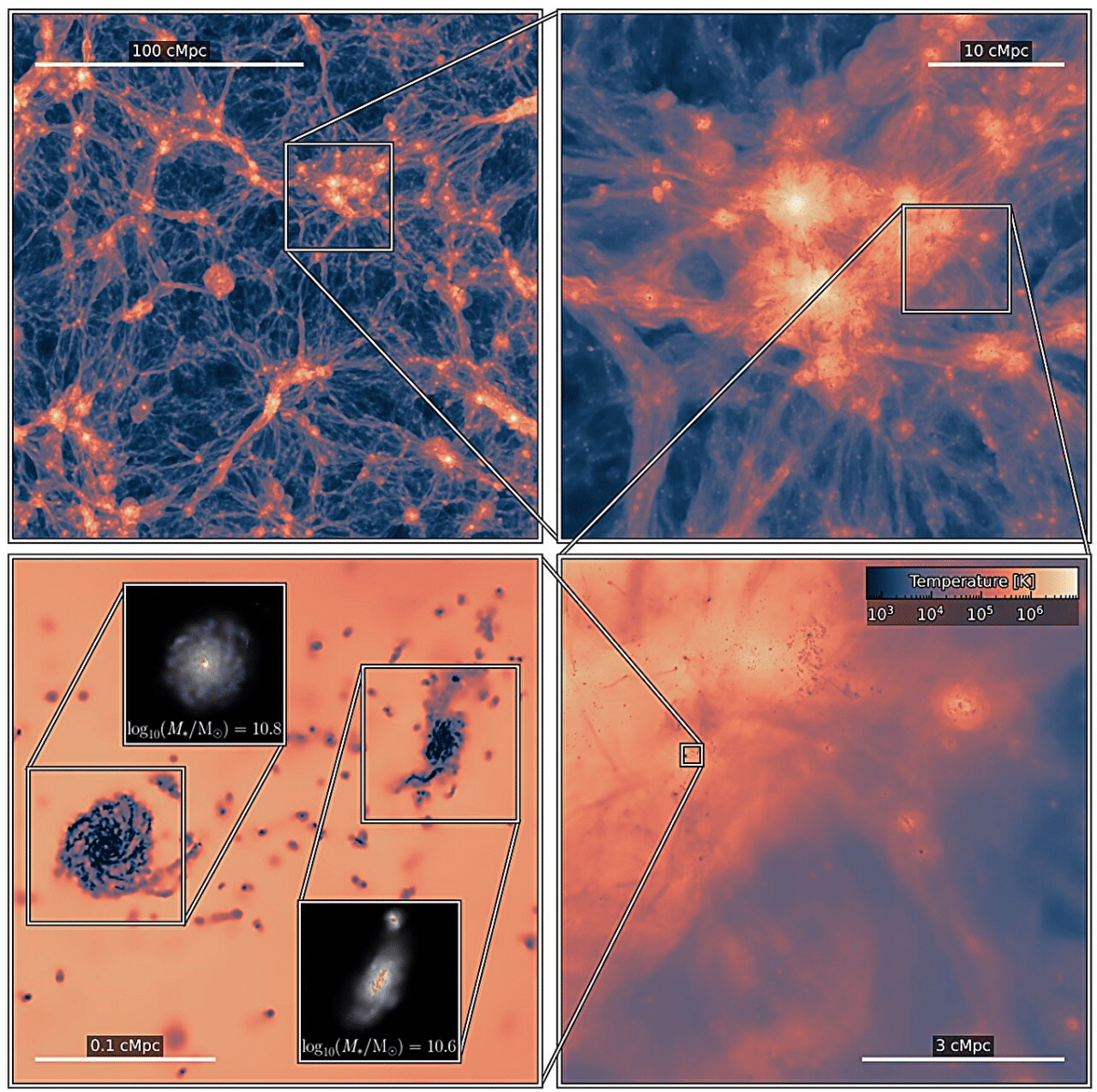
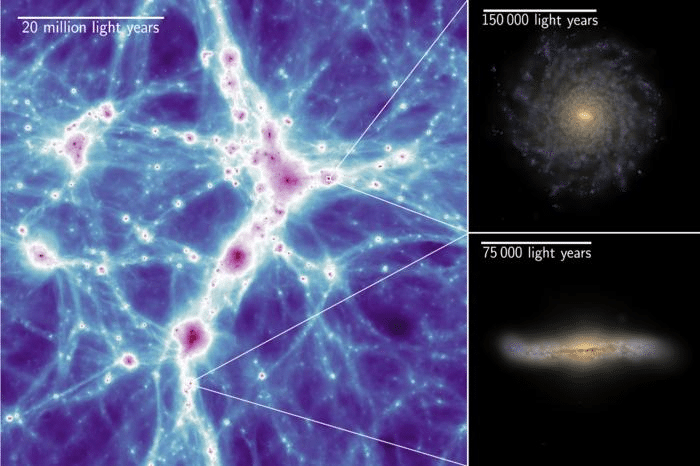
COLIBRE marks a significant milestone in computational astrophysics by employing up to 20 times more resolution elements than earlier attempts. This leap not only enables deeper analysis but also covers broader cosmic volumes at greater accuracy. Conducted on the COSMA8 supercomputer at Durham University, the simulations incorporate intricate physical and chemical dynamics essential to galaxy creation, including gas cooling, the birth of stars, and the influence of tiny dust grains.
Beyond breathtaking visuals, the simulations include an auditory component called “sonification,” where sound encodes physical information, offering an enriched multi-sensory way to experience galaxy formation. This innovative approach aids researchers in uncovering new insights and helps engage the general public with astronomy.
Confirming Cosmology: Insights Backed by the James Webb Space Telescope
A pivotal achievement of the COLIBRE simulations is the support they provide for the standard cosmological framework. Initial data from the James Webb Space Telescope (JWST) had cast some doubt on this model, but by accounting for previously overlooked factors, COLIBRE reaffirms the model’s validity.
“Some early JWST results were thought to challenge the standard cosmological model,” said Dr. Evgenii Chaikin, lead author of several COLIBRE papers. “COLIBRE shows that, once key physical processes are represented more realistically, the model is consistent with what we see.”
This outcome is essential for both cosmologists and observational astronomers, strengthening confidence in the theoretical foundations used to describe how galaxies come into being and change over time.
Exploration and Challenges Ahead: Unanswered Questions in Galaxy Development
While COLIBRE has provided answers to many queries, it also highlights gaps requiring further investigation. Notably, JWST’s discovery of “Little Red Dots”—potential precursors to supermassive black holes—remains unaccounted for in current simulations. This suggests that processes forming supermassive black holes may involve physics not yet included in COLIBRE.
“What is most remarkable is that we are able to produce this synthetic universe purely by solving the relevant equations of physics in the expanding universe,” said Professor Carlos Frenk, a core member of the COLIBRE team. “The simulations show us how galaxies could have formed and evolved, and the fact that they look indistinguishable from real galaxies is a testament to the power of our new approach.”
- Categories:
- Astronomy





0 comments
Sign in to Comment