

The most powerful underwater noise ever documented originated from one of the planet’s most inaccessible places—Point Nemo in the Southern Pacific Ocean. Positioned 2,689 kilometers (1,671 miles) away from any landmass, this remote location is renowned as the loneliest spot on Earth. So isolated, the nearest humans are often astronauts aboard the International Space Station, orbiting roughly 400 kilometers (250 miles) overhead.
An Unexpected Acoustic Event
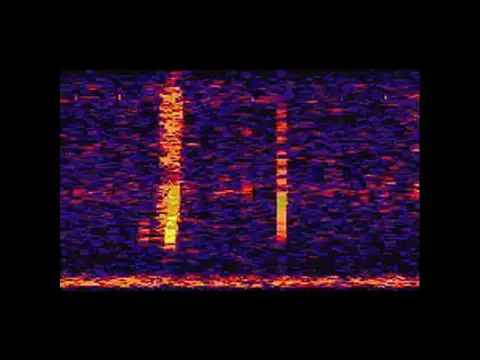
In 1997, researchers at the National Oceanic and Atmospheric Administration (NOAA) encountered a puzzling recording: an ultra-low-frequency sound emanating from Point Nemo, detected by hydrophones placed thousands of kilometers away. The strength of the signal led scientists to initially speculate it might have been created by marine animals such as whales, dolphins, or other large sea creatures with notable acoustic capabilities.
Yet, the extraordinary volume and intensity of the sound cast doubt on typical marine origins. The remarkable amplitude prompted speculation about a far more massive and potent source. This enigma lingered for years, with various theories emerging about what could have produced such a formidable underwater noise.

Linking the Sound to Ice Fractures
Chris Fox, an oceanographer at NOAA, was among those who proposed a compelling explanation: the sound might be caused by ice calving, where enormous chunks of glaciers or ice shelves break away, generating intense seismic vibrations. Fox noted, “It always comes from the south. We suspect it’s ice near Antarctica, which can create incredibly loud noises,” pointing to the southern polar region as the likely source.
This explanation gained momentum as the sound’s origin was traced nearer to Antarctica’s coastal ice. The vast scale and force involved in the fracturing ice provided a convincing rationale for the noise’s remarkable intensity. Over time, this hypothesis became widely accepted as the most plausible explanation for the sound affectionately known as the “bloop.”
The Legacy of the “Bloop” Phenomenon
The enigmatic “bloop” continues to enthrall scientists studying underwater soundscapes. Despite extensive research into the ocean’s acoustic environment, its origin remains one of the most intriguing mysteries in marine acoustics. Although linked to ice calving, this sound highlights the immense and often unseen natural forces shaping our oceans.
Remarkably, the signal was detected by hydrophones positioned up to 4,800 kilometers (3,000 miles) away from Point Nemo. The ability of such a powerful sound to travel vast distances through the water adds to the fascination surrounding its source.
- Categories:
- News









0 comments
Sign in to Comment