
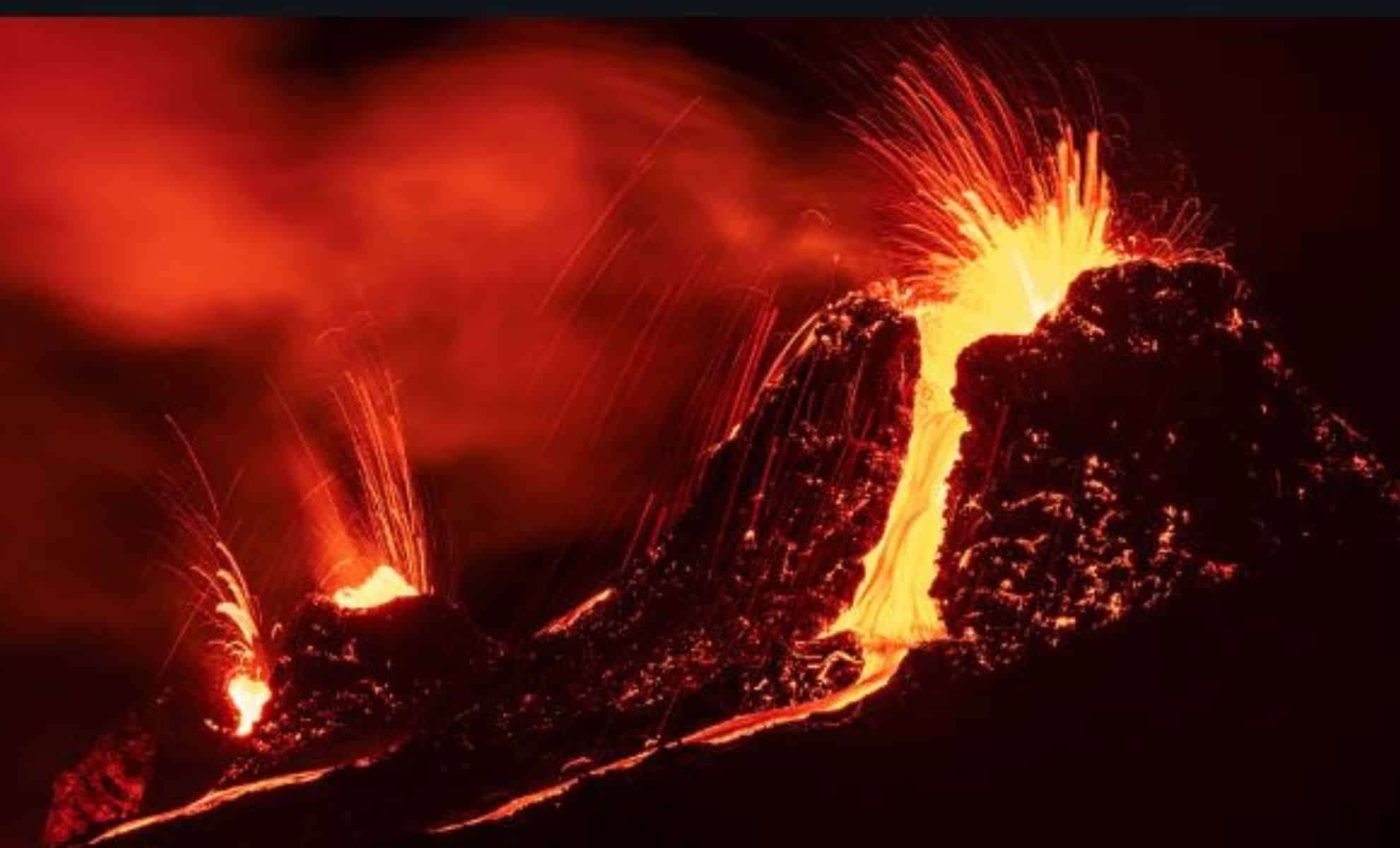
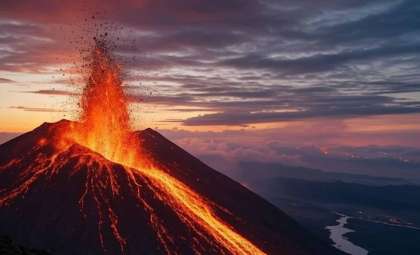
New research reveals that supervolcano eruptions could occur much more abruptly than was previously assumed, raising alarm about worldwide volcanic hazards. Scientists studying Italy’s Stromboli volcano found evidence that eruptions, once believed to develop over centuries, may instead be triggered by deep magma movements occurring just days before an eruption. This discovery fundamentally changes how scientists view the timeline of major volcanic events.
Published in Nature Communications, the investigation was conducted by researchers from the University of Florence and the University of Liverpool. By analyzing crystal formations through petrology and diffusion modeling from samples ejected during Stromboli’s 2019 explosive episodes, they reconstructed the deep magmatic processes. The new timeline uncovered suggests supervolcanoes may pose far more immediate dangers than once thought.
Understanding the Explosive Force Behind Supervolcanoes
Supervolcanoes are infamous for their immense destructive potential. Volcanologist David Pyle of the University of Oxford explains, “The extreme explosiveness comes from the combination of viscous magma and high gas content. When pressure reaches a critical point, the eruption is like releasing a violently shaken champagne bottle—only on a planetary scale.” The magma’s thick consistency and gas richness mean these eruptions release tremendous energy, with effects reaching worldwide.

Such eruptions can blast enormous quantities of ash and gases into the atmosphere, causing significant global cooling by blocking sunlight and altering weather systems. Consequences often include widespread agricultural collapse, ecological crises, and long-lasting environmental shifts.
Although these eruptions are not necessarily imminent, scientists warn that supervolcanoes remain a noteworthy global hazard owing to their explosive nature and the difficulty in forecasting their timing.
Yellowstone's Slow but Steady Magmatic Activity
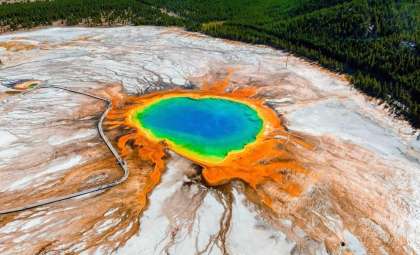
The Yellowstone supervolcano is closely observed due to its proximity to populated areas and potential for large-scale eruptions. Current research indicates magma accumulation beneath Yellowstone happens more gradually than earlier estimated. As Poland notes, “While Yellowstone is active, magma replenishment occurs too slowly to suggest an impending eruption.”
This slow buildup doesn’t mean inactivity; rather, it shows the volcanic system has not yet reached a critical threshold for explosion. Nonetheless, ongoing monitoring is vital because any sudden changes deep below could alter eruption forecasts.
Unveiling Eruption Histories Through Zircons
Another key aspect of the study focuses on the role of zircon crystals embedded in volcanic rocks, which help trace the timeline of magmatic activity. Volcanologist Dr. Clive Oppenheimer describes zircons as “time capsules” that record how long magma resides underground before erupting. For the ancient Toba supervolcano, zircons reveal magma storage durations spanning thousands of years, consistent with patterns found in other large volcanic systems.
The Toba eruption, dating back about 74,000 years, is well studied for its significant climate impact. Zircon analysis enables researchers to better understand how magma evolves over prolonged periods before an eruption, offering insights into the buildup mechanisms of future supervolcanic events.
Exploring Potential Interventions to Mitigate Eruptions
Beyond analysis, scientists are investigating ways to possibly avert devastating eruptions. Former NASA engineer Dr. Brian Wilcox suggests that deliberately cooling magma chambers may lower their energy, proposing a gradual approach to stabilize volcanic systems, potentially producing geothermal energy in the process.
However, experts caution such intervention is fraught with risks. According to Dr. Christopher Kilburn from University College London, “While venting magma is theoretically feasible, the operational challenges and hazards are immense. There is a serious concern about unintentionally triggering what we aim to prevent.”
Balancing Risks: The Challenge of Action vs. Inaction
David Pyle of Oxford University emphasizes, “Supervolcanoes demonstrate Earth’s overwhelming forces and fragility. Understanding them is crucial.” The threat of unforeseen eruptions makes comprehensive study and preparedness essential, but intervening in such vast natural systems raises profound questions. Pyle reflects, “We must weigh the dangers of both inaction and attempting to manipulate these colossal volcanos.”
As research progresses, maintaining careful observation and prudent decision-making remains critical. Managing supervolcano risks calls for striking a balance between deepening scientific insight and cautiously exploring intervention possibilities to protect global civilization.
- Categories:
- News


0 comments
Sign in to Comment