
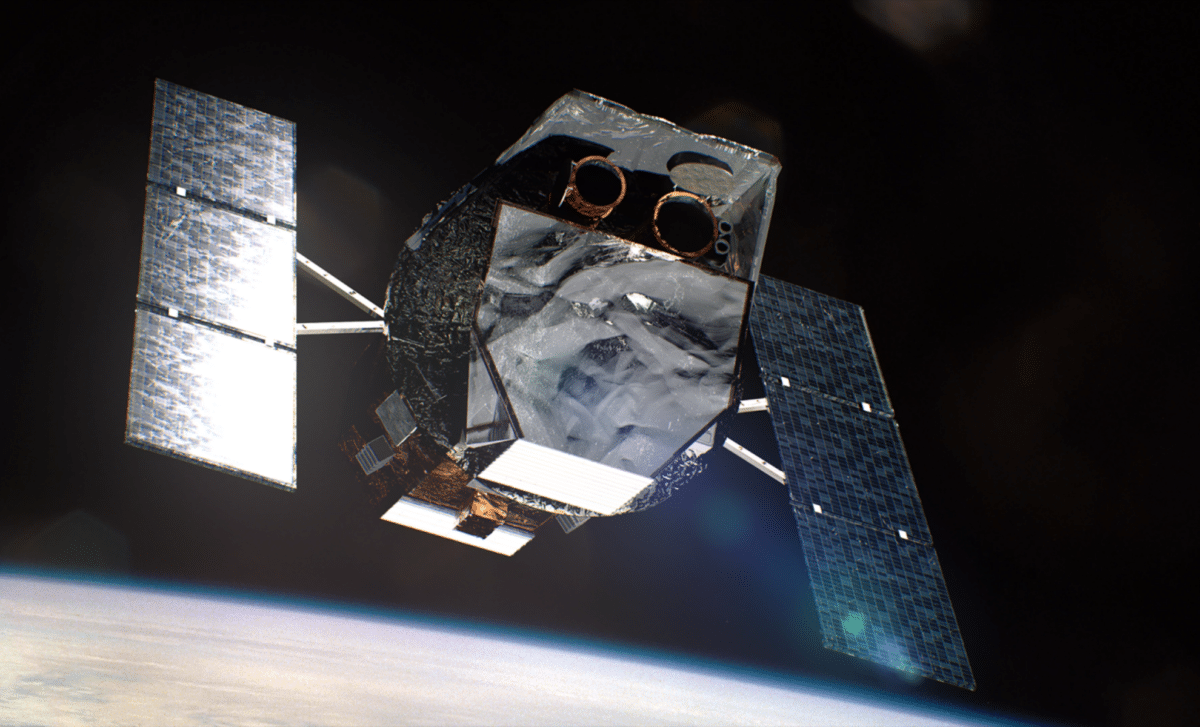
An unusual and critical challenge has emerged as a NASA spacecraft begins to descend from orbit, prompting a rapid and innovative rescue operation spearheaded by a private company. This unique mission, first revealed by Ars Technica, could revolutionize how satellites are maintained and preserved in space.
An Ambitious Attempt to Rescue a Fading Space Observatory
The focal point of this mission is Swift, a NASA satellite built to detect distant gamma-ray bursts. After years in service, atmospheric drag is causing the satellite to lose altitude, putting it on a gradual collision course with Earth’s atmosphere. Instead of allowing it to disintegrate, engineers are attempting the rare feat of capturing and docking with Swift to prolong its operational life.
According to the Ars Technica report, a private enterprise named Katalyst is leading the effort, designing a small spacecraft to physically latch onto Swift. Their strategy involves launching a servicing craft that can rendezvous with and stabilize the tumbling observatory, a maneuver fraught with technical challenges.

“This is really technically ambitious,” said Ghonhee Lee, founder and CEO of Katalyst. “It’s a lot of drag with two big spacecraft docking together,” Lee said. “Originally, we thought we had more time.”
“We realized that you can’t get 100 percent guaranteed success on this,” Lee said.
This mission carries immense importance as Swift continues to deliver crucial data about cosmic phenomena like black holes and the universe's evolution. Losing the satellite would halt these vital observations.
A Rapidly Assembled Mission Under Intense Pressure
Unlike typical NASA projects, which can take years to finalize, this operation has been organized within a matter of months, adding to its uniqueness.
“This is not quite as mature as you would expect,” one company official said. “Keep in mind that we started this whole thing about five months ago, so we are making great progress by those standards.”
To meet urgent deadlines, development, design, testing, and validation phases are overlapping, accelerating progress but also increasing risks.
“We’re basically doing it where everything is coming together,” Lee said. “The design, the testing, and the verification are all happening at once.”
NASA is embracing this risk. Shawn Domagal-Goldman, director of NASA’s astrophysics division, characterizes the mission as a pioneering experiment and a cost-effective alternative to launching a new satellite with similar capabilities.
He emphasized the mission’s “forward-leaning, risk-tolerant approach” and its benefit in expanding satellite servicing technologies to a broader range of spacecraft.
Engineering Challenges with Limited Visual Resources
A major hurdle is the incomplete documentation of Swift’s structure. Key images and design details needed for docking are missing, as original records and photographs are insufficient.
“One of the big things in developing this mission is there’s not a lot of great information about Swift looked like prior to launch,” a Katalyst manager said while standing beneath a full-scale model used for testing.
“This view that we have right here, there are no pictures that show this angle. None that we’ve found so far,” the manager said.
Despite extensive searches through archives from both NASA and Northrop Grumman, which built the spacecraft, no comprehensive imagery captures the satellite’s closure phase.
“There are pictures of lots of things around here,” the official mentioned. “There isn’t one at the end of closeout where you’re, like, ‘OK, yeah, this is what we should be expecting.’”
This data gap forces reliance on assumptions and simulations, complicating the delicate docking operation involving robotic arms and autonomous navigation.
Choosing a Smaller Rocket Could Be Decisive
The choice of launch vehicle is a crucial factor. Instead of a large rocket like Falcon 9, the team is considering Pegasus, an air-launched, smaller rocket well adapted for the mission’s specific orbit.
“Launching from Cape Canaveral on a Falcon 9 would cost about $65 to $70 million, which was unaffordable,” explained a company insider.
“Pegasus suits the mission because it can reach unique inclinations and is highly responsive with a payload capacity of up to 400 kilograms (880 pounds), perfect for our needs. Falcon 9 would have been excessive,” they added.
The entire initiative operates on a modest budget of approximately $30 million—exceptionally low for such a complex space mission.
“Our program doesn’t require new technology inventions,” Lee said. “We’re combining existing technologies in an innovative way to move quickly and efficiently, all for just $30 million.”
A Potential Breakthrough in On-Orbit Satellite Servicing
If this mission succeeds, it could transform how satellites are handled in orbit: repairing, refueling, or repositioning aging spacecraft rather than replacing them entirely.
This approach could cut costs and reduce space debris, moving satellite servicing beyond theory to practical, routine application.
Nonetheless, the operation is risky, requiring precise docking of two fast-moving large spacecraft amid incomplete data and tight schedules.
While uncertain, a successful mission would herald a future where satellites undergo maintenance and renewal, changing space from a venue of exploration to one of sustainable management.
- Categories:
- Nasa








0 comments
Sign in to Comment