
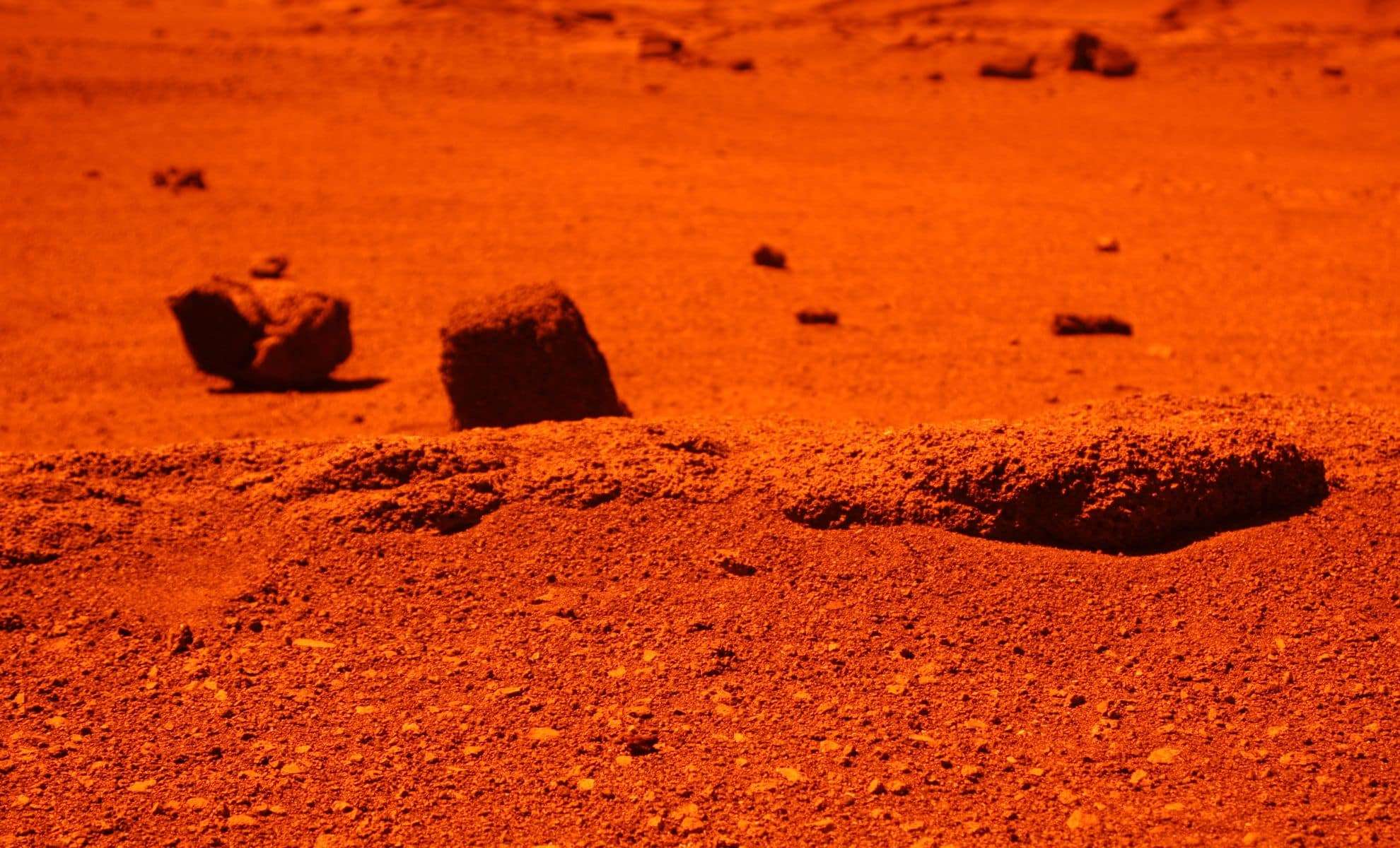
Recent discoveries from NASA’s Perseverance rover indicate that ancient volcanic processes on Mars may have created environments capable of sustaining life. Research led by Michael Tice from Texas A&M has unveiled volcanic rock formations similar to those found on Earth, challenging previous assumptions about Mars’ early habitability.
Perseverance Uncovers Intricate Volcanic Evolution
Since 2021, NASA’s Perseverance rover has been investigating the Jezero Crater, a location believed to have once contained a lake billions of years ago. Acting as a roving geochemical lab, the rover has allowed scientists like Tice and his team to conduct detailed analysis of Martian rocks’ mineral content.
They identified two distinct rock varieties: a dark rock abundant in iron, magnesium, pyroxene, and plagioclase feldspar, alongside a lighter trachyandesite characterized by plagioclase crystals and potassium.
Applying thermodynamic models to these samples, the research published in Science Advances on January 24, 2025, found chemical patterns typical of active volcanic processes on Earth. Tice explained, “The phenomena we detected—fractional crystallization and crustal assimilation—are hallmark processes in Earth’s volcanic systems.”

Volcanism’s Role in Nurturing Potential Martian Life
The enduring volcanic activity inferred from the rock samples points to Mars having regions with a stable chemical environment, capable of providing energy and nutrients essential for microorganisms. This supports theories that hydrothermal systems fueled by volcanoes might have created ideal niches for early life forms.
Tice commented, “This area of Mars likely experienced prolonged volcanic activity, potentially supplying various life-supporting compounds over extended periods.” If these compounds remained in steady environments, ancient Mars may have harbored basic ecosystems.
The Importance of Returning Samples to Earth
While Perseverance’s onboard instruments provide valuable insights, they cannot match the analytical depth of Earth-based laboratories. Therefore, the forthcoming Mars Sample Return mission is a critical objective for planetary scientists.
“These rocks were specifically chosen because they hold vital information about Mars’ environmental history,” Tice said. “By bringing them back to Earth, we can perform detailed testing to uncover their geological and possible biological secrets.”
Such samples might reveal whether ancient Mars had not only water and warmth but also the chemical energy gradients required to sustain microbial life.
Future Directions in Exploring Mars’ Volcanic Past
This research broadens the scope of astrobiological exploration from solely lakebeds and river deltas to include volcanic regions, which may have been equally important for Mars’ potential to support life.
As Perseverance continues its work and future missions—including human spaceflights—are planned, uncovering Mars’ volcanic history will increasingly guide scientific priorities.
- Categories:
- Space









0 comments
Sign in to Comment