
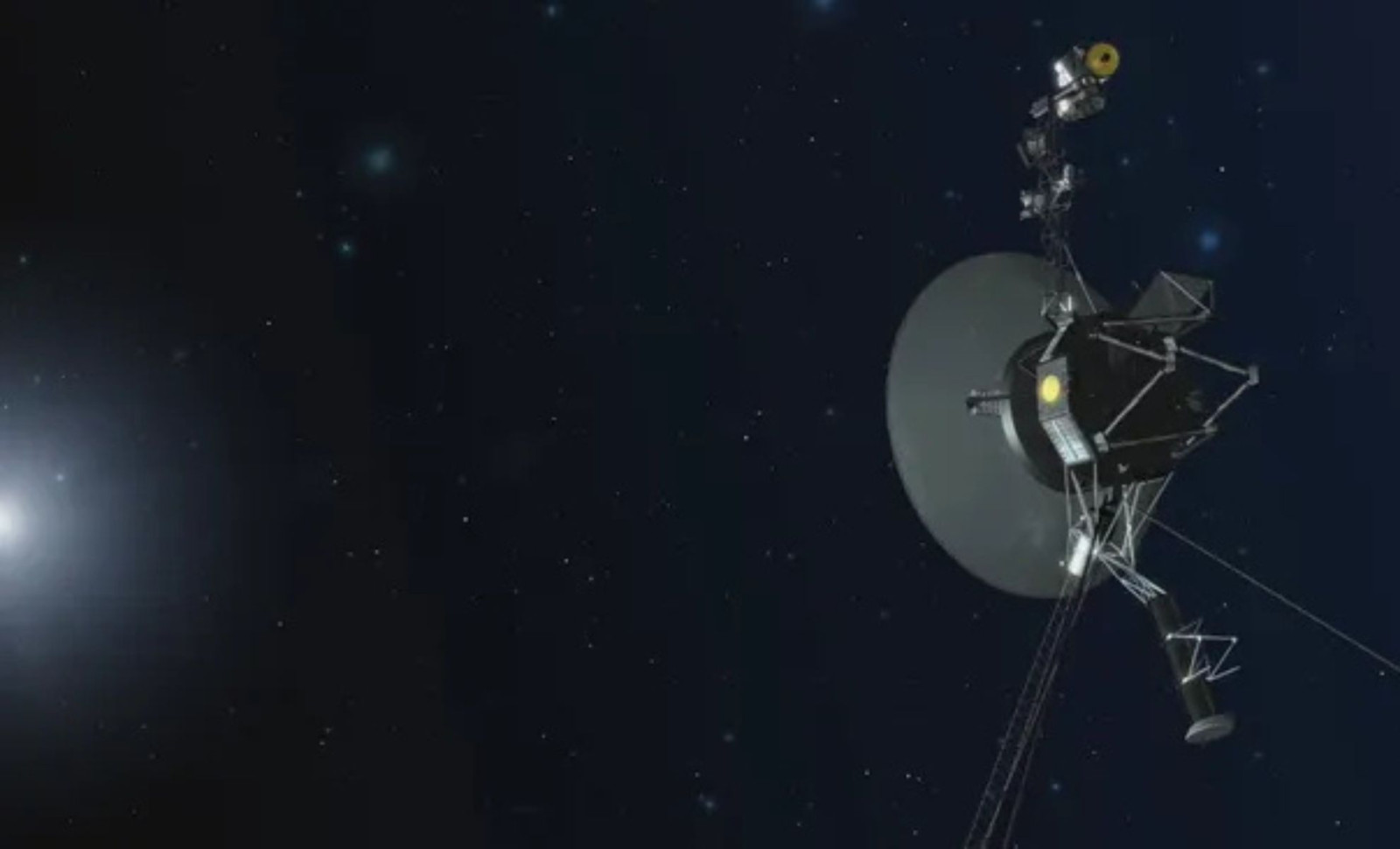
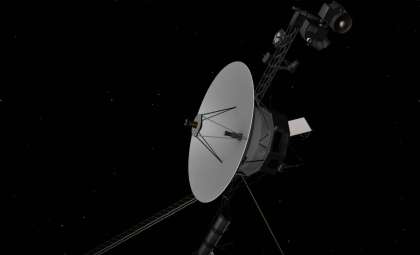
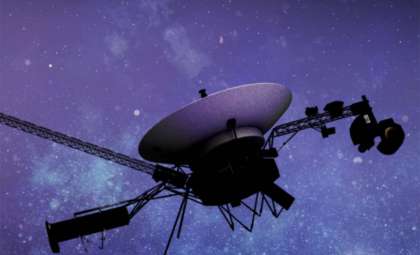
In November 2026, NASA’s Voyager 1 spacecraft will achieve a historic first by becoming the earliest human-made artifact to venture a full light-day away from our planet. As it approaches its 50th anniversary since launch, this landmark underscores the immense scale of the universe and marks a new chapter in humanity’s quest to explore beyond our Solar System.
Originally launched in 1977 with the goal of studying the outer planets, Voyager 1 has far exceeded its original mission. It is now moving through the vastness of interstellar space, and hitting the one light-day distance milestone demonstrates just how expansive the cosmos truly is.
An Unmatched Voyage
Voyager 1 was launched under NASA’s ambitious Voyager initiative, designed to investigate distant worlds such as Jupiter and Saturn. After completing these planetary encounters, the probe embarked on a trajectory that would carry it beyond the confines of our Solar System. Currently, as NASA reports, it is located over 166 Astronomical Units (AU) from Earth, with one AU representing the mean Earth-Sun distance.

Traveling at approximately 61,195 km/h (38,025 mi/h), Voyager 1 still requires more than a year to cover the span of one light-day, which equals about 25.9 billion kilometers (16 billion miles).
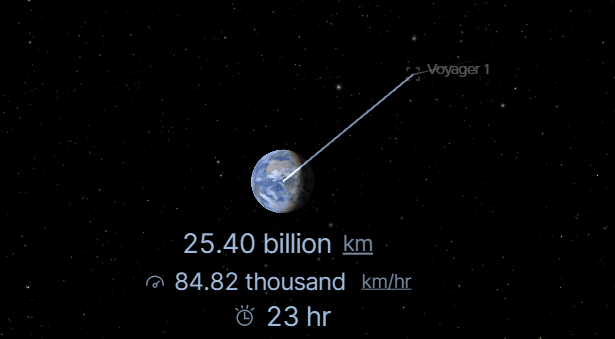
The time for a signal to traverse the gap between Earth and Voyager 1 has now grown to over 23 hours, highlighting the staggering distance it has reached.
Defining a Light-Day
A light-day is the quantity of distance light covers within 24 hours, roughly equating to 25.9 billion kilometers. According to the U.S. space agency, Voyager 1 is predicted to cross this threshold on November 15, 2026, with the milestone completion projected for January 28, 2027.
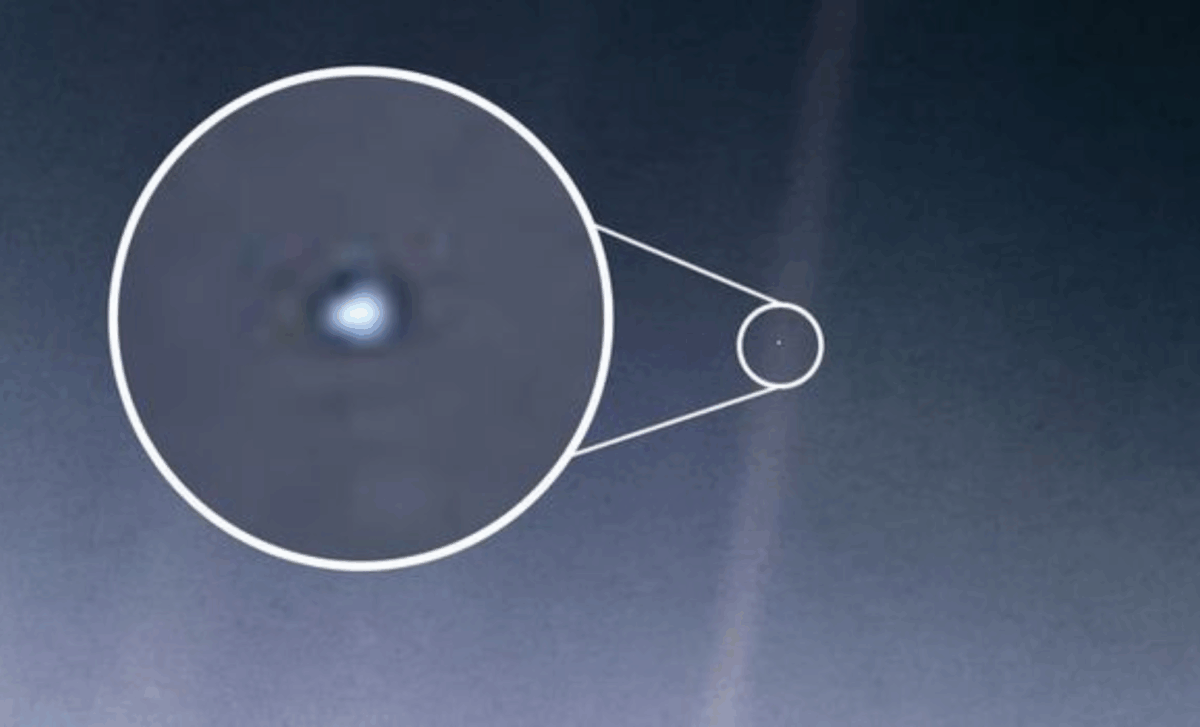
While light traverses this distance in just one day, it has taken Voyager 1 nearly five decades to arrive there. This achievement is a testament to the challenges of deep-space exploration and stands as a significant milestone for space history.
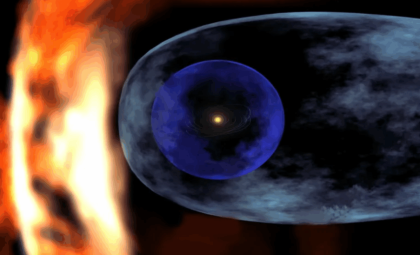
” Traveling at speeds of over 35,000 miles per hour, it will take the Voyagers nearly 40,000 years, and they will have traveled a distance of about two light years to reach this rather indistinct boundary,” explained NASA in a statement.
An Endless Journey Into the Unknown
Although Voyager 1 is about to hit this new distance benchmark, the spacecraft’s power supply will ultimately be depleted. NASA anticipates the probe to maintain communications until the early 2030s, after which transmissions will cease. Nevertheless, Voyager 1 will continue to drift through interstellar space indefinitely with no definitive endpoint.
Once power is exhausted, Voyager 1 will have become the most distant human-made object ever created. As NASA explains:
“One opinion is that the boundary is where the Sun’s gravity no longer dominates – a point beyond the planets and beyond the Oort Cloud. This boundary is roughly about halfway to the nearest star, Proxima Centauri.”
Despite the eventual loss of contact, Voyager 1 will remain a lasting symbol of humanity’s inaugural voyage into interstellar space.
- Categories:
- Space




0 comments
Sign in to Comment