
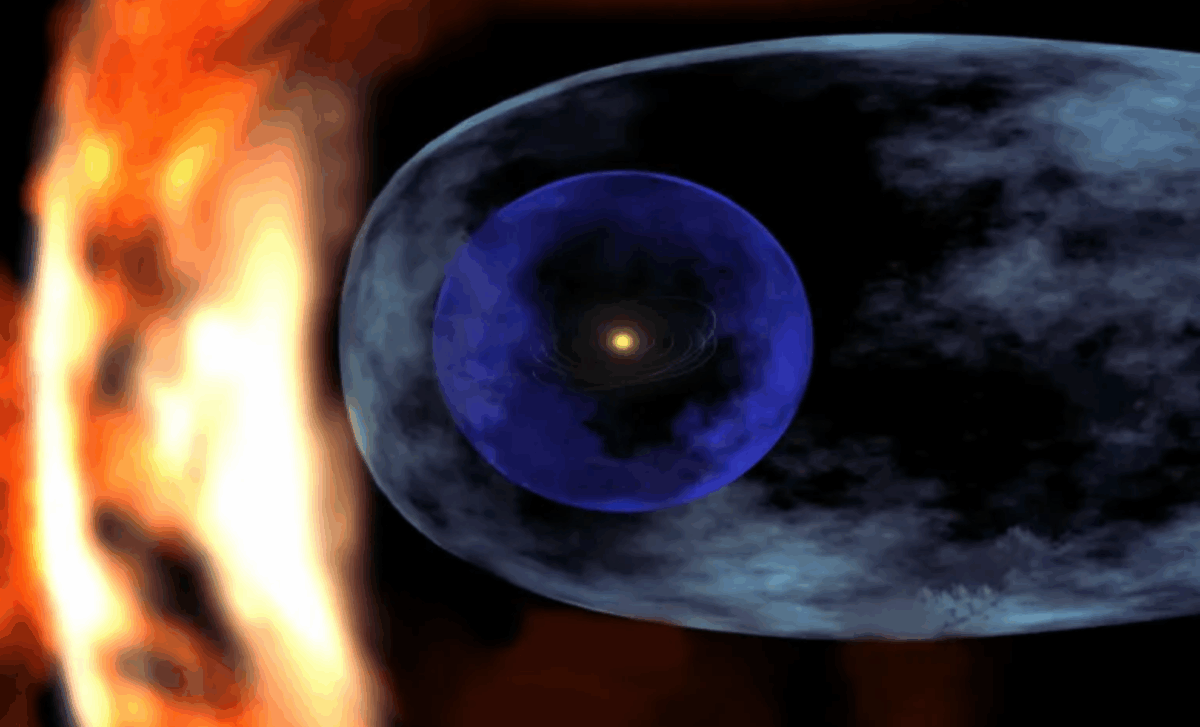
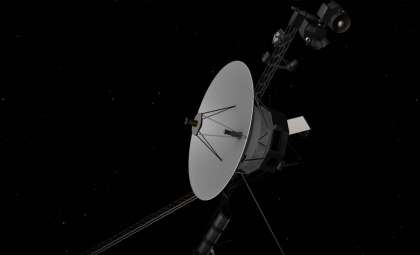
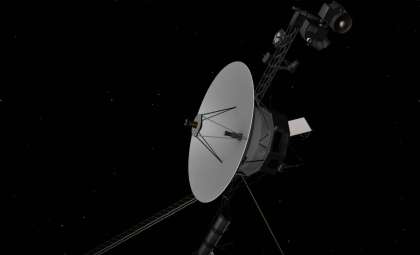
Over the past 50 years, NASA’s Voyager 1 and Voyager 2 spacecraft have journeyed farther than any objects created by humans, exploring the enigmatic region where our solar system ends and the interstellar medium begins. Recent analyses of their data uncovered a breathtaking discovery: a blazing boundary with temperatures soaring into the tens of thousands of Kelvin.
The Intense Frontier Between Solar Wind and Space Beyond
At the outermost edge of our cosmic surroundings, the Voyager probes detected what researchers describe as a "fiery frontier" — a highly energized zone where the Sun’s influence merges with interstellar space. According to NASA’s latest findings, temperatures in this region range from 30,000 to 50,000 Kelvin, or about 54,000 to 90,000 degrees Fahrenheit. Despite such extreme heat, the sparse nature of this area ensured the spacecraft remained unharmed. Instead, their instruments measured charged particles moving at tremendous speeds in the near-vacuum of space.
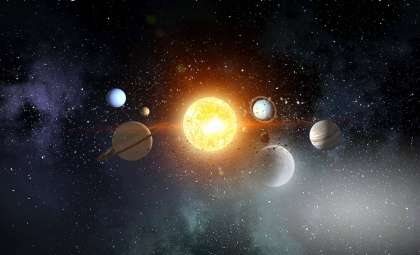
NASA explains, “The Sun sends out a constant flow of charged particles called the solar wind, which ultimately travels past all the planets to some three times the distance to Pluto before being impeded by the interstellar medium. This forms a giant bubble around the Sun and its planets, known as the heliosphere.” Within this vast bubble lies the realm we call home — the domain where the Sun’s magnetic and particle influence dominates. Beyond it begins true interstellar space.
Add Cosmo Herald as a Preferred Source

As the Voyagers crossed this dynamic boundary, they provided valuable data to help define the heliopause, the transitional boundary where solar forces balance with those of the interstellar environment.
“The boundary between solar wind and interstellar wind is the heliopause, where the pressure of the two winds are in balance. This balance in pressure causes the solar wind to turn back and flow down the tail of the heliosphere,” NASA continues. “As the heliosphere plows through interstellar space, a bow shock forms, similar to what forms as a ship plowing through the ocean.”
This cosmic bow shock signals not just the end of the Sun’s direct domain, but also heralds an entirely new region influenced by magnetic fields and particles shaped by distant stars.
The Sun’s Pulsing Boundary
The distances at which Voyager 1 and 2 crossed the heliopause varied, revealing that this boundary is not static but shifts according to the Sun’s magnetic fluctuations. During periods of heightened solar activity, the heliosphere expands; when the Sun calms down, it contracts. This pulsing character is one of the mission’s most intriguing discoveries.
As NASA explained, “Scientists expected that the edge of the heliosphere, called the heliopause, can move as the Sun’s activity changes, sort of like a lung expanding and contracting with breath. This was consistent with the fact that the two probes encountered the heliopause at different distances from the Sun.”
This finding enriches our understanding of how the Sun interacts with the broader galaxy and offers new insights into the behaviors of cosmic rays, magnetic fields, and energetic particles just beyond our solar system.
Voyager’s Lasting Contributions
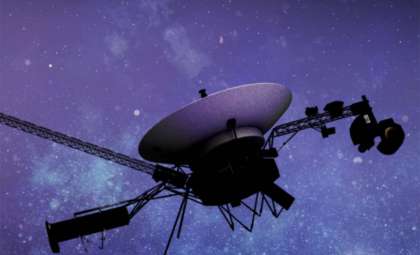
Originally launched in 1977 to study the outer planets, Voyager 1 and 2 have far exceeded their expected lifetimes. Nearly five decades later, they continue transmitting critical data from billions of miles away, outpacing any other human-made explorers.
The intense "wall of fire" they traversed is less a barrier and more a window into the volatile boundary where the Sun’s reach wanes, and the vast expanse of interstellar space begins. Their journey highlights the fragile edge between our familiar solar environs and the greater universe beyond.
- Categories:
- Space





0 comments
Sign in to Comment