
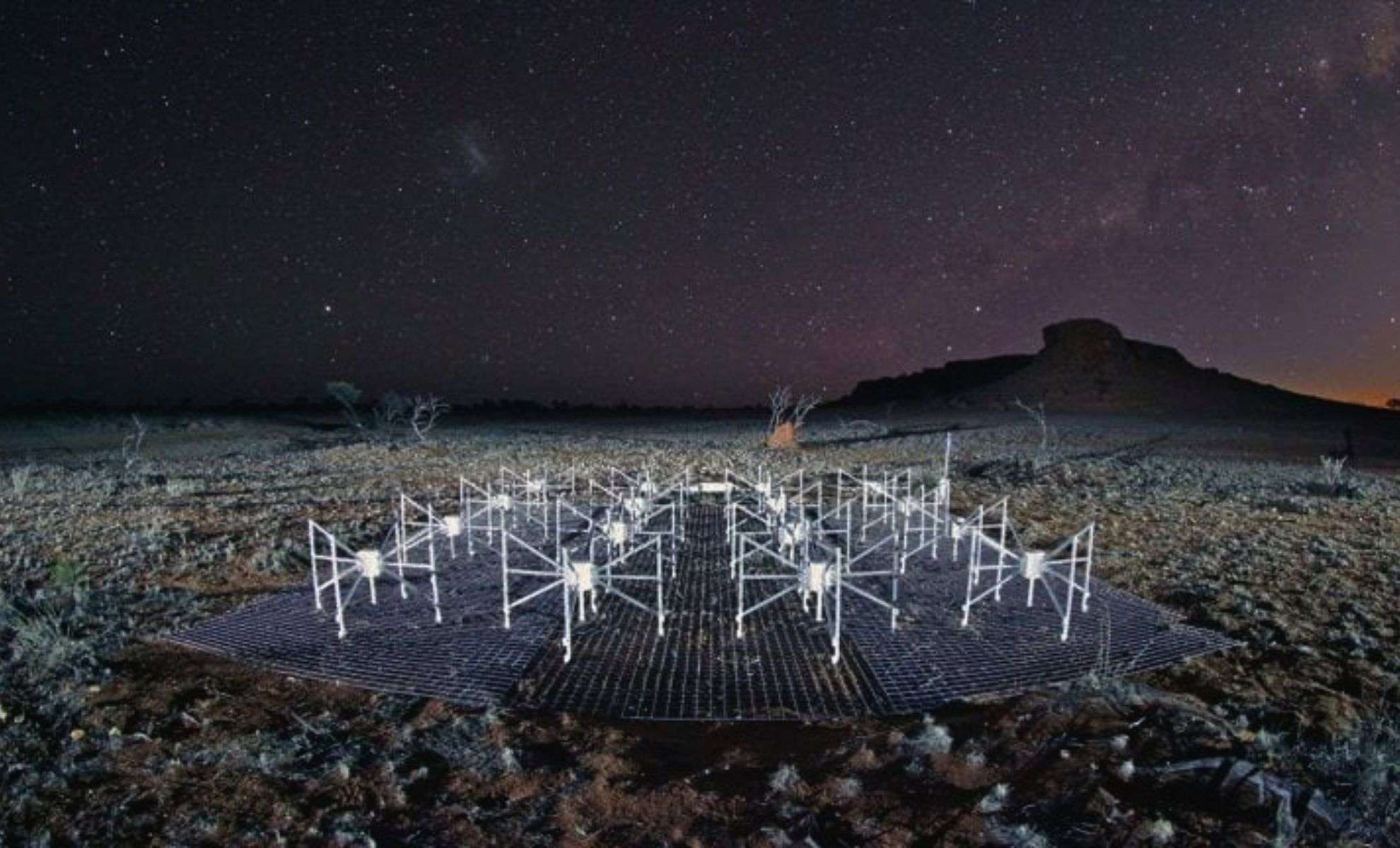
Prior to the emergence of stars and galaxies, the cosmos existed in a vast, dark expanse. Recent research indicates this era might have been warmer than previously estimated. Analyzing nearly ten years of data collected by a remote radio telescope in Western Australia, astronomers have found evidence that the universe started warming hundreds of millions of years before the first luminous objects appeared.
This early temperature rise, embedded in the faint signals of primordial hydrogen, could reshape our understanding of the universe’s formative phases.
The Universe’s Dim and Quiet Youth
Approximately 13.8 billion years ago, the universe began with the Big Bang, an unimaginably hot and dense explosion. Within a few hundred thousand years, the universe had cooled enough for particles to join into neutral hydrogen atoms, ushering in a prolonged period of darkness.

This stage, called the cosmic dark ages, lasted for hundreds of millions of years with no stars or galaxies illuminating the void. Gravity eventually gathered matter into dense regions, sparking the formation of the first bright sources like stars and black holes, which ended this darkness.
The energy from these early sources, especially ultraviolet light, started eroding the thick hydrogen fog during a dramatic process called reionization, allowing light to traverse the cosmos freely. But what mechanisms began warming the universe prior to this breakthrough? This question drives the latest study.
Detecting Faint Echoes from the Early Universe
Because the earliest stars are too far and faint for direct observation, researchers look for subtle indirect clues they left behind. One critical indicator is the 21-centimeter hydrogen signal, a weak radio emission caused when the spin orientation of a hydrogen atom’s proton and electron alter.
Stretched over billions of years by cosmic expansion, this signal serves as a temperature indicator, revealing the physical state of intergalactic hydrogen during the universe’s youth.
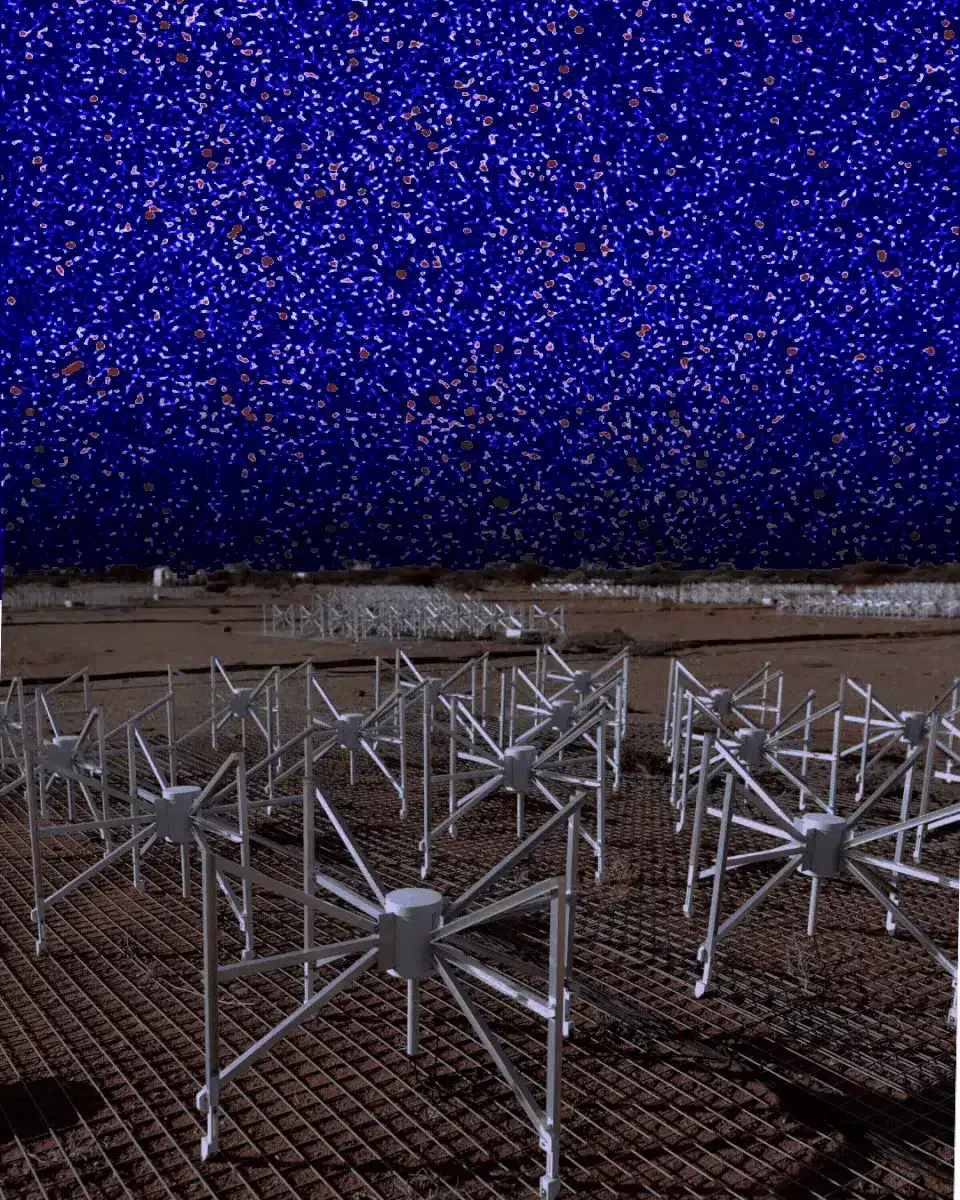
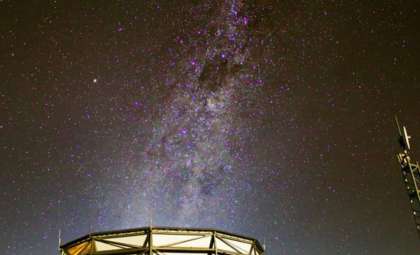
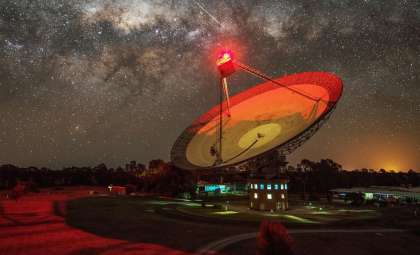
The research team, led by scientists at the International Centre for Radio Astronomy Research (ICRAR), focused on capturing this signal from roughly 800 million years post-Big Bang. They employed the Murchison Widefield Array, an extraordinarily sensitive radio telescope situated in the isolated Western Australian desert, minimizing interference from human activity.
The Absence of a Signal Reveals New Insights
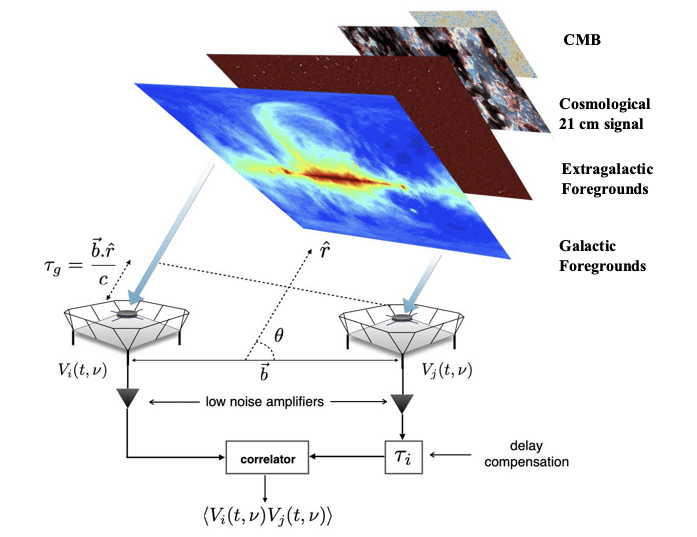
After meticulously filtering out noise from nearby galaxies, Earth’s atmosphere, and the telescope itself, researchers anticipated detecting a clear signature of very cold hydrogen, evident as a dip in radio frequencies. Surprisingly, this expected feature was missing.
Instead, the data suggested the hydrogen gas had already experienced gentle warming, potentially due to X-ray emissions from primordial black holes or lingering light from massive early stars that had already extinguished.
Cathryn Trott, lead author and professor at Curtin University, stated:
“As the universe evolved, the gas between galaxies expands and cools, so we would expect it to be very, very cold. Our measurements show that it is at least heated by a certain amount. Not by a lot, but it tells us that very cold reionization is ruled out.”
A Delicate Change with Profound Consequences
Although the sought-after 21-centimeter signal was not directly observed, the investigation produced the most refined map to date of the early radio universe. This achievement was driven by an innovative data-cleaning technique that effectively eliminated foreground noise, a vital step forward as researchers gear up for more advanced observations.
Attention now focuses on the Square Kilometre Array (SKA), an ambitious global radio telescope project underway in Australia and South Africa. When operational, SKA should possess the sensitivity to detect these faint hydrogen signals directly, offering unprecedented insights into the emergence of the universe’s first structures. Co-author Ridhima Nunhokee expressed optimism:
“We know what we are looking for. We just need a few hours of [SKA’s] data that will allow us to go to the levels that we want to.”
In the meantime, the faint murmur of hydrogen from the universe’s dark beginnings continues to intrigue astronomers with hints of unexpected warmth.
- Categories:
- Space






0 comments
Sign in to Comment