
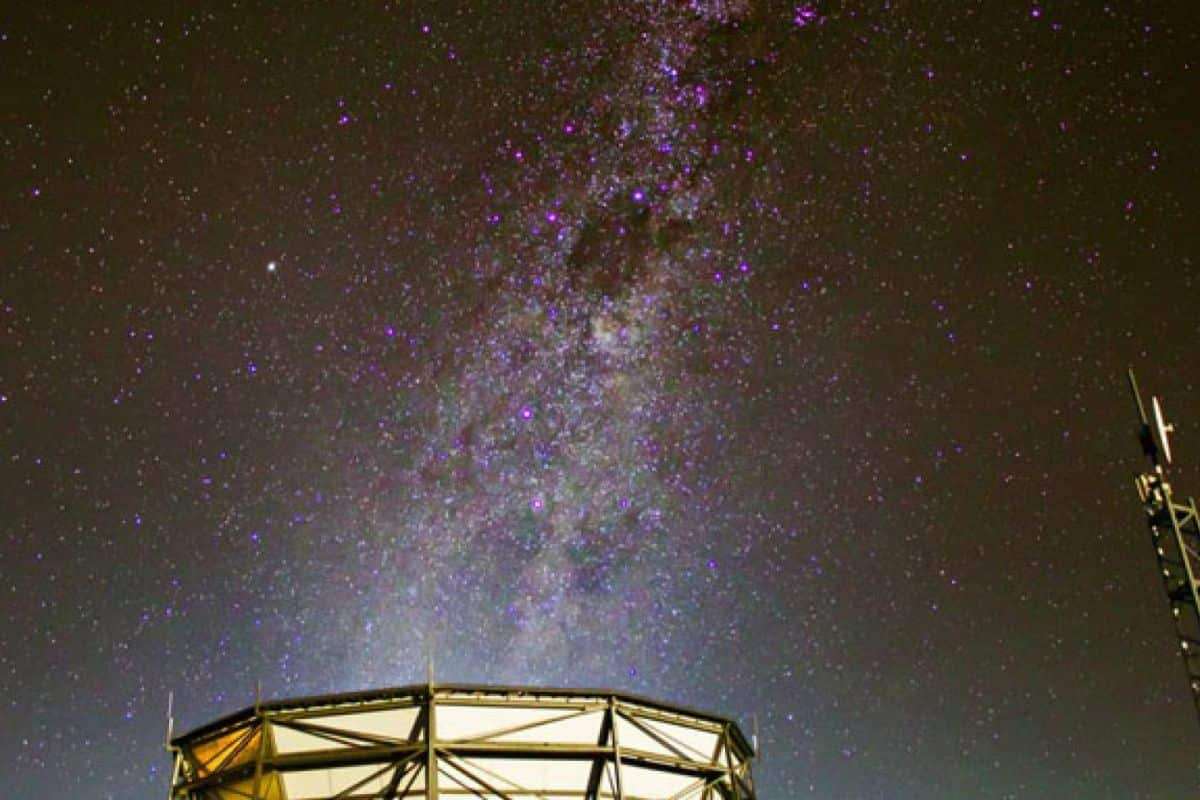
Scientists have released extraordinary new visuals capturing the universe during its formative moments, shedding light on the period following the Big Bang. Taken by the Atacama Cosmology Telescope (ACT) in Chile, these images represent the most detailed observations so far of the cosmic microwave background (CMB)—the faint afterglow of the universe’s birth.
A Snapshot of the Universe’s Beginnings
In the initial 380,000 years after the Big Bang, the universe existed as a dense, opaque plasma where light was scattered by free electrons, preventing any direct view. As expansion cooled the universe, electrons combined with protons to form neutral atoms of hydrogen and helium.
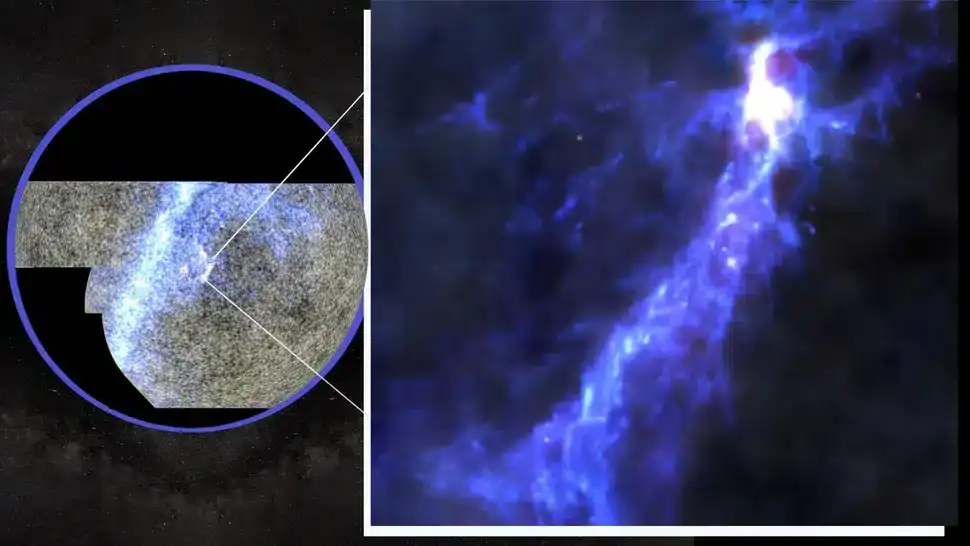
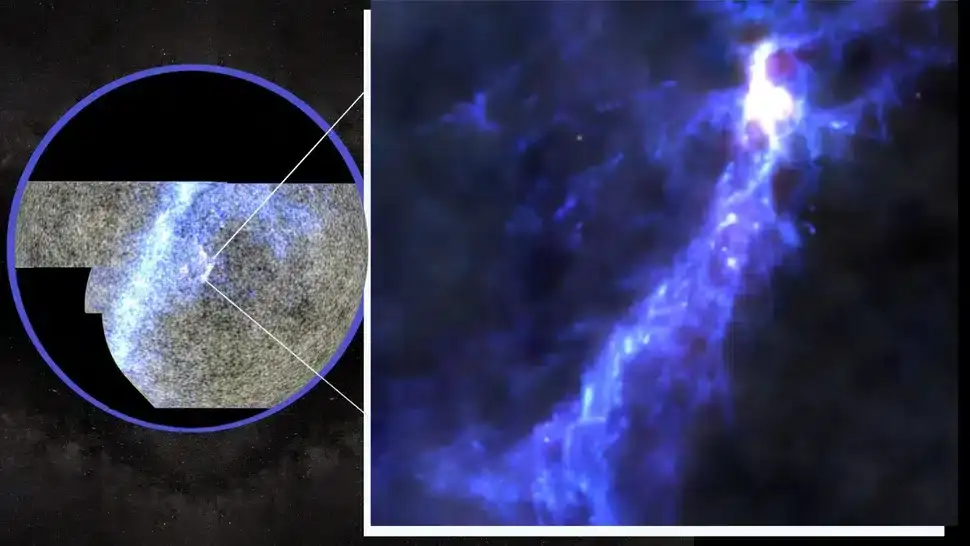
This transition allowed photons to travel freely, creating the CMB—the oldest light detectable today. The ACT’s high-definition images map this primordial radiation in extraordinary detail, uncovering subtle patterns that hold clues to the universe’s earliest framework.

Star and Galaxy Formation Unveiled
A major revelation from ACT’s observations is the detection of light polarization, offering a window into the assembly of the first large-scale cosmic structures. These signals reveal how gravity gathered clouds of hydrogen and helium together.
“We are witnessing the earliest steps in the formation of stars and galaxies,” explained Suzanne Staggs, ACT’s director. The data enable researchers to trace the flow of primordial gases as they coalesced into complex structures over billions of years.
The Ongoing Puzzle of Cosmic Expansion
These images also add context to the persistent enigma known as the Hubble tension, which refers to differing measurements of how fast the universe expands, based on CMB data versus observations of nearby galaxies.
ACT’s results confirm a growth rate of approximately 67–68 km/s per megaparsec, aligning with previous CMB-based findings. Yet, direct studies of galaxy movement indicate a swifter expansion between 73 and 74 km/s per megaparsec.
To resolve this, alternative hypotheses involving exotic particles or phases of rapid early expansion have been suggested, but ACT’s results lend strong support to the standard cosmological model as the best fit for current data.
Pinpointing the Universe’s Mass and Makeup
Through ACT’s data, scientists have refined our understanding of the universe’s overall mass, estimating it to be equivalent to 2 trillion trillion (2 × 10³⁶) solar masses. The distribution breaks down as follows:
- Dark energy (68%) — driving the acceleration of cosmic expansion
- Dark matter (27%) — the invisible scaffolding shaping galaxies
- Ordinary matter (5%) — the matter detectable through direct observation
Remarkably, just around 100 zetta suns—each containing 10²¹ times the mass of our Sun—are made up of ordinary matter, mainly hydrogen and helium.
Exploring New Horizons in Cosmic Research
With the ACT project concluding in 2022, astronomers are now turning to the Simons Observatory, a cutting-edge telescope under construction at the same site. This instrument promises unprecedented accuracy, paving the way for deeper investigations into dark matter, dark energy, and cosmic inflation.
Meanwhile, the wealth of data gathered by ACT remains available to the global scientific community via NASA’s LAMBDA archive, providing a valuable resource for ongoing exploration of the universe’s earliest epochs. These remarkable images not only expand our cosmic perspective but also mark a significant advance in decoding the origins of everything.
- Categories:
- Space









0 comments
Sign in to Comment