
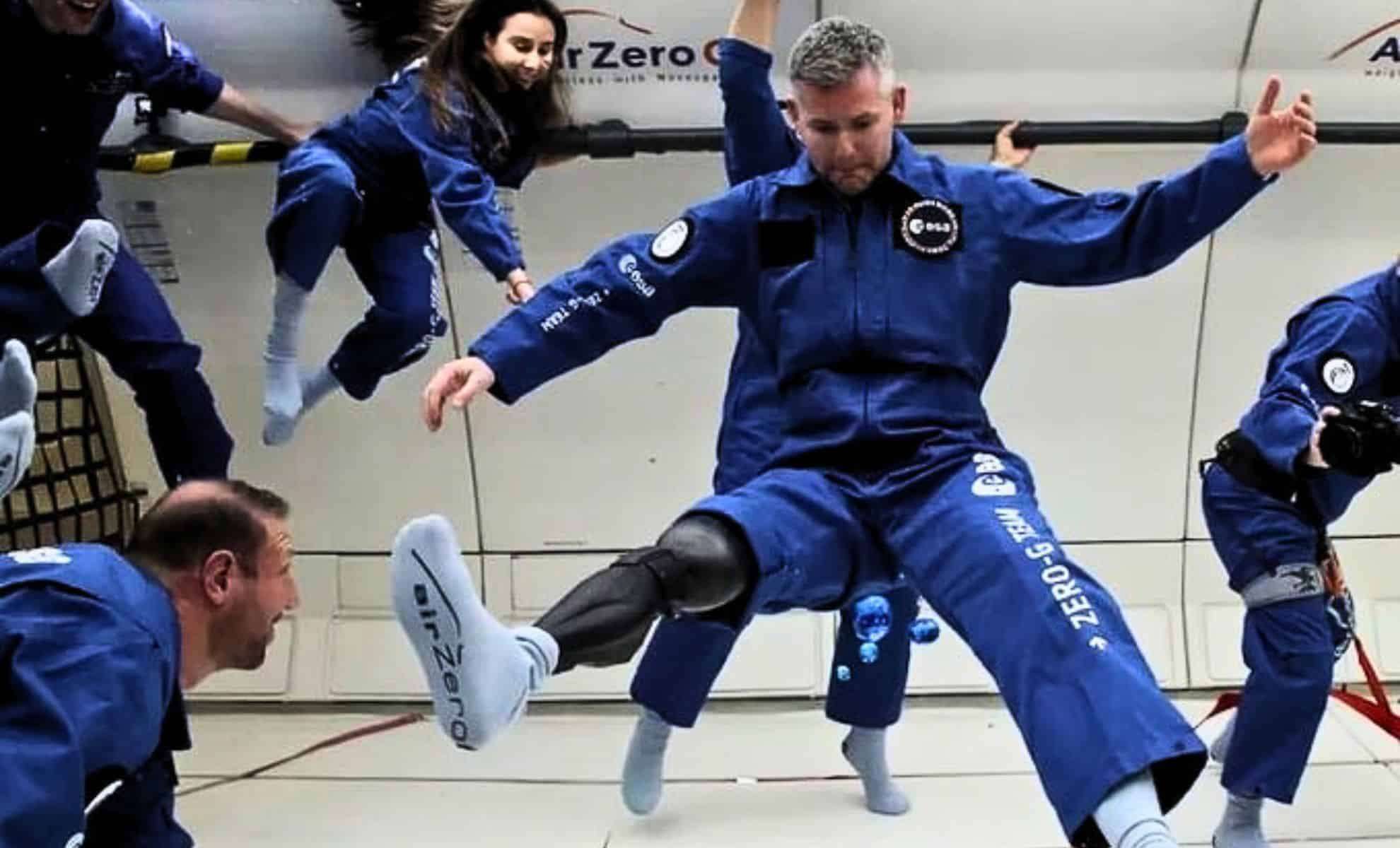
John McFall, the European Space Agency’s pioneer para-astronaut, has received medical approval to join the International Space Station for a long-term mission, announced ESA’s Director of Human and Robotic Exploration, Daniel Neuenschwander. This decision signifies a monumental advancement in space travel, affirming that physical disabilities are not barriers to reaching outer space.
An Unprecedented Milestone for Accessible Space Exploration
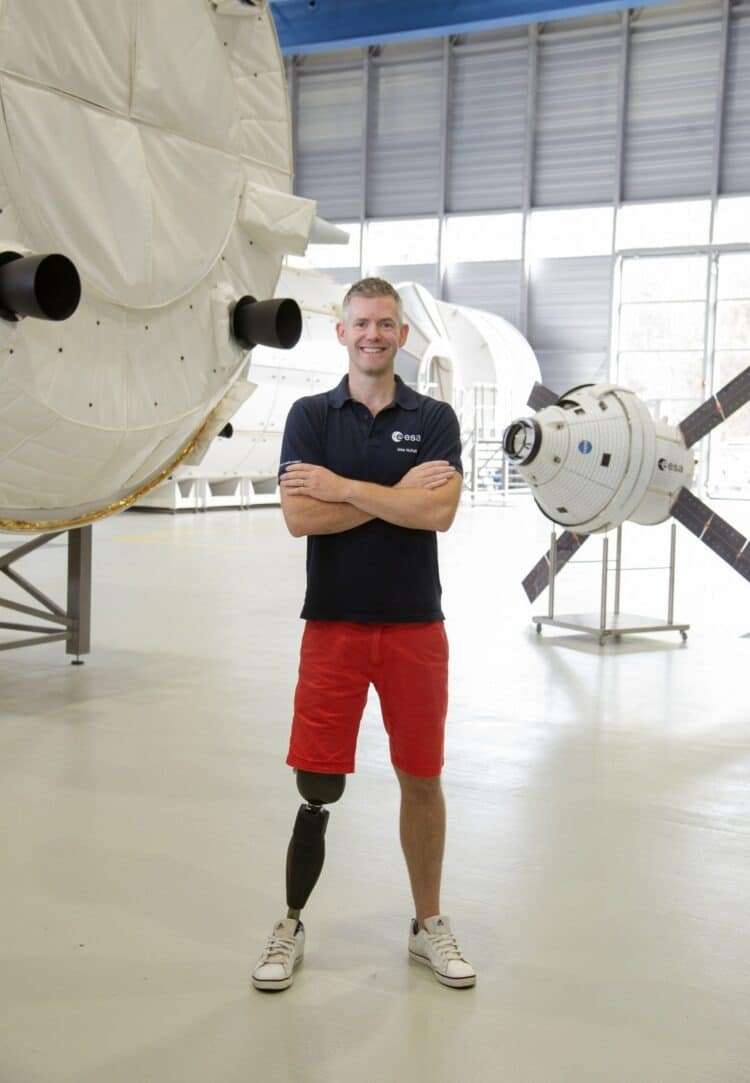
The 43-year-old Briton, McFall, lost his right leg above the knee following a motorcycle accident at 19. Despite this life-altering event, he achieved success as a Paralympic sprinter and later qualified as a surgeon before becoming ESA’s first astronaut with a physical disability in 2022. His story marks a transformative moment for both space exploration and societal perceptions of disability.
This announcement follows the ESA-led feasibility study called Fly!, which analyzed the feasibility and challenges of a para-astronaut operating in zero gravity. The conclusion was decisive: no factors prevent McFall’s full participation in a mission.

To gain clearance, McFall demonstrated mastery over all astronaut responsibilities, including emergency protocols, adapting to microgravity, and daily station activities. He performed exceptionally, surpassing expectations.
Neuenschwander admitted initial concerns but was impressed with McFall’s smooth adjustment. “Safety procedures aboard the International Space Station are complex,” he remarked, “and John’s adaptation has been remarkable.”
Adapting Prosthetics for Space Environment
Although medical approval is a vital step, McFall’s prosthetic limb must still pass specialized certification for use in space. Every item brought onto the ISS must comply with stringent safety and operational criteria, and his prosthesis is no exception. ESA collaborates with German orthopedics firm Ottobock to customize the design for microgravity conditions as detailed in related research.
McFall views this challenge as a chance to advance prosthetic technology for millions on Earth as well. “Our work in space should translate into improved mobility solutions for people everywhere,” he emphasized.
To validate the prosthesis’ performance, McFall has undergone intense testing, including cycling while inclined head-down to simulate microgravity’s impact on fit and comfort. These assessments are essential for ensuring his safety and mission effectiveness.
Planning the Official Mission Ahead
While ESA has approved his participation, the mission timeline is still being finalized. The upcoming stage focuses on defining scientific goals for McFall’s ISS tenure, with potential studies exploring human space adaptation, prosthetic technology, and rehabilitation under microgravity.
This achievement also illustrates varying global attitudes toward inclusion in space programs. ESA continues to promote diversity in astronaut selection, contrasting with the United States’ recent reduction in DEI (Diversity, Equity, and Inclusion) initiatives under the Donald Trump administration.
Neuenschwander recognized this contrasting approach, commenting, “We are entering a period where DEI philosophies among ISS partners are evolving differently.”

A Powerful Example of Progress
McFall’s achievement transcends personal success, symbolizing a significant cultural evolution in space exploration. As agencies strive for inclusivity, spaceflight aspirations expand beyond traditional astronaut profiles.
With final preparations underway, the world anticipates a historic moment: the first para-astronaut living and contributing on the ISS for a six-month duration, demonstrating that previous limitations no longer define our potential.










0 comments
Sign in to Comment