

The quest for eternal youth has fascinated people across generations, yet new findings indicate that the hope of everlasting life may be beyond our grasp. A recent article published on October 7th in Nature Aging argues that the human lifespan is approaching its natural ceiling, making true immortality unlikely.
Improvements in Life Expectancy Are Slowing Down
During the last hundred years, life expectancy has risen significantly in many regions, mainly because of progress in medical care and reductions in early childhood deaths. However, this upward trend has plateaued in recent times. Although technology and healthcare have helped people live longer, the potential for extending lifespan further seems to be diminishing.
This research, spearheaded by S. Jay Olshansky, a public health professor at the University of Illinois, challenges the optimistic notion that humans will regularly survive well beyond 100 years. Olshansky's team estimates the maximum lifespan for humans falls between 115 and 120 years, and it’s improbable that future innovations will significantly exceed this boundary.

Regional Differences in Longevity Trends
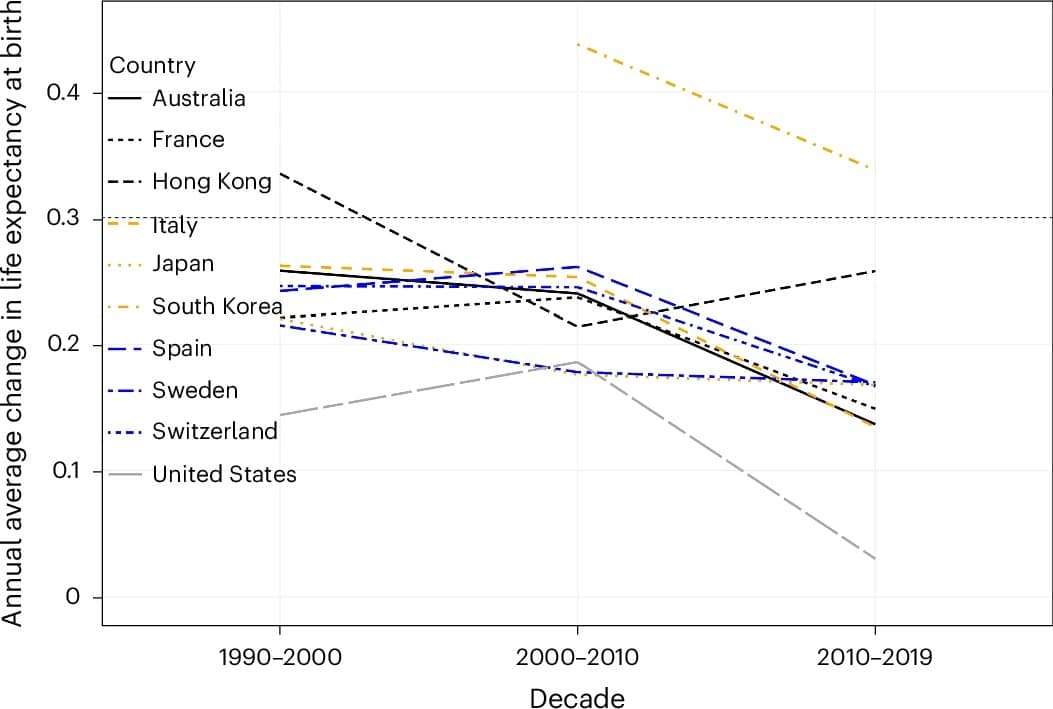
Certain countries stand out as positive outliers. Places like Hong Kong and South Korea continue to experience life expectancy improvements thanks to strong public health initiatives, such as anti-smoking campaigns and enhanced healthcare systems. In these countries, it’s increasingly common for people to live well past their hundreds.
Conversely, some nations have witnessed stagnation or even reduction in average lifespan. The United States, for example, has faced a decline in life expectancy recently, largely due to the opioid crisis, increasing obesity rates, and the impacts of the COVID-19 pandemic.
Life Expectancy Trends Worldwide
The table highlights how different nations have undergone varying life expectancy changes shaped by healthcare policies, cultural habits, and social conditions. These disparities emphasize that although favorable circumstances can lengthen individual lives, universal increases in longevity are not guaranteed.
Is the Era of Rapid Lifespan Extension Ending?
The early 1900s showed significant leaps in life expectancy due to groundbreaking medical advances. Yet, the latest findings suggest those improvements are leveling off. The prospect of surging beyond 100 years of age appears increasingly limited, with only minor improvements expected.
Future medical efforts may need to pivot away from chasing eternal life toward enhancing the overall well-being of older adults. Instead of merely adding years to life, research should focus on making those years healthier and more fulfilling.
A New Priority: Focusing on Healthspan Instead of Lifespan
Although the fantasy of never-ending life remains unrealized, the drive to improve health during aging remains crucial. By addressing age-related diseases and promoting vitality in later years, science aims to extend people’s quality of life. This approach anticipates that individuals will not only live longer but also enjoy their senior decades in better physical and mental shape.
- Categories:
- Science










0 comments
Sign in to Comment