
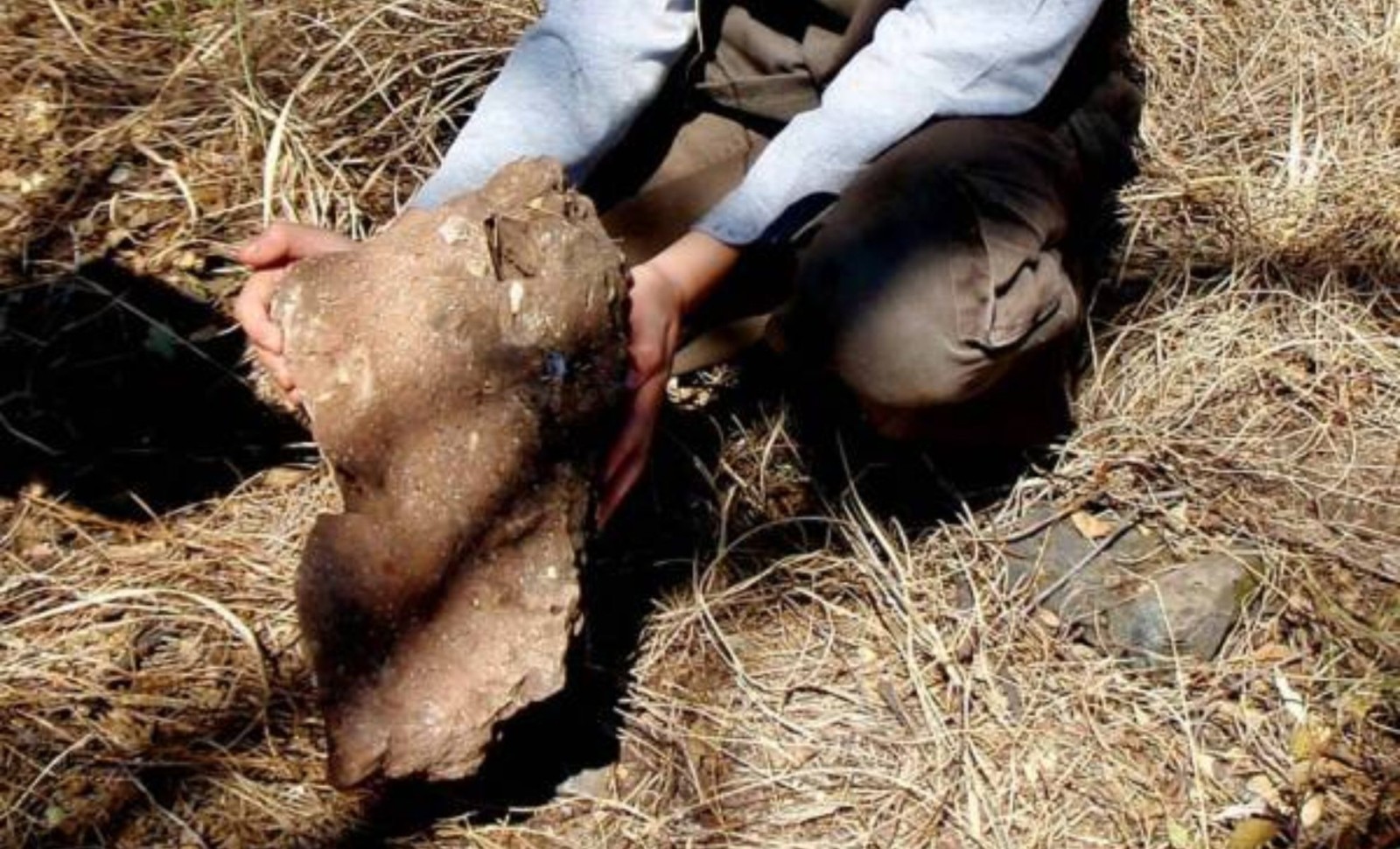
Back in 2008, 9-year-old Matthew Berger was simply walking his dog when he noticed what appeared to be a mere stone. However, this turned out to be an extraordinary find—a fossil estimated to be nearly 2 million years old, later classified as Australopithecus sediba.
Unearthed in a cave near Johannesburg, South Africa, these remains are recognized as one of the century's most significant fossil discoveries. Australopithecus sediba is thought to occupy an evolutionary position between the famed Australopithecus afarensis (best known as “Lucy”) and the early tool-using human ancestor, Homo habilis.
A Crucial Evolutionary Bridge
Scientists striving to map the path from primitive ape-like beings to early humans have found Australopithecus sediba to be a pivotal discovery. It appears to occupy an evolutionary timeline between Australopithecus afarensis (the species behind Lucy) and Homo habilis, credited as one of the first species to craft tools.

“These fossils give us an extraordinarily detailed look into a new chapter of human evolution and provide a window into a critical period when hominids made the committed change from dependency on life in the trees to life on the ground,” noted Lee Berger, a paleoanthropologist with South Africa’s University of the Witwatersrand.
The fossils reveal that although Australopithecus sediba retained some apelike traits, such as elongated arms, it also demonstrated an enhanced capacity for upright walking. Paleontologist Jeremy DeSilva observes:
“The anatomies we are seeing in Australopithecus sediba are forcing us to reassess the pathway by which we became human.”
Most notably, its hands resemble those of Homo habilis, suggesting this ancestor might have been capable of making or handling tools with greater dexterity than previous species.
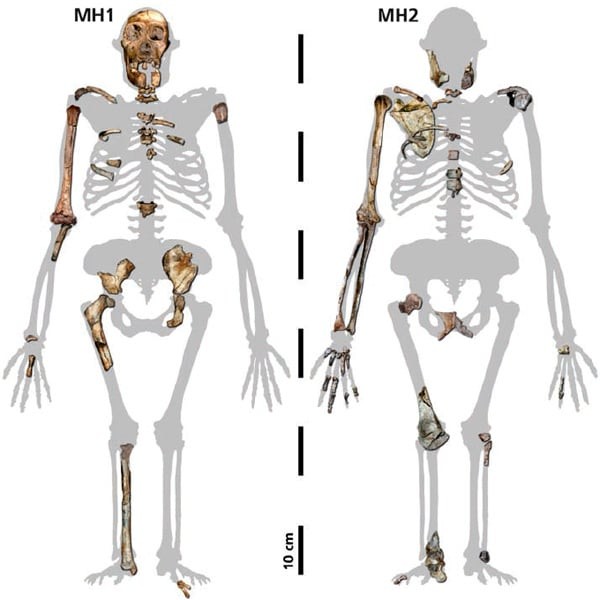
Exceptional Preservation Surpassing Even Lucy’s Skeleton
One remarkable aspect of this find is the extraordinary preservation of the bones. These fossils are far from fragmented remnants; they rank among the most intact early hominin skeletons ever uncovered from this era.
The Au. sediba fossils encompass nearly complete skeletons of an adult female and a young male, enabling scientists to analyze fine anatomical features in great detail.
These well-preserved remains indicate Australopithecus sediba was adapted both for arboreal life and walking on two feet. While its body supports evidence of upright locomotion, its long arms imply it also spent considerable time in trees, possibly for feeding or protection.
An Unplanned Discovery That Revolutionized Science
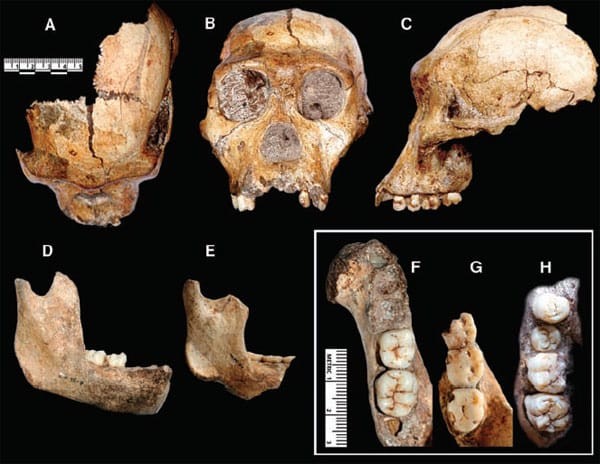
The significance of Australopithecus sediba’s discovery cannot be overstated, yet it began quite by chance. Young Matthew Berger’s dog walk led to him stumbling upon what he initially thought was a rock, later confirmed as a fossil. This event is documented in the paper “Australopithecus sediba: A New Species of Homo-Like Australopith from South Africa”, featured in the journal Science.
“Matthew ran off the site and within about a minute and a half said, ‘Dad I found a fossil!'” Berger quoted. “When I got to the block and looked at it, there was a hominid mandible and canine sticking out of the back. So he did, in fact, make the first discovery.”
If Matthew had overlooked the stone, these crucial fossils might have remained hidden, undiscovered to this day. Researcher DeSilva reflects on this near-miss:
“If Matthew had stumbled over that rock and continued walking, our science would not know about Au. sediba, but those fossils would still be there, still encased in calcified clastic sediments, still waiting to be discovered,” explained one of the study’s authors.
- Categories:
- Science










0 comments
Sign in to Comment