

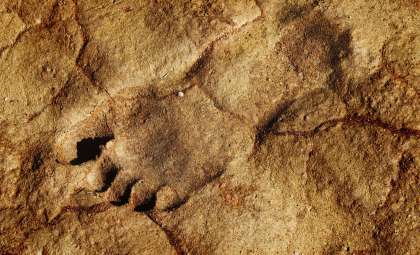
Buried beneath sediment in a long-lost lakebed, a set of ancient human footprints dating back about 115,000 years has been uncovered, offering some of the earliest tangible proof of Homo sapiens presence in the Arabian Peninsula. Detailed in a peer-reviewed article in Science Advances, this finding enhances our understanding of early human movement through a region historically viewed as a migratory crossroad.
A Fleeting Encounter at a Vanished Lake
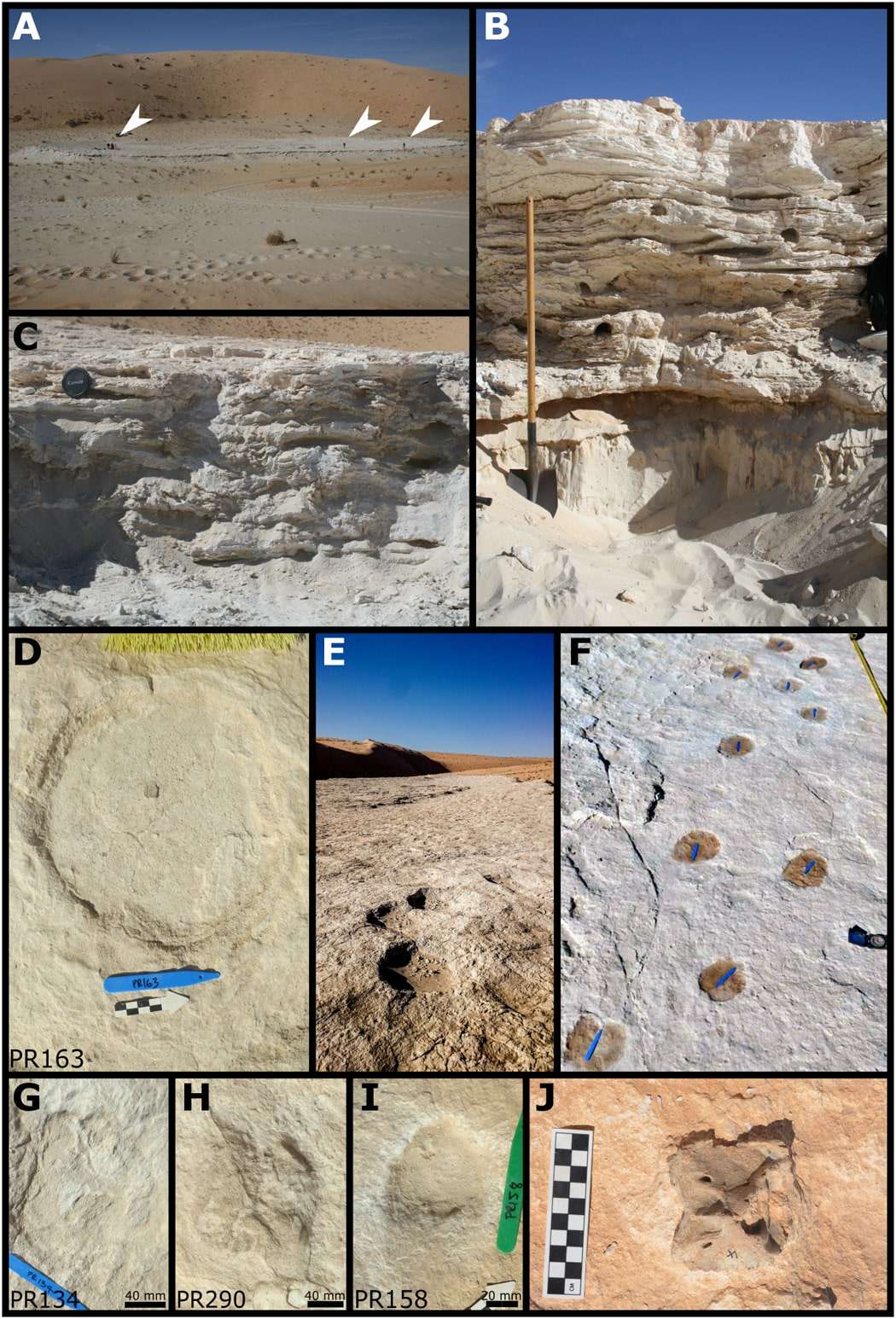
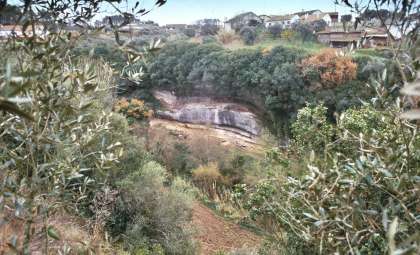
In 2017, researchers discovered the site named Alathar, meaning “the trace” in Arabic, located within the western part of the Nefud Desert. Today, this area consists mainly of sand and rocks, but around 100,000 years ago, it featured freshwater lakes that attracted both humans and wildlife.
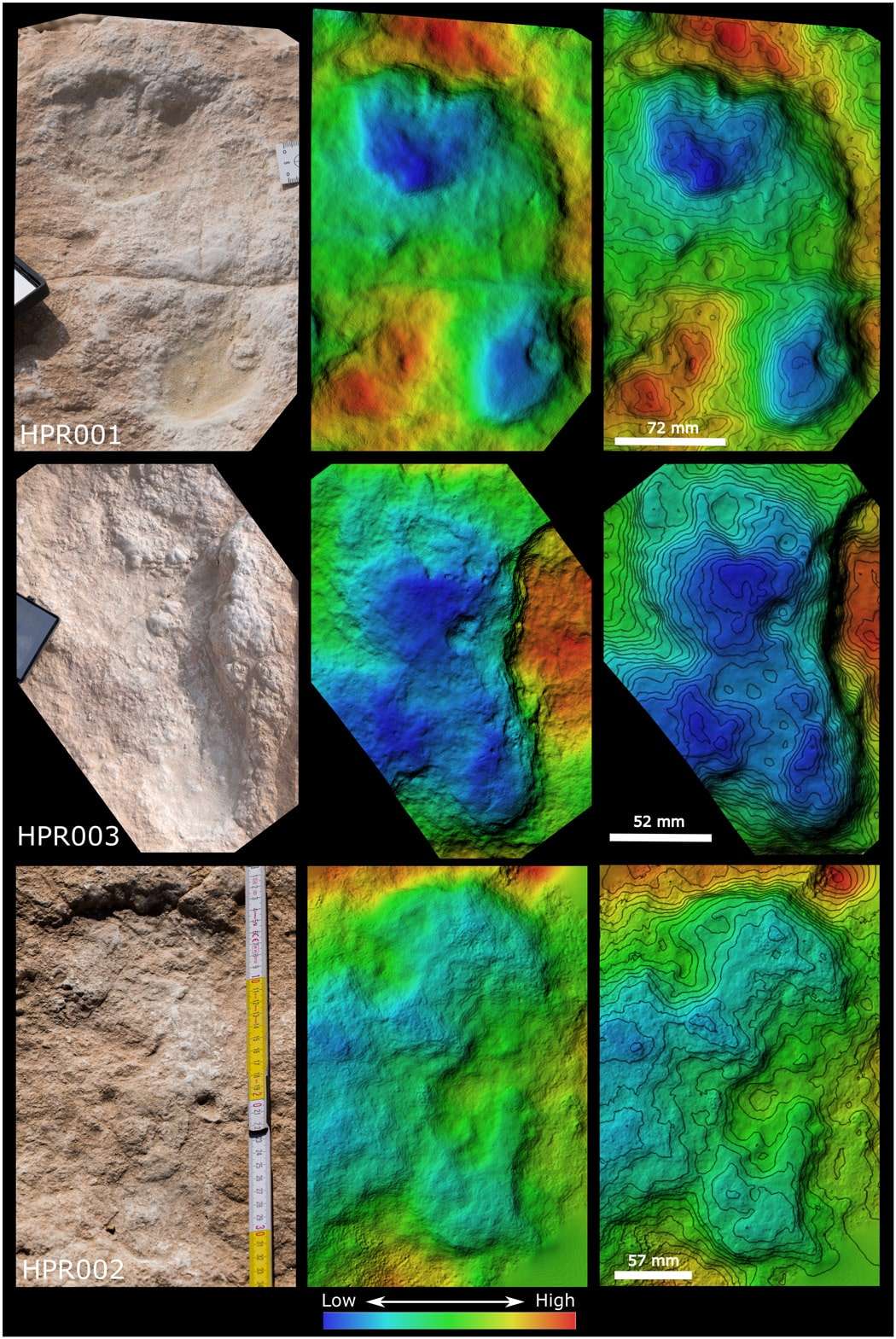
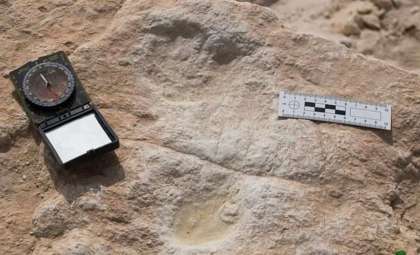
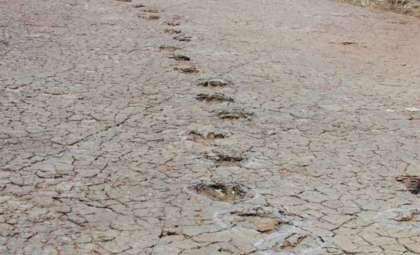
At this location, scientists identified seven distinct human footprints embedded in ancient mud, positioned near tracks left by elephants, antelopes, camels, and wild horses—species no longer found there. This suggests the lakebed functioned as a busy gathering point on migration paths, uniting various creatures drawn to the essential resource of water.

The brevity of this moment is remarkable; these footprints likely formed over just hours or days rather than years. Footprints in wet mud typically disappear rapidly, fading within two to four days. Their preservation owes itself to a rare combination of environmental conditions that effectively captured this fleeting scene.
Insights Into Early Hominin Migration Patterns
The Alathar footprints carry significance far beyond their state of preservation. They support the view that early humans left Africa much earlier than previously thought, taking inland routes that traversed the Arabian Peninsula.
While genetic and fossil studies have documented Homo sapiens expansions into the Levant and Eurasia, direct evidence from Arabia has been sparse. These new footprints demonstrate that humans colonized the area during periods of favorable climate, taking advantage of verdant corridors created by transient lakes and grasslands.
The study’s authors stressed that the footprints are “contemporaneous with an early H. sapiens out-of-Africa dispersal,” representing the oldest known signs of human activity in Arabia. Their morphology strongly suggests a Homo sapiens origin, not that of Neanderthals.
“Given the fossil and archaeological evidence for the spread of H. sapiens into the Levant and Arabia during [130,000 to 80,000 years ago] and absence of Homo neanderthalensis from the Levant at that time, we argue that H. sapiens was responsible for the tracks at Alathar,” they explained.
Arabia's Oldest Human Footprints Illuminate Prehistoric Landscape
These marks at Alathar are more than simple footprints — they capture a moment when early humans and large animals converged around a drying lake in an increasingly warm climate.
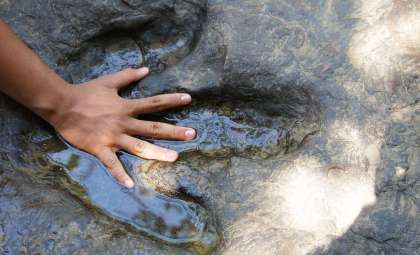
Accompanying animal tracks enrich the scene: enormous elephants, possibly the extinct Palaeoloxodon, left prominent imprints. Camels, antelopes, and wild horses also passed through, all drawn by the presence of water.
The absence of overlapping human footprints indicates that people likely visited only once, suggesting that this group may have been among the final inhabitants before the lake evaporated and the onset of the Ice Age.
- Categories:
- News






0 comments
Sign in to Comment