
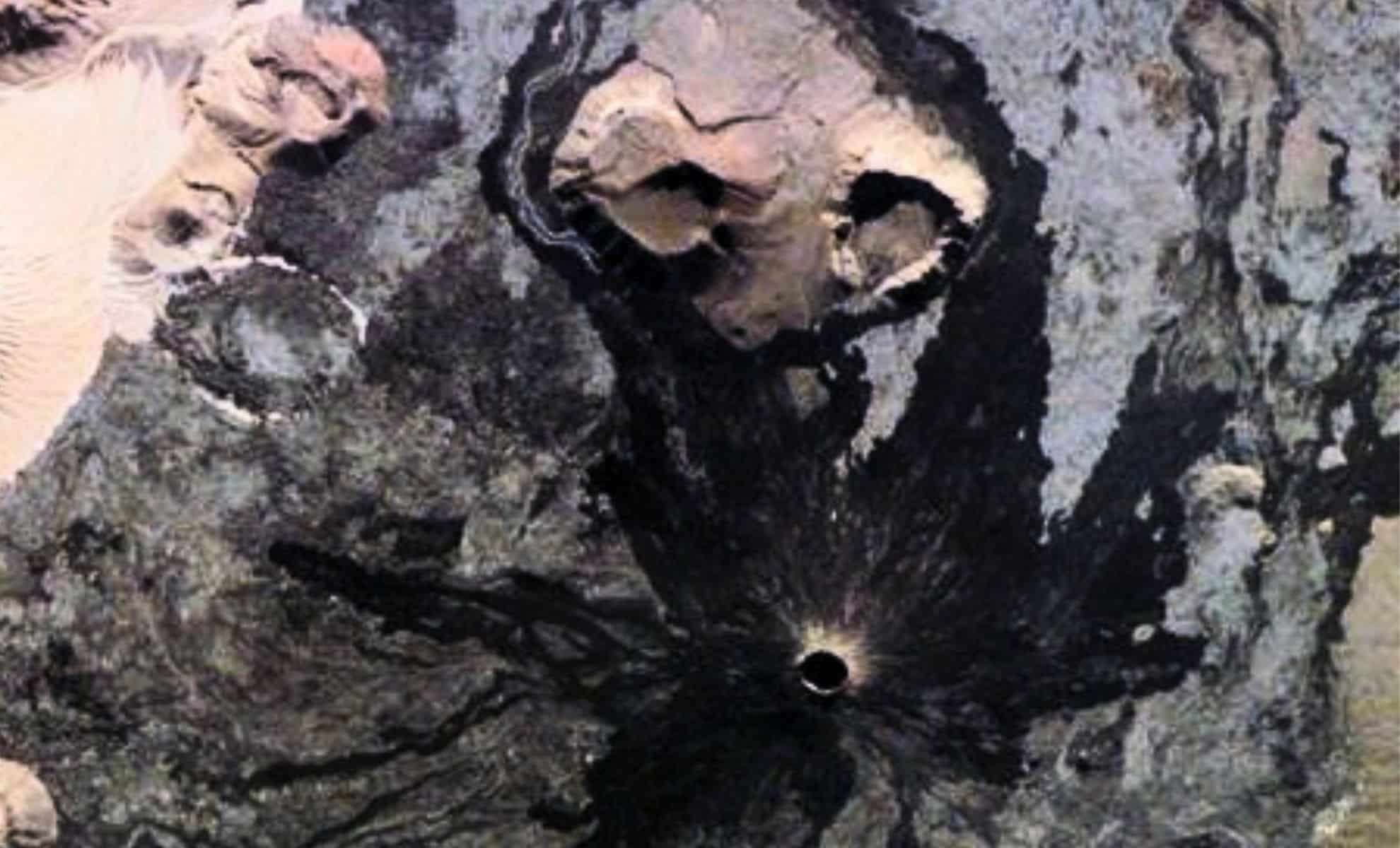
The expansive volcanic terrain of Harrat Khaybar in northwest Saudi Arabia has recently been identified as a remarkable site of Neolithic interest. Utilizing a combination of satellite technology, on-site investigations, and volcanic dating methods, researchers have uncovered traces of ancient settlements, stone enclosures, and a series of mysterious formations known as “gates” and “desert kites”, which were once overlooked as mere volcanic rock formations over 14,000 square kilometers.
A 2018 report shared at the EGU General Assembly described this area as a “prehistoric landscape perfectly preserved.” Its exceptional state of conservation is attributed to the extremely arid climate that has shielded these remnants from erosion, vegetation growth, and sand burial for millennia.
Aerial Views Reveal Intricate Stone Patterns
Interest in these enigmatic sites dates as far back as 1977 when reports emerged about unusual stone circles scattered across the desert. However, the advent of high-resolution satellite imagery and tools like Google Earth allowed scientists to observe and document nearly 400 stone structures spanning over 500 meters in some cases, distributed throughout the lava field. Their spatial arrangement implies intentional design along ancient travel routes, sometimes extending dozens of kilometers.

“Saudi Arabia is often perceived as an empty desert,” stated archaeologist David Kennedy, who led this remote sensing research. “But from the vantage point of space, it reveals a vast open-air archive of human history.”
The most notable among these features are the so-called “gates”—rectangular stone outlines situated on isolated volcanic hills, distant from any water sources. Kennedy remarked to The New York Times in 2017, “These are not residential sites, burial places, or hunting traps. Their intended use remains a mystery.”
Tracking Early Human Adaptation and Animal Management
Another fascinating category, desert kites, likely functioned to assist in hunting or animal herding. These long stone walls apparently guided animals into confined areas, possibly representing one of the earliest known instances of domestication efforts.
“These structures demonstrate an advanced grasp of manipulating the environment,” noted Dr Hugh Thomas of the University of Sydney in an interview with Arab News. “They likely illustrate not only hunting techniques but the beginnings of animal husbandry.”
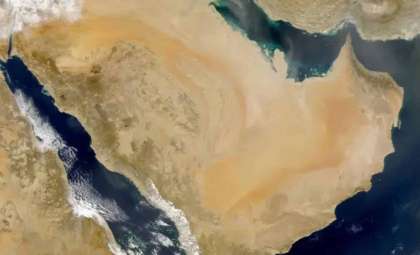
The archaeological findings correspond with paleoclimate research suggesting the Arabian Peninsula experienced significantly wetter conditions during the early Holocene epoch, roughly 10,000 to 6,000 years ago. Evidence from NASA Earth Observatory satellite images and sediment samples supports repeated wet periods in this presently arid landscape.
Volcanic Landscape Shaped Over Millions of Years
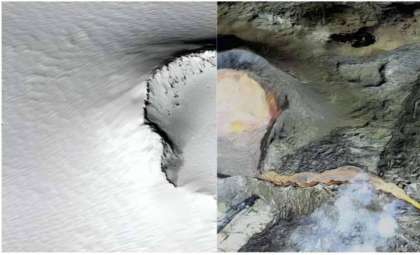
The volcanic features of Harrat Khaybar are geologically striking. According to NASA, the region includes typical basaltic cones such as Jabal al Qidr along with rare silica-rich lava domes like Jabal Abyad. Formation processes began some five million years ago, with the most recent eruptions dated between 600 and 700 CE.
Some archaeological sites either predate these lava flows or are partially buried by newer volcanic deposits, signaling continuous or overlapping human presence. Collaborative efforts by Italian and Saudi experts sampled the Habir Flow to estimate the ages of nearby structures using Ar–Ar dating and archaeomagnetic techniques (ADS/Harvard Abstract Service).
Preserved Clues to Ancient Human Activity
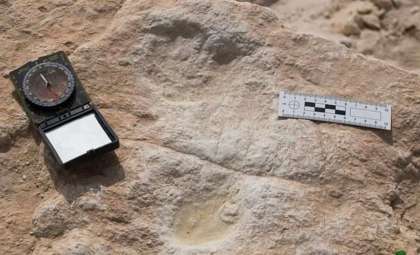
What fascinates archaeologists about Harrat Khaybar is not only its vast scale or odd configurations but how exceptionally preserved these features are. Many Neolithic sites suffer disturbance or burial, but here, these stone marks sit clearly etched into the volcanic crust, as if messages from an ancient society.
Despite this, many questions persist. No written records or substantial artefacts have been unearthed. While the various stone forms seem intentional, their exact creators and functions continue to elude researchers.
Access restrictions currently limit hands-on research, so satellite and aerial surveys remain the primary investigative tools. Nevertheless, scientists anticipate that future studies will deepen our understanding of early human adaptation in Arabia, possibly rewriting timelines and perceptions of survival in hostile environments.
“There’s an assumption that deserts were always deserted,” Kennedy concluded. “This region proves that was never the case.”
- Categories:
- News



0 comments
Sign in to Comment