
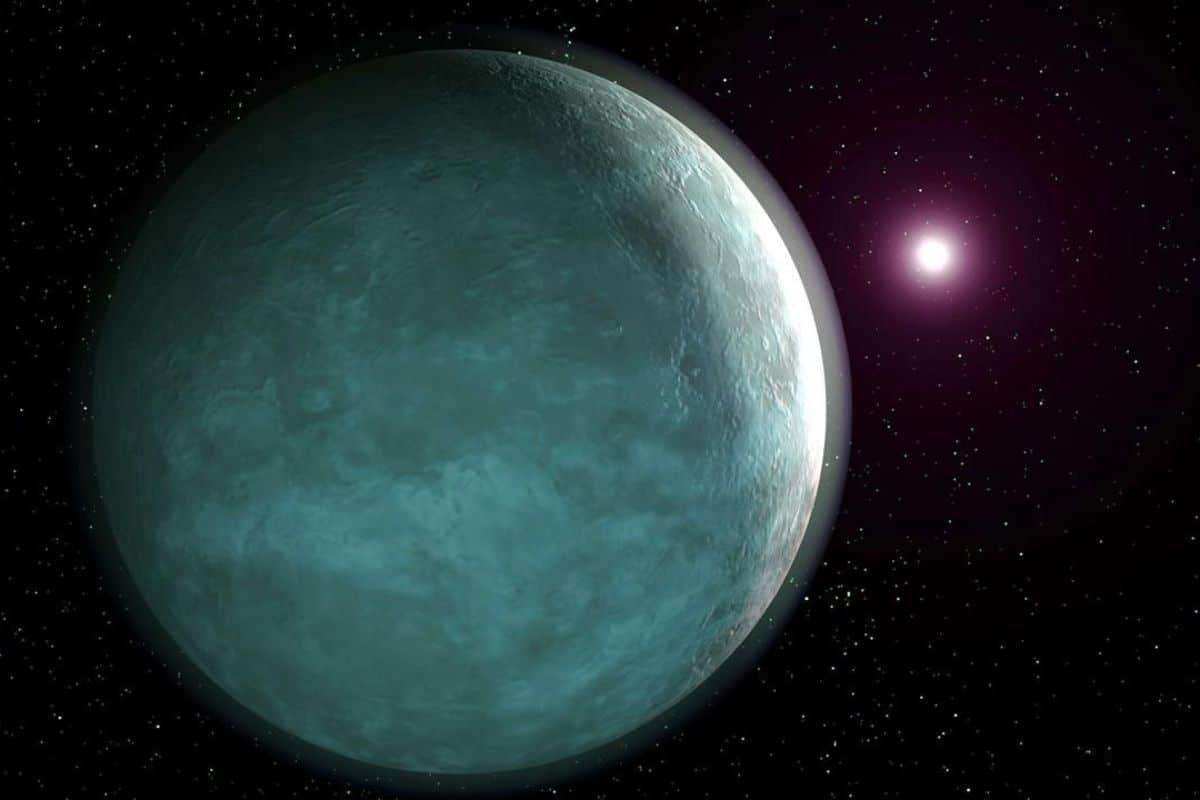
Scientists have uncovered an extraordinary exoplanet, LTT 9779 b, that challenges current planetary atmosphere models. Leveraging data from the James Webb Space Telescope (JWST), astronomers found that this scorching Neptune-sized world maintains a reflective, cloud-rich atmosphere despite orbiting extremely close to its parent star.
An Uncommon Planetary Oddity
Located in the so-called “hot Neptune desert”, LTT 9779 b occupies a rare position where planets of its size typically do not survive. While massive gas giants known as hot Jupiters are common in tight orbits, Neptunian planets usually cannot endure such intense stellar conditions.
Discovering LTT 9779 b is akin to spotting ice surviving inside a blazing furnace—its atmosphere should have vanished long ago.
Researchers observed a striking imbalance in its atmosphere. One side of the planet experiences much higher temperatures, while its opposite hemisphere is cloaked in high-altitude clouds that reflect starlight, making this exoplanet one of the brightest known.
The detection of silicate clouds, made up of fine mineral particles, reveals a surprisingly intricate and dynamic climate system.

A Planet Marked by Fierce Contrasts
Completing an orbit in under 24 hours, LTT 9779 b is tidally locked, with one face eternally sunlit and the other in constant darkness.
Nonetheless, observations indicate an uneven distribution of heat. The planet’s western side remains cooler due to reflective clouds, whereas its eastern hemisphere endures intense stellar radiation, resulting in significantly higher temperatures.
These dramatic differences imply that strong winds move heat across the planet, generating alien weather patterns unlike anything found in our own Solar System.
The resilience of clouds under such harsh conditions offers valuable clues about how planetary atmospheres adapt in extreme environments.
Decoding Alien Atmospheric Dynamics
By examining both emitted heat and reflected light, scientists have created detailed maps of the planet’s atmospheric behavior. Using JWST, they identified the presence of water vapor.
Findings confirm clouds are critical in modulating heat retention on the planet. This research also supports earlier indications that the LTT 9779 b's silicate cloud layers significantly impact its energy dynamics, shielding the planet from harsh stellar radiation. Gaining insight into cloud formation and stability here will enhance climate models for other extremely hot exoplanets.
Insights From a Blazing Alien Environment
LTT 9779 b exemplifies a distinct category of exoplanet that questions established ideas about how planets form and endure. Its unique combination of reflective clouds, scorching temperatures, and atmospheric persistence introduces fresh puzzles about planetary survival in intense radiation zones.
This planet’s characteristics provide valuable benchmarks for modeling atmospheres of other worlds, including those within potentially habitable regions. Although LTT 9779 b itself cannot sustain life, studying its cloud structures and heat distribution offers a framework for exploring similar atmospheric processes on distant exoplanets.
- Categories:
- Space










0 comments
Sign in to Comment