

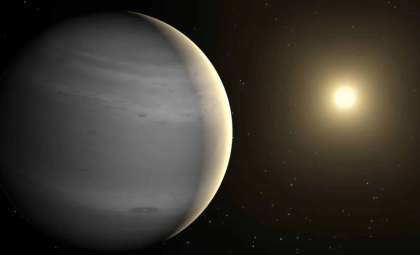
A team of scientists has developed an advanced AI system that is transforming the search for Earth-like exoplanets beyond our solar system. Working at the University of Bern and the National Centre of Competence in Research PlanetS, this AI has identified 44 star systems that may contain previously unknown Earth analogs.
Revolutionizing the Hunt for Earth-Like Exoplanets
Uncovering exoplanets similar to Earth is a notoriously challenging endeavor. These planets tend to be small and cold, especially those located within their star’s habitable zone—the region where conditions could support life.
Current detection methods employed by missions like PLATO and future concepts such as LIFE are highly precise but slow, often taking over a year to confirm a single potential candidate.
To expedite this process, researchers harnessed artificial intelligence. Their AI model analyzes the layout of known planetary systems to infer where Earth-sized planets may be hidden.
Tests show the AI achieves an impressive 99% success rate in pinpointing Earth-like exoplanets.

The Mechanics Behind the AI Approach
The research leveraged the Bern Model of Planet Formation and Evolution, a sophisticated computer simulation capturing the complex processes that guide planet formation and development.
This simulation produces synthetic planetary systems mirroring the diversity and structure of real ones, offering a substantial dataset to train the AI.
After training, the AI assessed over 1,600 stellar systems, each containing at least one known planet. It focused particularly on the innermost detectable planet (IDP) within each system, recognizing that its mass and orbit provide clues about other planets further out.
Through pattern analysis, the AI singled out 44 star systems potentially hosting undiscovered Earth-like planets.
These candidate systems are mostly around G, K, and M type stars, which are considered prime hosts for habitable worlds.
Enhancing Future Space Exploration
The predictions made by this AI could drastically streamline future astronomical missions. Instead of broadly searching the skies, astronomers can now concentrate on specific systems flagged by the AI.
This targeted search approach conserves valuable time and optimizes telescope usage, increasing the efficiency of the quest for potentially life-supporting planets.
Dr. Jeanne Davoult, instrumental in building the AI, expressed enthusiasm about the findings: “Our model highlighted 44 systems with a high likelihood of hosting hidden Earth analogs,” she remarked. “Further analysis supports the theoretical feasibility of Earth-like planets in these locations.”
This development is particularly promising for upcoming missions like PLATO and LIFE, both of which study small, cold exoplanets but face slow throughput due to their sensitive instrumentation.
While these missions might yield only a few candidates annually, the AI’s guidance could enable astronomers to prioritize the most favorable star systems.
Limitations of Synthetic Training Data
Despite its potential, the AI has some constraints.
The synthetic planetary systems used for training do not always capture the full complexity of actual star systems.
For example, many solar-type stars host both super-Earths and cold Jupiters, a configuration that the model sometimes struggles to predict accurately.
Moreover, the synthetic data tends to place planets closer to their stars than is often observed, signaling adjustments will be needed as additional real data becomes available.
Nonetheless, the AI’s ability to highlight promising locations for undiscovered Earth-like planets marks a significant leap forward in exoplanet research.
- Categories:
- Science










0 comments
Sign in to Comment