

Researchers have uncovered that within ice giants like Neptune and Uranus, as well as in many far-flung exoplanets, the interplay between hydrogen and water under crushing pressure and heat leads to a unique process of mixing followed by separation. This internal "rain" phenomenon could revolutionize our understanding of planetary formation and their long-term evolution.
These insights challenge existing ideas about how substances divide inside planets and shed light on the unusual thermal characteristics observed in some planets both inside and beyond our solar system.
More Than Just a Metaphor: Planetary Rain
Advanced computer modeling by scientists at UCLA and Princeton University shows that during a planet's formative years, the powerful conditions allow hydrogen and water to blend into a homogeneous fluid. As the planet gradually cools, this blend destabilizes, initiating what is known as rainout.
This results in heavier water molecules descending deeper into the planet, while lighter hydrogen moves upward. The outcome transforms the planet’s chemical composition internally and generates heat, significantly influencing the planet’s thermal evolution over time.

Shedding Light on the Thermal Puzzle of Uranus and Neptune
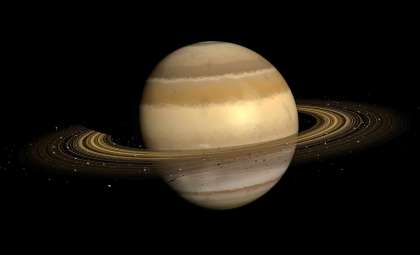
This process offers an explanation for the stark contrast in heat emission between Uranus and its similar-sized counterpart Neptune. Although close in size and make-up, Neptune radiates notably more internal heat than Uranus.
Lead author Akash Gupta of Princeton suggests that Neptune’s interior likely experienced more pronounced rainout, releasing excess heat toward space, while Uranus’s cooling is more advanced, limiting its heat emission.
Reconsidering Exoplanet Habitability
Looking beyond our solar system, these findings impact our assessment of exoplanets with hydrogen-rich atmospheres and possible subsurface oceans, including candidates like K2-18 b and TOI-270 d.
If interior temperatures remain elevated, hydrogen and water may stay uniformly mixed, obstructing the development of separate ocean and atmospheric layers. Such scenarios could profoundly affect estimates of their potential to support life and their internal processes.
A Modern Framework for Planet Studies
Conventional models often depict planetary interiors as distinct chemical layers with minimal mixing. This new evidence suggests the need for a more fluid, integrated view.
Hilke Schlichting, a UCLA professor, emphasizes that the capacity of hydrogen and water to mix demands reevaluation of how we simulate planets. The internal and thermal progression of planets comparable to Earth or Neptune might be far more intricate than previously believed.
Revolutionizing Planetary Chemistry Through Quantum Computation
Since replicating planetary core pressures and temperatures in labs isn't feasible, researchers employed quantum mechanical molecular dynamics simulations to investigate these conditions.
By modeling interactions among hundreds of atoms virtually, the team captured phenomena impossible to observe experimentally. Their groundbreaking results, published in The Astrophysical Journal Letters on March 24, 2025, highlight how supercomputing is pushing planetary science beyond traditional boundaries.
This work presents planetary interiors as dynamic environments where materials continually intermingle and evolve, challenging the notion of them being static and layered.
- Categories:
- Science








0 comments
Sign in to Comment