
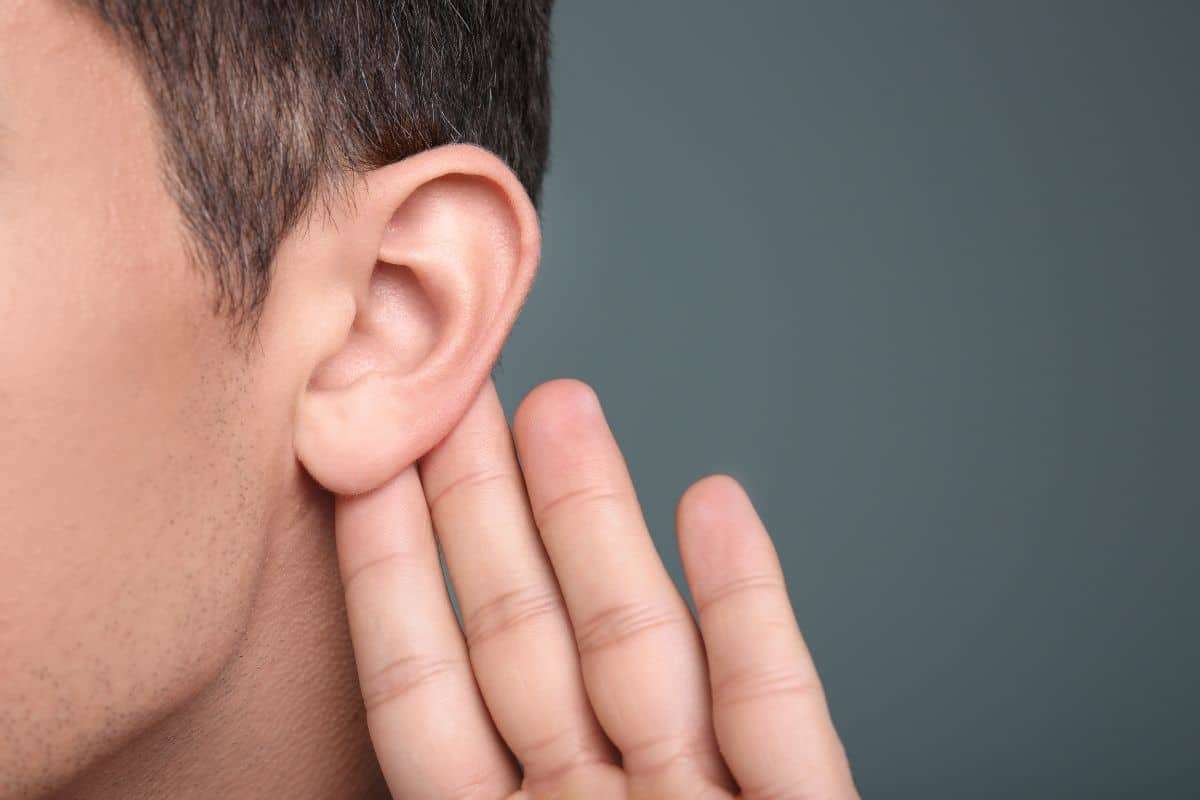
Though often seen as a quirky ability, ear movement reveals a deeper story: new research shows that when we focus on sounds, our brains still activate the muscles around the ears. Despite appearing motionless, evidence of an ancient auriculomotor system—once used to orient ears toward noise—remains embedded in our neural pathways.
Investigations reveal that specific ear muscles engage when people concentrate on distinguishing sounds, even though humans no longer have the capacity to swivel their ears like many animals. This surprising “neural relic” illuminates how evolutionary history continues to influence modern brain function and behavior.
A Hidden Evolutionary Mechanism in the Human Brain
In numerous species, ear mobility is key for pinpointing sound locations. Animals such as cats, horses, and dogs exploit this skill to focus on sounds without having to move their heads. Humans, however, have lost this ability roughly 25 million years ago, rendering our ears largely fixed.

Despite this, the new study shows that the brain circuits linked to ear movement are still somewhat functional. Andreas Schröer and his research team discovered that though we cannot consciously wiggle our ears, the surrounding muscles activate when attentive listening demands increase.
“Our brains have maintained some structures for moving the ears, even if the function seems obsolete now,” Schröer stated. The research indicates that while the ears don't physically orient toward sounds anymore, the brain still attempts to recruit these dormant muscles during focused listening.
Examining the Hidden Ear Reflex
To explore this phenomenon, 20 subjects were instructed to listen to an audiobook while background audio, like a podcast, played simultaneously. The level of difficulty in isolating the audiobook evolved through three stages:
- Simple: The audiobook volume was much higher with distinct pitch compared to the podcast.
- Moderate: The background podcast grew louder, making separation trickier.
- Challenging: Two podcasts overlapped at increased volumes, with one mimicking the audiobook’s pitch.
Participants, equipped with electrodes capturing muscle activity, also self-reported how hard they focused on the audiobook.
Unexpected Muscle Activations
Results demonstrated that muscle activity in the ear region rose as listening effort intensified, especially in the superior auricular muscles responsible for pulling the ear upward and the posterior auricular muscles which tug the ear backwards.
Notably, these muscles reacted differently depending on where the sound originated. Sounds from behind triggered greater activity in the posterior auricular muscles, resembling animals’ ear movements orienting toward unseen noise sources.
Remarkably, none of the participants could consciously control their ear movements, indicating these activations operate below conscious awareness.
Why This Finding Matters
This research underscores the persistence of evolutionary remnants woven into our nervous system. Though these tiny muscle twitches are imperceptible, they reveal our brains remain wired to engage an archaic survival response.
“The ear muscle signals we recorded likely produce movements so slight they are barely detectable and offer no real advantage,” Schröer said. “It seems this vestigial auriculomotor system continues to ‘try’ but without clear benefit.”
Is It Possible to Regain Ear Movement?
While most individuals can’t consciously wiggle their ears, a few can, suggesting that neural pathways for ear movement still exist in some form. Studies indicate that with practice, some people can train themselves to move their ears voluntarily, akin to learning to raise one eyebrow.
This research focused on involuntary muscle responses but encourages further exploration into whether targeted training might reactivate this dormant function. Could we someday revive our inner animal and regain ear mobility?
Insights into Human Evolution
These findings add to growing evidence of vestigial reflexes—traits inherited from ancestors that no longer serve their original purpose. Examples include:
- The palmar grasp reflex in babies, a leftover from primates needing to cling to their mothers.
- The appendix, once critical for digesting tough plant fibers, now largely unnecessary.
- Wisdom teeth, formerly essential for heavy chewing, but now often problematic.
Each of these traits reveals stories about our evolutionary heritage. Although the auriculomotor system no longer contributes to daily life, its presence in our neural wiring testifies to the brain’s retention of ancestral capabilities long after they lose function.
This discovery reminds us that despite modern advances, our biology still echoes the distant past. While it remains uncertain if humans will ever voluntarily move their ears again, our brains continue to hold the blueprint.
- Categories:
- Science













0 comments
Sign in to Comment