
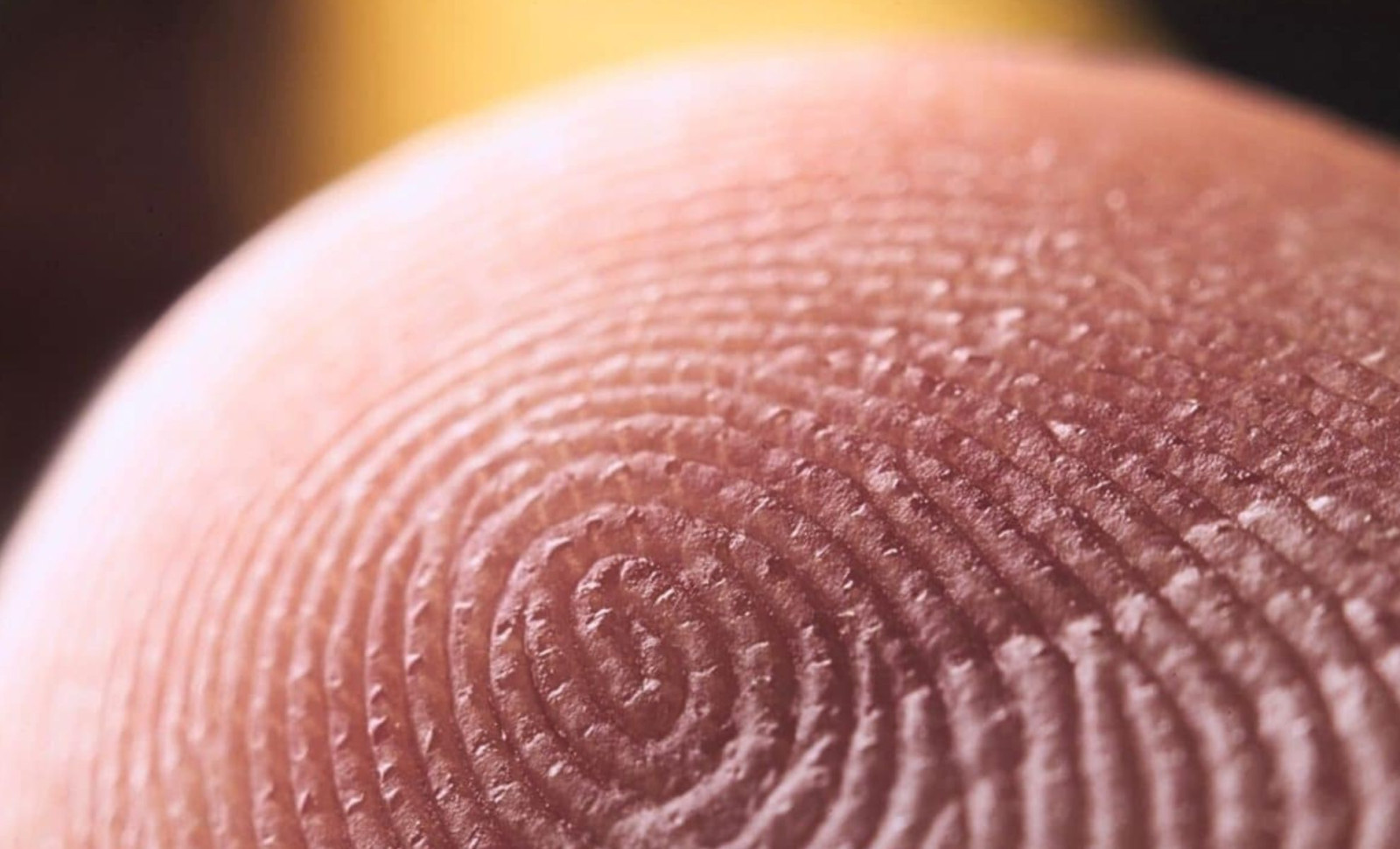
For over a century, forensic science has been grounded in the belief that every fingerprint is uniquely distinct to each individual and finger. This principle has underpinned criminal investigations, identity checks, and courtroom evidence worldwide.
Fingerprint patterns have traditionally been accepted by law enforcement and biometric technologies under the conviction that no two fingerprints—either across different people or even different fingers of the same person—are identical. However, new insights from artificial intelligence research have begun to question this foundational idea.
A cutting-edge study by computer scientists from the United States has uncovered strong evidence indicating that certain fingerprint structures are surprisingly consistent across all ten fingers of a single person. These resemblances, imperceptible to human analysts, were revealed using a machine learning approach designed to identify subtle biometric details previously unnoticed.

AI Unveils Hidden Fingerprint Parallels Between Fingers
Published in Science Advances in January 2024, the research teams from Columbia University and University at Buffalo demonstrated that deep learning algorithms can recognize fingerprint similarities that cross finger boundaries within the same individual. Utilizing deep contrastive learning, twin networks were trained on a collection of over 60,000 fingerprint images compiled from four major biometric repositories.
The AI system attained a remarkable 99.99 percent certainty in matching fingerprints to the same individual and achieved 77 percent accuracy when identifying prints from different fingers of the same person—performance improving further when multiple prints were analyzed together.
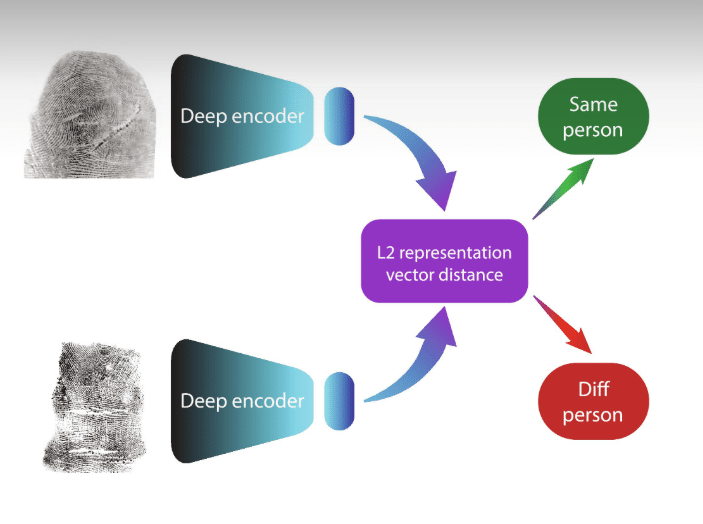
Breaking from conventional fingerprint analysis that focuses on minutiae points like ridge endings and bifurcations, the AI leveraged global fingerprint features such as ridge orientation and curvature. These overarching structural elements were consistent across fingers, including those on opposite hands.
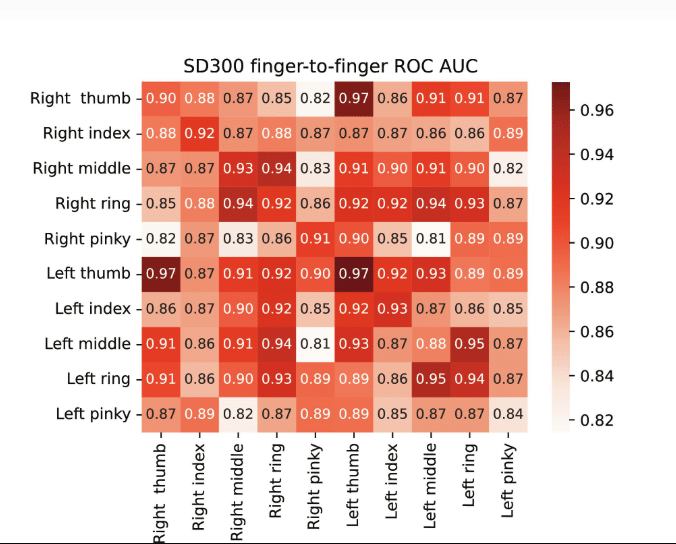
The study’s datasets incorporated leading sources like the NIST SD300 and SD302 benchmarks, alongside the RidgeBase biometric database from the University at Buffalo. Researchers carefully controlled for environmental variables such as sensor differences and capture sessions to verify that detected similarities weren’t due to external factors.
Accelerating Investigations by Narrowing Suspect Pools
Traditionally, fingerprint analysis involves matching recovered prints to known prints within databases—a time-intensive process complicated by the need to check all ten fingerprints per individual. The new AI-driven approach promises substantial speed enhancements.
In a simulated forensic scenario, the technology shrunk a suspect list of 1,000 individuals down to fewer than 40 likely matches. By exploiting fingerprints’ recurring structural features across different fingers, the system can link prints found at multiple crime scenes even when those prints come from different fingers.
This innovation could be particularly impactful in cases where only partial, blurred, or poor-quality prints are recovered—which often pose significant challenges for classical methods requiring exact matches.
Despite these advancements, the authors caution that the AI model’s reliability has not yet reached standards necessary for courtroom evidence. Instead, they advocate its use primarily as a tool to generate investigative leads, rather than definitive identification.
Rethinking Fingerprint Features: Emphasizing Orientation Over Minutiae
The study revealed that ridge orientation, especially near fingerprint centers, played the largest role in revealing within-person finger similarities. Conversely, traditional minutiae points contributed minimally in this new context.
Interestingly, simplified fingerprint images such as binarized scans and orientation maps yielded similar model accuracy, hinting that key fingerprint features may be more fundamental and widely distributed than previously believed.
Using saliency mapping and convolutional filter analysis, researchers found that the AI concentrated on areas with notable directional ridge shifts, like fingerprint deltas. Statistically significant similarity spanned all finger pairs, even across opposite hands.
Tests extending to the NIST SD301 dataset, which involves distinct data collection settings, confirmed the model’s generalizability across different data sources.
Implications for Security Systems and Identity Verification
Findings also bear consequences for biometric authentication technology, such as those in smartphones, building access, and border security systems, where each enrolled fingerprint is assumed to be a unique identifier.
The existence of cross-finger similarities introduces both new security vulnerabilities and potential conveniences. Attackers might exploit structural overlap to circumvent protections by using unregistered fingers, while genuine users could benefit from more flexible authentication if their primary finger is damaged or inaccessible.
The AI model was initially trained using the synthetic PrintsGAN dataset, composed of over 500,000 artificially generated fingerprints. This pretraining enhanced detection of ridge-related traits before the model was fine-tuned on actual biometric samples.
Researchers further evaluated performance across different genders and ethnicities, finding consistent results overall but slightly improved accuracy when training and testing data matched demographically. This highlights the critical need for diverse training datasets and raises awareness of potential algorithmic bias in forensic applications.
The evaluation drew from a carefully balanced demographic segment of the SD302 dataset. Though subgroup differences were small, expanding datasets to embrace broader diversity is recommended for future improvements.
- Categories:
- Science













0 comments
Sign in to Comment