

Fossils of two eel-like, primitive fish uncovered near Glasgow have unveiled what researchers consider the oldest evidence for sophisticated, camera-like eyes in vertebrates. Dating back 443 million years, these fossils are transforming current views on how complex organs such as eyes and bone-like tissues first arose in early animal life.
The specimens of Jamoytius and Lasanius, both jawless, early fish species, were examined using cutting-edge imaging methods that revealed remarkable anatomical details. Despite their small size and extinction millions of years ago, these creatures show signs of retinal layers and optic nerve connections previously thought to have appeared much later in vertebrate evolution.
Revelations from Advanced Synchrotron Imaging
Researchers utilized synchrotron X-ray fluorescence imaging, allowing detection of elemental distribution at microscopic scales. The University of Manchester study, published in Proceedings of the Royal Society B, highlighted notable zinc and copper accumulations within the eye region of Jamoytius. These minerals are indicative of pigment-rich layers and retina-like tissues typical of vertebrate camera eyes.

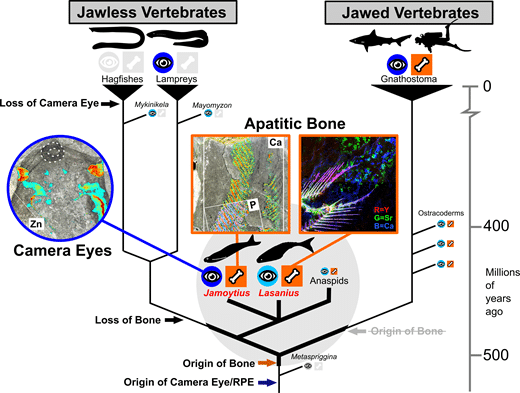
Roy Wogelius, a co-author, pointed out that their scans even detected the indentation marking where the optic nerve would have attached, a key component for vision. The project was done alongside the Stanford Synchrotron Radiation Lightsource (SSRL) in California, led by University of Manchester alumnus Nick Edwards.
Soft-Bodied Creatures Show Signs of Early Skeletal Elements
What makes this find exceptional is the soft-bodied composition of these animals, as much of early vertebrate fossil evidence is poorly preserved due to lack of bone. Remarkably, these fossils exhibited traces of calcium and phosphorus, elements linked to the development of hard tissues.
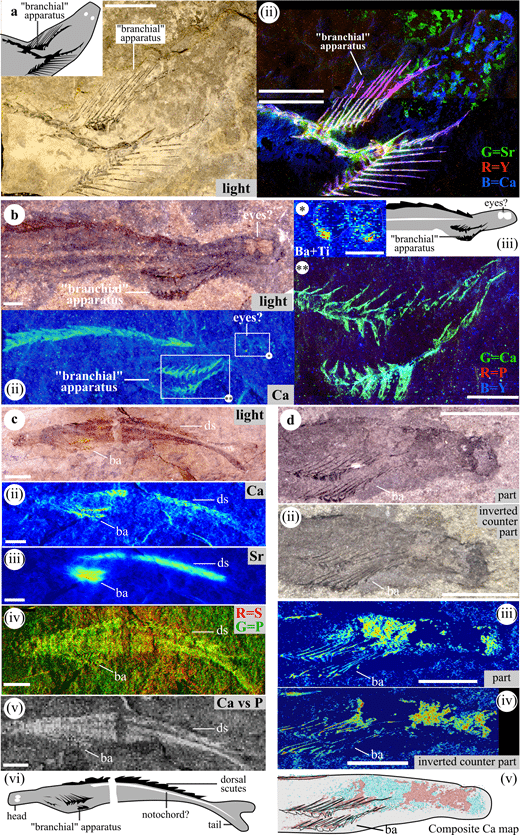
As detailed by Discover Wildlife, both Jamoytius and Lasanius showed evidence of bone-like tissues, challenging previous assumptions about when skeletal structures first evolved. Jane Reeves, who led the study, described the results as groundbreaking.
“It’s been amazing to see just how much new information we can recover from fossils, which are usually too poorly preserved to be useful, using these new technologies.”
Insight Into Early Vertebrate Evolution Strengthens
This research arrives amid growing investment in understanding vertebrate origins. Just days earlier, another team revealed even older evidence of intricate eyes in 518-million-year-old myllokunmingids from China. Reeves noted how these discoveries together are forging a “comprehensive and robust” picture of the evolution of vision.
Jamoytius and Lasanius are considered early ancestors of modern hagfish and lampreys. Findings from Scottish fossils imply that vital vertebrate features such as vision and mineralized tissues appeared much earlier than previously believed.
- Categories:
- Science









0 comments
Sign in to Comment