
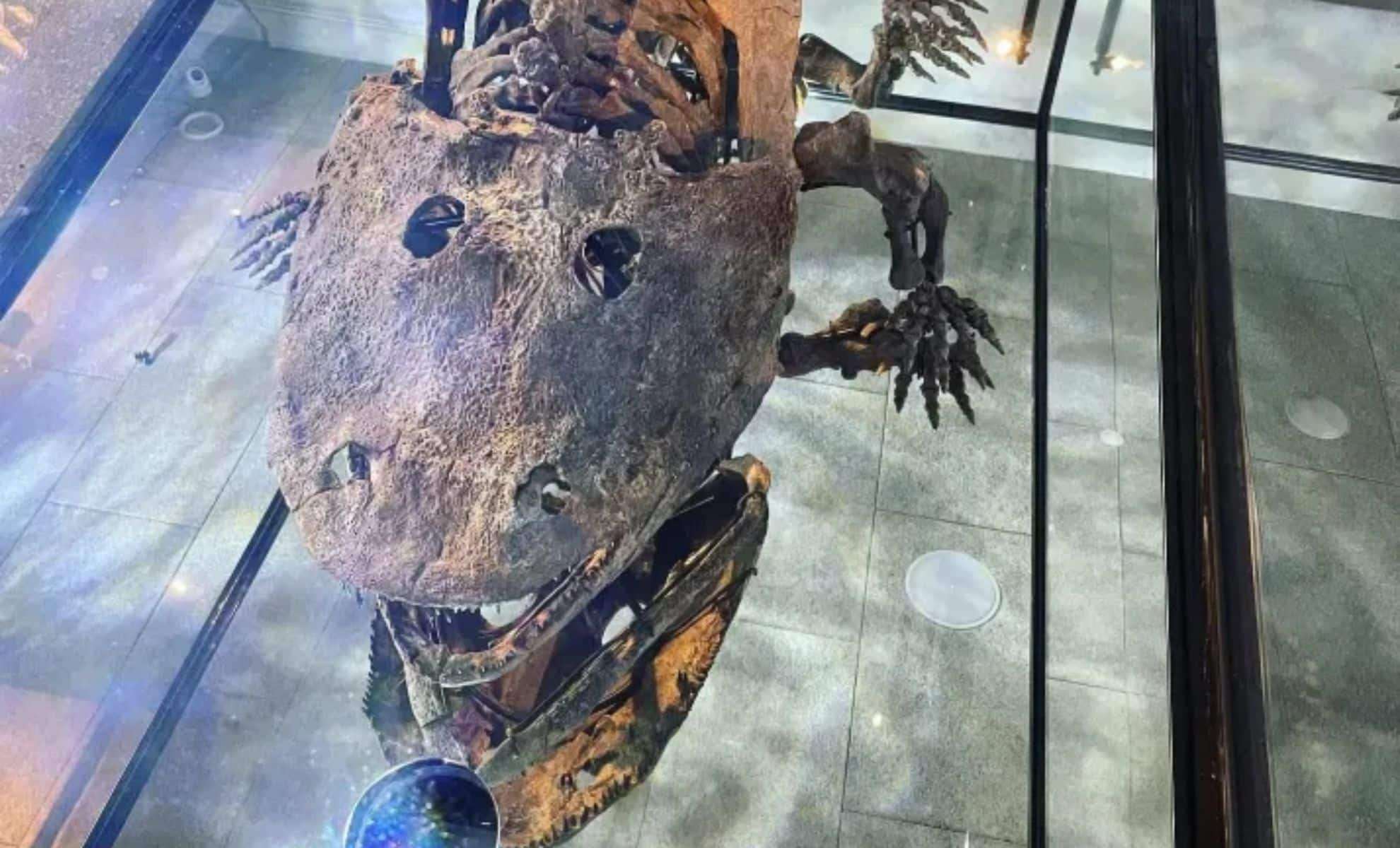
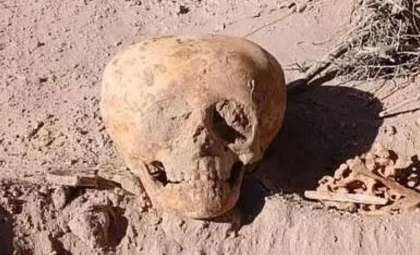
Researchers have uncovered a fossilized skull of a giant prehistoric amphibian in a quarry located in Texas, whose look has ignited amusing comparisons to a famous character from an animated children’s movie. Despite its uncanny similarity to Toy Story’s Rex, this skull belonged to a dominant predator species that inhabited swampy areas of ancient Texas around 280 million years ago.
Heavy Rainfall Exposes Fossil in Northern Central Texas
Andre LuJan, a paleontologist heading the Texas Through Time Fossil Museum, discovered the exceptionally preserved skull after intense rainfall revealed it in a quarry north of central Texas. The specimen is identified as Eryops megacephalus, a creature from the Permian period that preceded the age of dinosaurs. These animals were semi-aquatic amphibians, not dinosaurs or reptiles, yet their features exhibit some familiar traits seen in modern carnivores.
LuJan characterized Eryops as an “apex predator amphibian from the Permian era.” According to fossil records, these animals could reach up to six feet long and weigh between 200 and 400 pounds. While lacking chewing capabilities, their powerful skulls suggest they subdued prey by swallowing it whole or tearing it into chunks.

Ambush Hunter’s Skull Displays Specialized Adaptations
The skull showcases a design optimized for stealth and ambush. The placement of its eyes and nostrils atop the head points to a lifestyle akin to modern-day alligators or crocodiles, lurking underwater to surprise prey. LuJan explained, “the skull structure reveals they were ambush predators,” allowing the animal’s body to stay hidden beneath water while watching for food.
These amphibians likely inhabited estuaries, rivers, and swampy regions that once covered parts of what are now New Mexico and Texas. During the Permian, fluctuating climates transformed arid zones into wet, fertile environments—ideal habitats for large amphibians like Eryops to flourish.
From Prehistoric Giant to Modern Amphibian Relatives
Eryops belongs to an ancient amphibian lineage that eventually gave rise to today’s frogs, toads, and salamanders, making it a distant relative of species still thriving in freshwater areas. LuJan compared it to the Hellbender, a large salamander native to North America, sharing similar body shapes and ecological roles.
The exceptional preservation of this skull is a noteworthy discovery in paleontology, where skulls often suffer damage over millions of years. This nearly intact fossil provides valuable insights into the physiology and lifestyle of these ancient creatures. As LuJan noted, “in paleontology, the amount of specimens is crucial.” A larger collection helps scientists detect diseases, analyze growth abnormalities, and explore interactions with predators, enriching understanding of prehistoric ecosystems.
Survived Beyond the Permian-Triassic Crisis
Although Eryops megacephalus vanished from the fossil record between 310 and 295 million years ago, it likely disappeared before the catastrophic Permian-Triassic extinction, known as the Great Dying. This event eradicated roughly 96 percent of marine species and nearly 75 percent of terrestrial life over approximately 60,000 years due to widespread volcanic eruptions and severe climate change. In this sense, Eryops escaped what is recognized as Earth's deadliest extinction episode.
The fossil is set to be displayed at the Texas Through Time Museum in Hillsboro, located halfway between Dallas and Waco. Visitors can explore this exhibit alongside other rare finds, like the most complete Cretaceous-era shark fossil found in Texas, a massive bull mammoth skull, and multiple prehistoric treasures—all available with free admission.
- Categories:
- News







0 comments
Sign in to Comment