
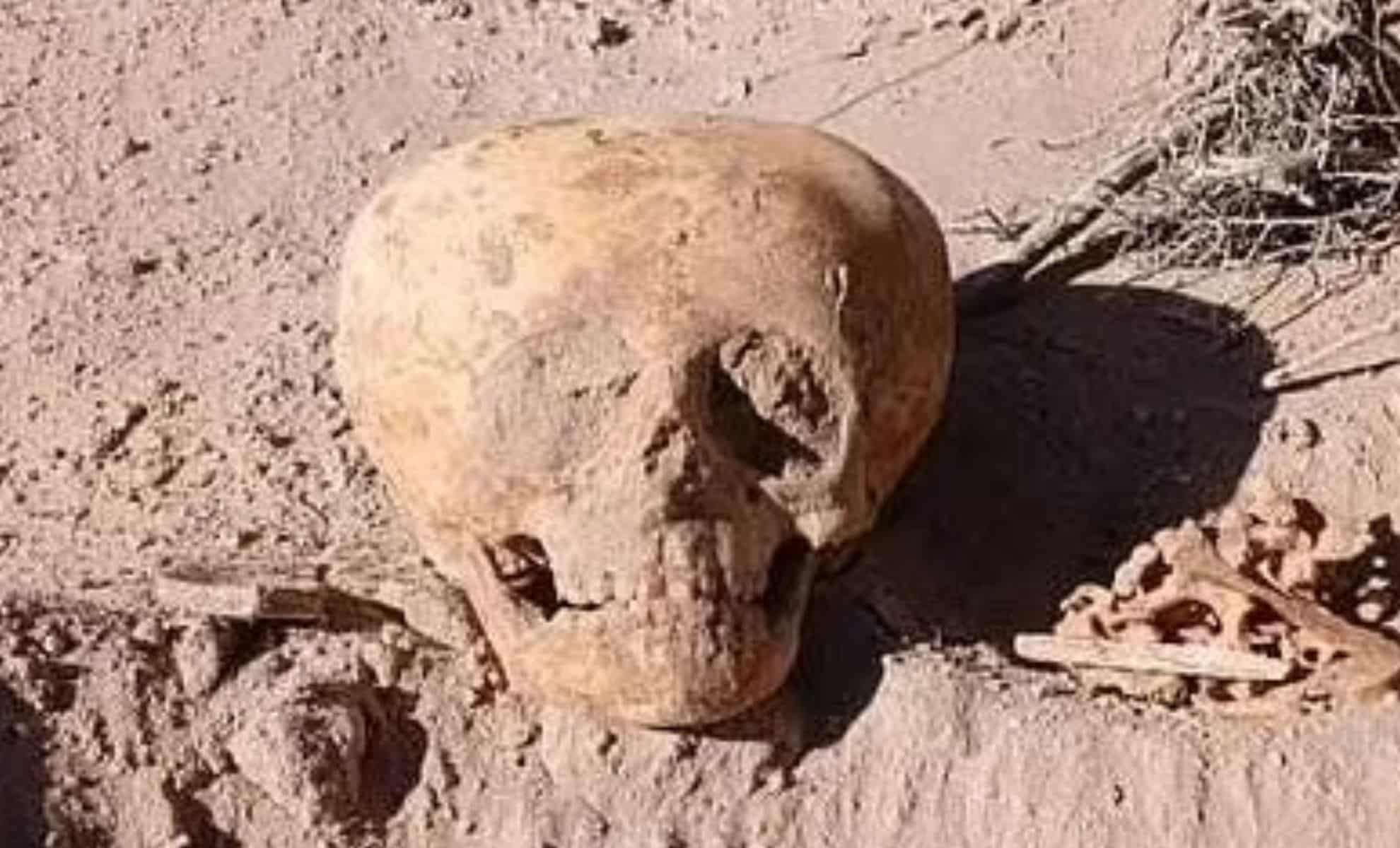
An extraordinary finding in northern Argentina has revived interest in the history and traditions of ancient societies. During the installation of a water supply system in San Fernando, within the Catamarca province, workers uncovered two funerary urns. One of these contained a skull with a highly distinctive form.
Unconventional Skull Shape Prompts Extraterrestrial Theories
The skull features an elongated and irregular shape far beyond normal human proportions, sparking comparisons to popular sci-fi illustrations of aliens. Many noted its uncanny likeness to the beings portrayed in the 1990s movie Mars Attacks!, while others referenced the Greek legends of the Myrmekes, or “antmen,” rumored to reside in giant anthills guarding subterranean treasures.
According to El Ancasti, a regional news outlet, one urn held a nearly complete skeleton, while the other contained partial bones, including this unusually shaped skull. To protect the area for detailed examination, officials quickly cordoned off the site. Experts from the National University of Catamarca are now investigating to determine if the skull’s form arises from natural growth patterns, intentional modification, or a medical anomaly.

Deliberate Skull Modification Explains Unnatural Shape
Although the find initially inspired speculation about unknown human species or otherworldly origins, anthropologists have offered a more plausible explanation: artificial cranial deformation. This ancient custom involved shaping an infant’s skull using pressure from bindings or boards while the bones were still soft. The resulting shapes—often extended or flattened—served to signify social rank, cultural identity, or spiritual meanings across many old civilizations.
Rick Schulting, a prehistoric archaeology professor at the University of Oxford, explained, “This practice was performed for various reasons, including aesthetic appeal and distinguishing social groups such as ethnicity or elite status.” He added that there’s no indication it caused harm to the children involved. This tradition was common among South American cultures like the Ciénaga and Aguada peoples from roughly the 3rd through 12th centuries AD.
Dr. Heidi Dawson-Hobbis, senior lecturer in biological anthropology at the University of Winchester, observed the skull might belong to a child. She considered medical conditions such as hydrocephalus—accumulation of fluid within the brain—but agreed that cultural cranial shaping is a probable cause.
Exploring Ancient Skull Modification Practices
This discovery also highlights other historic medical interventions like trepanation, the process of . Used both therapeutically and ceremonially, this technique dates back to Neolithic periods and persisted until the 18th century. Its mention underscores the diverse ways early humans engaged with bodily alteration.
The National University of Catamarca commented that studying these remains presents “a valuable chance to deepen our understanding of ancestral roots.” They emphasized, “Honoring these cultural traditions helps us cherish our ancestors and maintain a tangible link through our shared human heritage.”
Analysis of the second urn’s contents is ongoing, and the full implications of this archaeological site are still emerging as research continues.
- Categories:
- News











0 comments
Sign in to Comment