
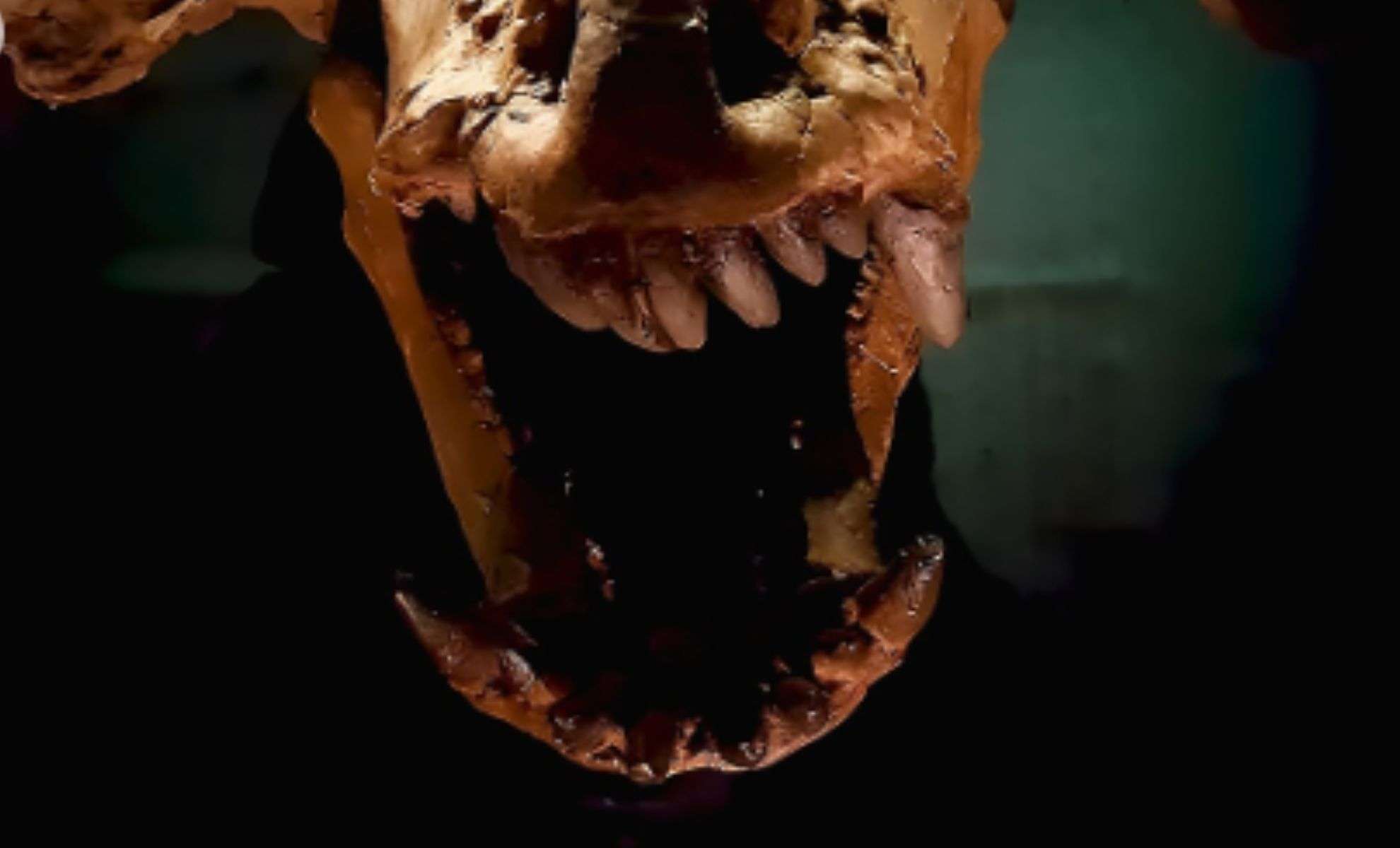
A fascinating fossilized skull from an extinct species recently captured public interest when unveiled at the South Australian Museum. Known colloquially as the “crowned crocodile,” the exhibit coincided with a significant biodiversity publication in Biological Reviews by University of Hawaii researchers, highlighting evidence for a human-accelerated sixth mass extinction.
The research, led by biologist Dr. Robert Cowie, sparked extensive debate by estimating that between 7.5% and 13% of Earth’s recognized two million species may have vanished since the 1500s.
An Ancient Species Predating Dinosaurs
Contrary to its popular nickname, the “crowned crocodile” does not belong to reptiles. This creature, named Estemmenosuchus mirabilis, belongs to the Dinocephalia suborder of therapsids, which are ancestors of modern mammals.

The study notes that these animals were warm-blooded omnivores with a sprawling stance. The skull on display was uncovered in Russia’s Perm region, a renowned site for extensive Permian-era fossils.
One of the skull’s most remarkable characteristics is its bony extensions, often likened to the antlers of moose. Researchers propose these structures served as tools in contests within the same species, much like how deer use their antlers today. At lengths reaching up to four meters, Estemmenosuchus mirabilis ranked among the largest terrestrial creatures of its time. A spokesperson from the South Australian Museum offered insight:
“Estemmenosuchus were omnivorous—plant and meat eaters—therapsids in the group Dinocephalia. They were clumsy-looking animals, with a sprawling posture, growing up to four metres in length, making them one of the largest animals of their time.”
@fossilcratesIs there a cooler skull? I have always loved this beast’s visage! I’m not sure the images herein capture its uniqueness, but I did my best, sharing images of the specimen we have on display at the Arizona Museum of Natural History, as well as images from various hard-to-find publications. Estemmenosuchus, “crowned crocodile,” Chudinov 1960 is a #Permian (~269 mya) #dinocephalian “terrible head” therapsid “beast arch” measuring 12’+ long and 1,000+ lbs. Some were found in Perm, Russia, the area that gives the #Permian period its name. Numerous specimens of this #therapsid (alas, ‘mammal-like reptile’ was rendered extinct by sadistics, I mean cladistics ;-)) have been found, suggesting the presence of sexual dimorphism. It has palatal and pterygoid teeth (= eeth on the roof of the mouth), along with large, sharp teeth up front. Was it herbivorous or omnivorous? I’d be curious to see an isotope study on the teeth. I can see these sharp teeth used for rooting up plants (and offense/defense). The rear teeth were used for chewing. I know mice, squirrels, deer, cows, tortoises and (though I can’t find the footage) even a gorilla have all partaken in flesh at some point, either accidental or on purpose. To me, omnivorous would mean it seeks out meat, that tis an important part of the diet. I’ve included images from Chudinov (1968) showing skin impressions that suggest it had a smooth body with possible glandular structures preserved. Are these still accessible? Aside, is it Chudinov or Tchudinov? I see it spelled both ways. Pic 3 is the spelling from the original paper. AI translation drops the ‘T’ but, being AI, tis best to verify… It resembled a #hippo with low, squat legs and a huge, smooth (?) body with odd teeth. The “horns” were likely tusslin’ tools. Why bite when one can fight over food, territory, and mates with a less bloody outcome? Note, one pair of horns projects upwards while the other juts downwards. The horn shape is used for species delineation, separating E. uralensis from E. mirabilis. This skull is proudly on display at the Arizona Museum of Natural History, a *very* cool museum to visit (I am biased, though :-))! #FossilCrates PS- playing around with templates for the first time, not sure how I feel about it, any thoughts vs my usual static images?
♬ original sound – FOSSIL CRATES
A Highlight of the Extinction Exhibition
The skull replica was unveiled as a centerpiece of Six Extinctions, a comprehensive showcase at the South Australian Museum that ran until February 5, 2023. This exhibition aimed to highlight the five historic mass extinction episodes while also underscoring the ongoing scientific view that a sixth extinction, driven primarily by humans, is underway.
“Premiering at the South Australian Museum, Six Extinctions explores the big five mass extinctions throughout Earth’s history and looks at the current extinction crisis, the sixth extinction, and what we can do to help,” explained the museum.
Because the authentic fossils are too fragile or cumbersome for display, the museum relies on precise replicas to provide visitors with a realistic experience.
From Fossil to Photographic Icon
Photographer Israel Baldago, celebrated for his natural history imagery, was tasked with capturing the Six Extinctions display just prior to its public opening. His striking photographs, including detailed shots of the Estemmenosuchus skull, gained wide circulation after being shared by the museum for promotional and media purposes.
“I almost walked past it until I realized what it was,” Baldago told Newsweek in an interview dated December 2, 2022. “Seeing the skull in such great condition really helps with being able to visualize how this creature may appear in real life, it’s amazing to think that this creature once lived on Earth hundreds of millions of years ago.”
For Baldago, photographing these lifelike displays was not just a creative project but also a moment of reflection. “It was also quite sobering to learn about the five major extinction events,” he shared, emphasizing the exhibit’s urgent conservation message.
- Categories:
- News




0 comments
Sign in to Comment