
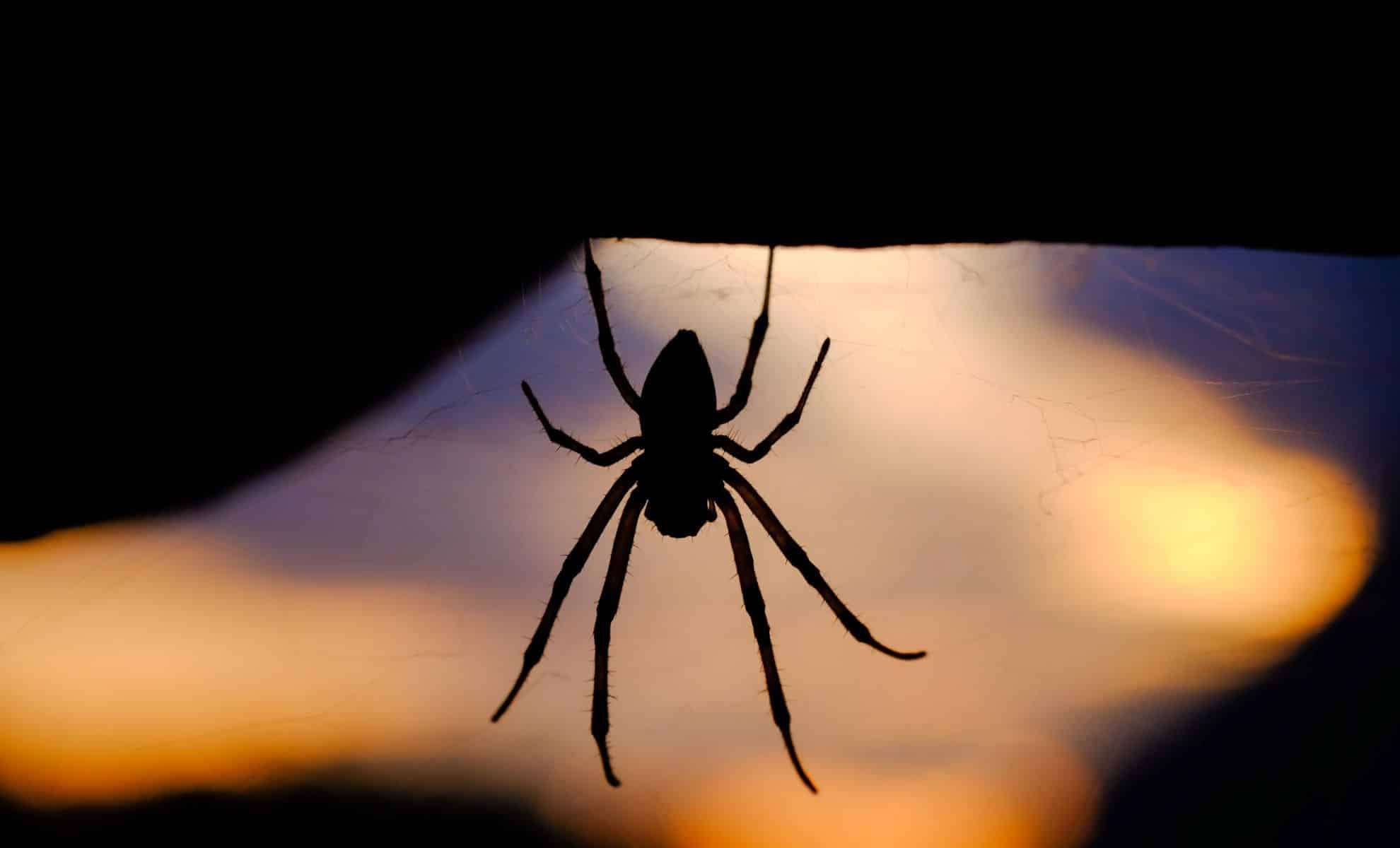
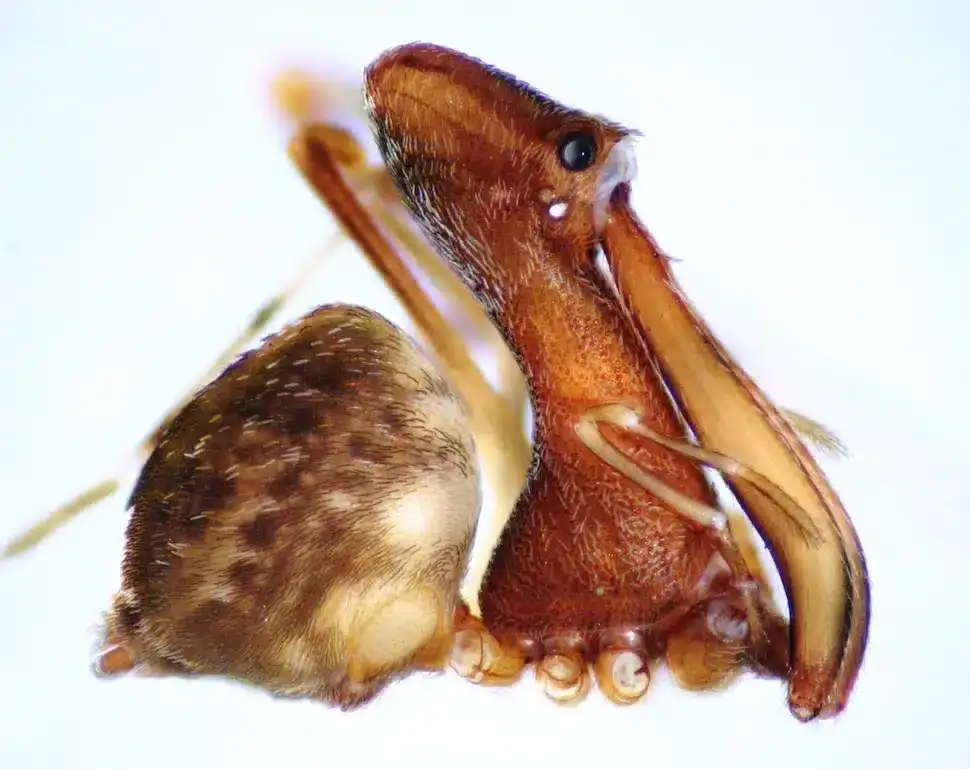
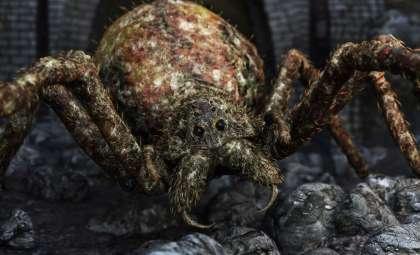
Among the dense foliage of Madagascar, South Africa, and Australia, a peculiar predator thrives, both ancient and intriguingly unusual. These creatures, called pelican spiders, possess a striking appearance reminiscent of intricate mechanical cranes instead of the fierce hunters they are.
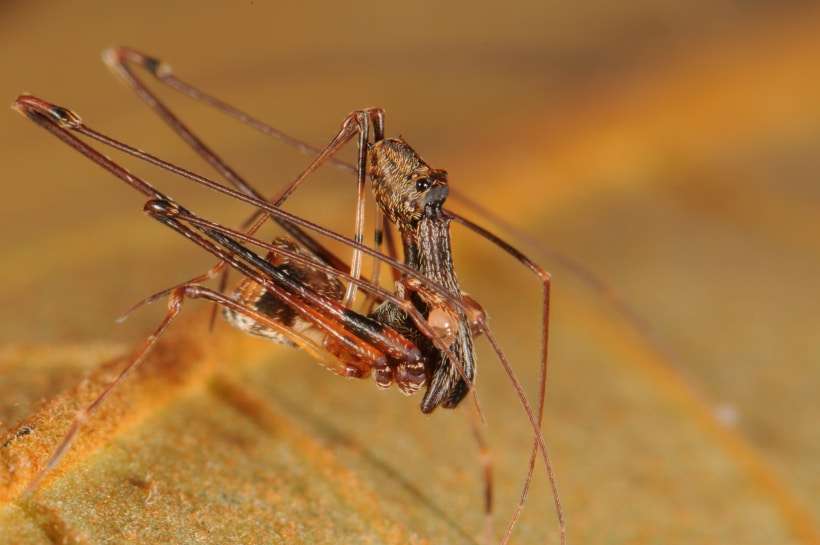
Featuring elongated necks and beak-like claws, pelican spiders exhibit a hunting technique that dates back millions of years. Their evolution has preserved primal predatory skills, enabling them to coexist in present-day ecosystems. A recent article in ZooKeys sheds light on the extraordinary diversity within this fascinating spider family, with new species continuing to emerge.
Ancient Arachnids with a Fearsome Edge
Members of the family Archaeidae, pelican spiders are often labeled “living fossils” due to their striking resemblance to forms from over 165 million years ago. Their morphology remains relatively unchanged since the Mesozoic era, making them one of the most significant and enduring spider lineages known today.

Unlike typical spiders that depend on webs, pelican spiders actively hunt prey. They track other spiders by following the silk trails they leave behind. Their unique body shape—especially the extended neck and beak-like pincers—allows them to attack targets from a secure distance, mimicking the precision of a bird’s beak.
Unveiling Species Unchanged for Millions of Years
Previously thought to be extinct and only known from ancient amber fossils, pelican spiders have been proven to survive in present ecosystems. Researchers have now found at least 26 species inhabiting Madagascar and South Africa, with many more yet to be formally identified. This newfound diversity challenges earlier assumptions about their rarity.
These resilient arachnids not only carry a legacy of antiquity but also show remarkable endurance amid environmental shifts. One recently documented species, Austrarchaea andersoni, was discovered in Queensland, Australia.
Despite facing dangers from climate change and habitat destruction, several species have endured catastrophic events such as Australia's wildfires. For example, the Kangaroo Island assassin spider, once considered extinct, was spotted in the scorched landscape, exemplifying its extraordinary survival skills.
A Center of Evolutionary Spider Richness
Madagascar stands as the primary refuge for pelican spiders, sheltering the greatest number of species—more than 20 variants. The island’s distinctive, isolated forests provide an ideal habitat for these primeval hunters. Recent research has identified 18 new assassin spider species here, confirming Madagascar as a pivotal site for evolutionary history.
These discoveries offer insight into a bygone era when pelican spiders roamed the forests of Gondwana, the ancient supercontinent connecting Madagascar with Africa, South America, and Antarctica. As these landmasses separated over millions of years, these spiders adapted to diverse environments, evolving into the formidable predators found today.
- Categories:
- News






0 comments
Sign in to Comment