
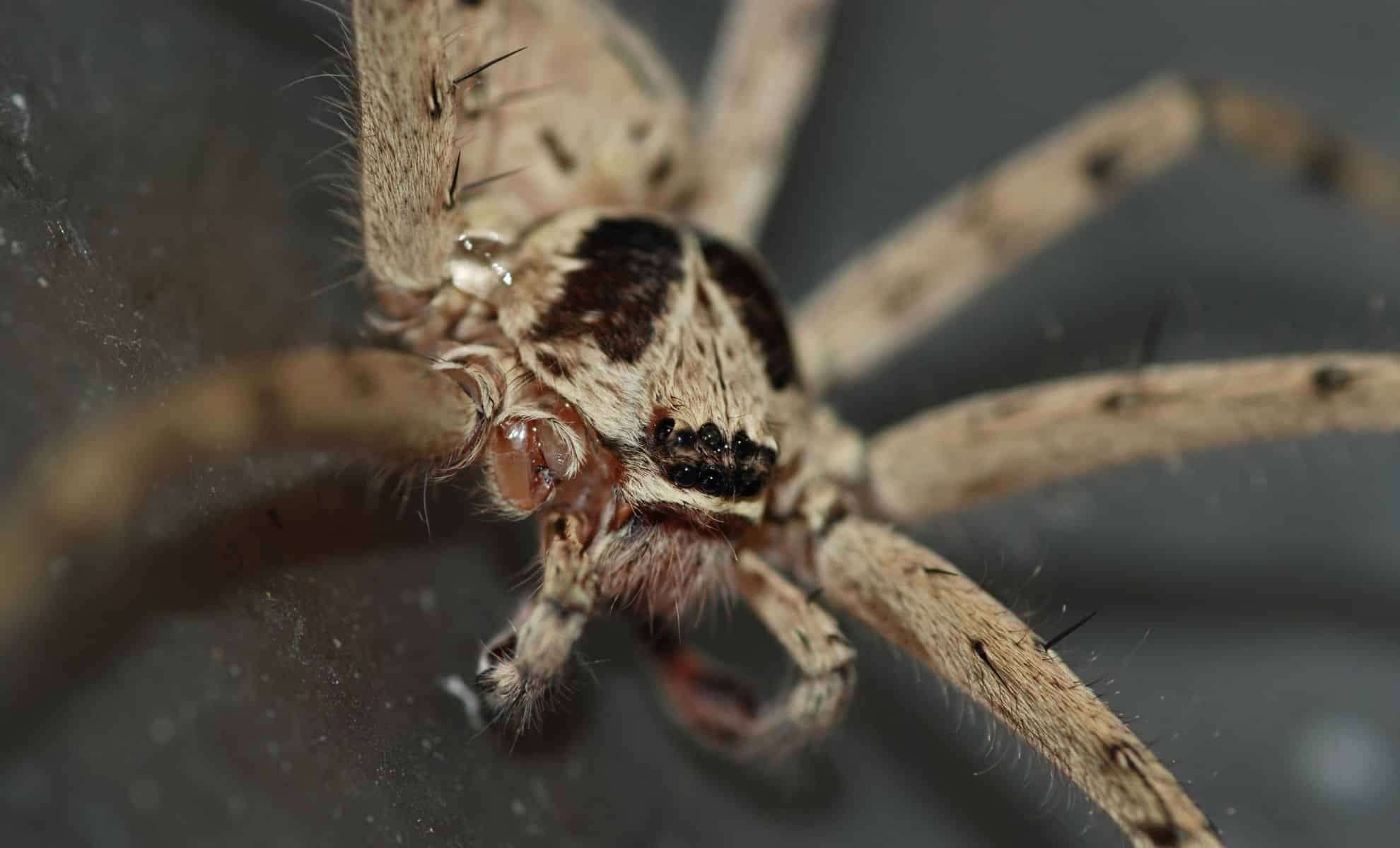
Huntsman spiders are renowned for their distinctive sideways crab-like legs and incredible agility, encompassing more than 1,200 species globally. Although their appearance can be startling, they pose little threat to humans and exhibit fascinating behaviors that underline their adaptability and ecological importance.
Origin and Habitat of Huntsman Spiders
Discover Wildlife explains that huntsman spiders, often dubbed giant crab spiders because of their sprawling sideways legs with twisted joints, earn their name from their hunting technique rather than spider webs for capturing prey. Their rapid movement—some species clocking speeds near a meter per second—and crab-like sideways crawl make them adept predators of insects.
These spiders are predominantly found in warm, tropical areas such as Australia, Africa, Asia, and the Americas. However, certain species like the green huntsman spider have adapted to cooler environments, including parts of Northern and Central Europe.

In Australia, huntsman spiders frequently enter homes, seeking shelter under furniture or in narrow spaces. The UK's native green huntsman is smaller than its tropical cousins and is currently experiencing population declines. These spiders mainly occupy woodlands, gardens, and heathlands, especially across southern England.
The Astonishing Crab-Style Legs of Huntsman Spiders
Huntsman spiders typically display brown or gray hues, with some sporting patterned legs. Their smooth, hairy bodies often cause them to be confused with tarantulas. However, their hallmark dynamically angled legs, extending sideways rather than forward, give them their characteristic crab-like silhouette. As with all spiders, they shed their exoskeleton to grow and have eight eyes aligned in two rows. Although their eyesight is limited, they rely chiefly on sensing vibrations and tactile stimuli to navigate their surroundings.
Their feeding primarily involves hunting insects and other small invertebrates. Females produce egg sacs containing up to 200 eggs, which they fiercely protect for about three weeks and continue to care for their spiderlings after they hatch. Mating is a complex process where males create vibrational signals by drumming on surfaces, producing a rhythmic, clock-like ticking sound to attract females.
Unveiling the Survival Tactics of These Impressive Spiders
One of the largest is the giant huntsman spider (Heteropoda maxima) native to Laos, boasting a leg span nearing 30 centimeters, ranking among the world’s biggest spiders. These giants face natural threats, including spider wasps, which paralyze them before laying eggs on their bodies. The wasp larvae feed on the immobilized spider, showcasing a harsh but intriguing survival strategy.
While they are venomous, huntsman spiders rarely bite humans, preferring to retreat when disturbed. Any bites usually cause mild symptoms like localized pain, redness, and swelling and are not medically serious.
The wide range of huntsman spiders’ hunting techniques, fast movements, and ecological roles make them captivating subjects in arachnid research. Especially in warmer locales like Australia, their frequent home visits intrigue and occasionally alarm people, while these spiders continue to contribute positively by keeping insect populations in check.
- Categories:
- News










0 comments
Sign in to Comment